


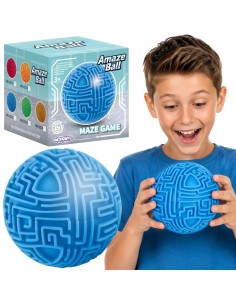

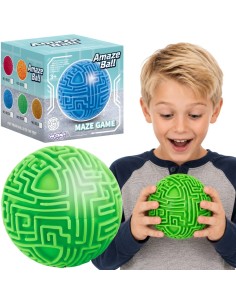
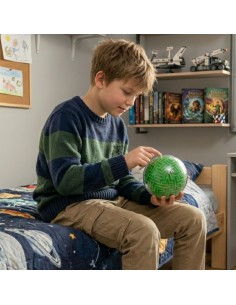
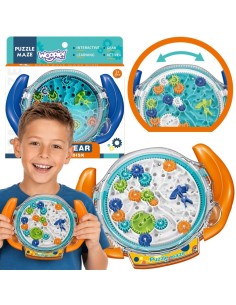
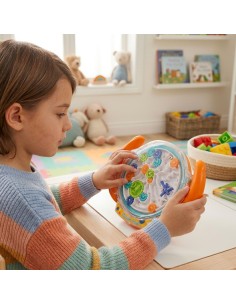
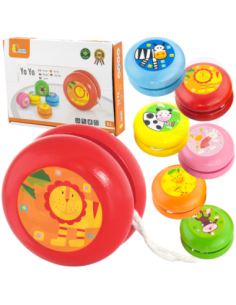
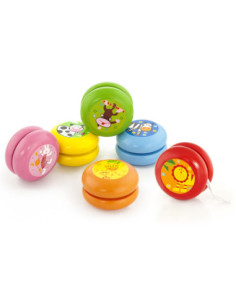

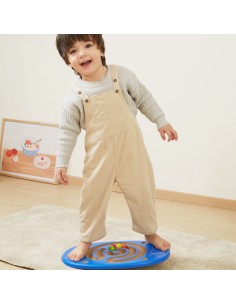
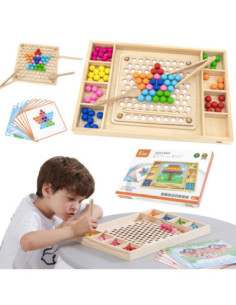
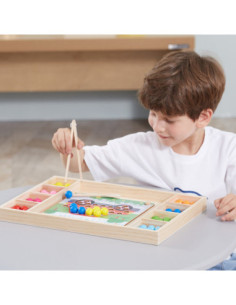
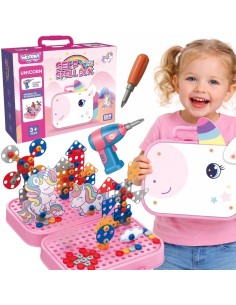
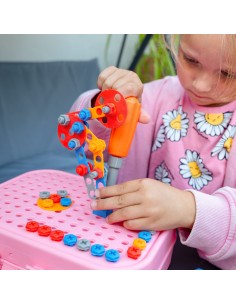
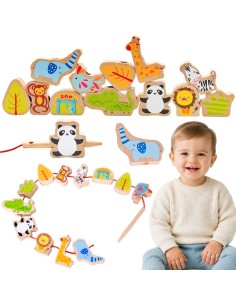
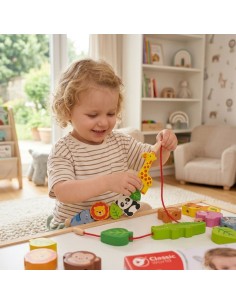
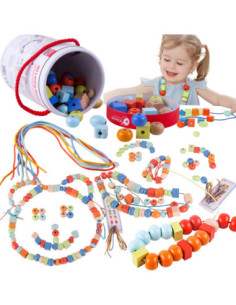
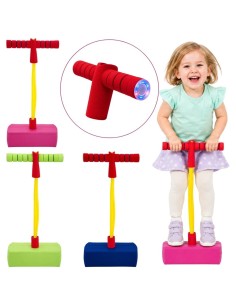

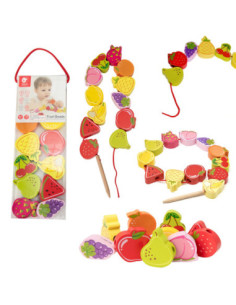

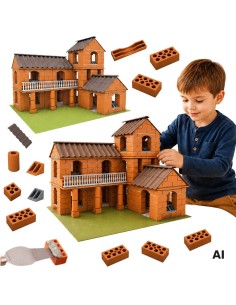
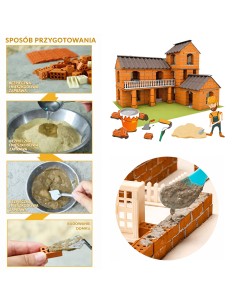
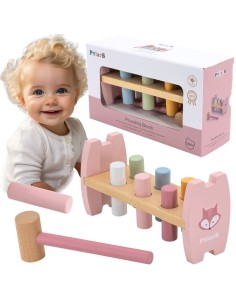


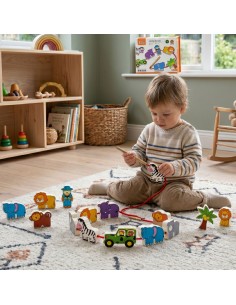


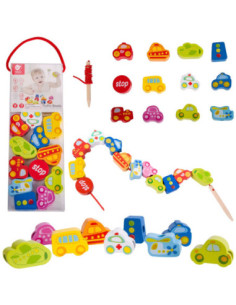
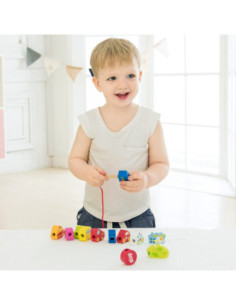

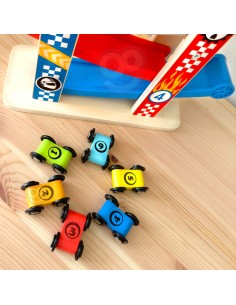

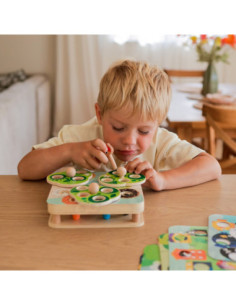

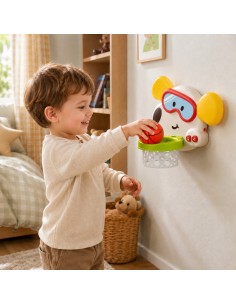

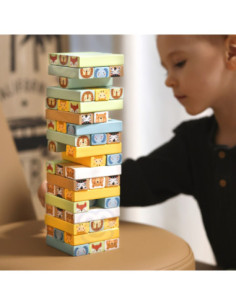

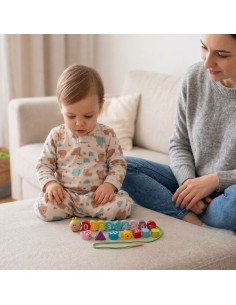
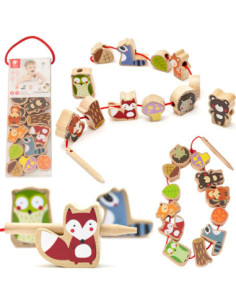

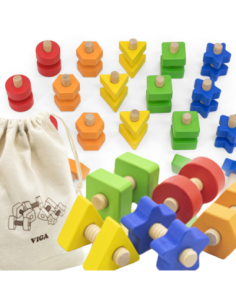
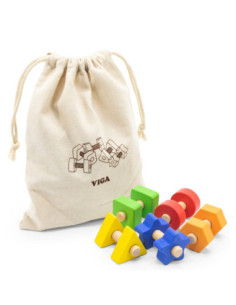
In this category you will find carefully selected educational toys inspired by the Montessori approach, designed to support children through independent play, discovery and hands-on learning. It is a strong assortment for online stores and B2B partners who want to offer products that parents actively search for: practical, safe in everyday use and clearly tied to child development. Educational toys are easy to present as valuable purchases because they help build fine motor skills, logical thinking, concentration and self-confidence.
The selection in this category works especially well for retailers who want to build an offer around products with clear learning value. Items that encourage sorting, matching, stacking, ordering and problem-solving are naturally attractive to customers looking for something more than a simple toy. They fit both home use and educational environments, which makes them a versatile choice for e-commerce, marketplaces and wholesale distribution.
Montessori-inspired products are designed to let children work at their own pace. In practice, that means toys and learning aids that encourage repetition, concentration and purposeful action. Rather than overstimulating a child, they provide a clear task and a satisfying result. For parents, that is a major selling point; for sellers, it creates a category that is easy to explain and easy to recommend.
Products in this range often include shape sorters, lacing toys, stacking sets, matching games, sensory activities and other items that support active learning. These are the kinds of products that help children understand cause and effect, develop hand-eye coordination and build the patience needed for more complex tasks later on. Because the benefits are obvious and practical, they convert well in online listings and in marketplace offers.
For B2B customers, the category also offers excellent opportunities for merchandising. You can group products by age, skill level or educational function, making it simpler to prepare clear offers for different sales channels. That makes it easier to publish listings on Allegro, Amazon, Erli or Empik Marketplace without having to create separate product logic for every platform.
Parents increasingly look for toys that offer a developmental purpose. They want items that keep a child engaged, but also support real growth. This is why educational toys are one of the most stable and commercially attractive categories in toy retail. They work as birthday gifts, everyday learning aids and first-choice products for families building a home learning environment.
From a sales perspective, these products are highly adaptable. A single item can be presented as a fine motor exercise, a logic game, a concentration tool or a sensory activity. That flexibility helps when creating listings, bundles and themed collections. It also makes the category useful for resellers who want to expand their assortment without introducing overly complex product stories.
When product data is well prepared, educational toys are especially convenient for multi-channel sales. Ready product descriptions, clear images and structured assortment data make it easier to maintain consistency across an online shop and marketplace listings. For B2B partners, this reduces the workload connected with publishing and updating offers, especially when stock and price synchronization is handled automatically through XML integrations.
A strong educational assortment should include products that encourage small, deliberate movements. Fine motor toys are particularly valuable because they support skills children use in writing, drawing, dressing and other everyday activities. Items that require pinching, placing, threading, aligning or matching are not only engaging, but also meaningful from a developmental point of view.
These types of toys are easy to position in a sales offer because the benefit is clear. Customers understand why a child needs practice with hand movements, visual tracking and coordination. That clarity helps reduce hesitation before purchase and makes the product easier to recommend in a storefront, a newsletter or a marketplace listing.
For trade partners, fine motor products can also be grouped into practical sets. A retailer can build a selection around early learning, preschool readiness or skill development, which helps increase basket value. Because these products often have a simple structure and a visible educational purpose, they are ideal for creating thematic bundles that can be promoted across different channels.
Children learn effectively when they are given simple but purposeful tasks. Sorting colours, matching shapes, arranging elements in the correct order or completing a logical sequence are all activities that support cognitive development. Products built around these actions are especially useful in the Montessori category because they give children clear goals and immediate feedback.
For retailers, this means a category that is easy to market. The selling message does not need to be complicated: the toy teaches a specific skill, keeps the child engaged and supports everyday learning. That simplicity is valuable in online commerce, where customers often decide quickly based on short product descriptions, photos and visible benefits.
Items that involve logic and problem-solving also perform well in gift-oriented sales. They feel educational without being dull, and they appeal to buyers who want something more substantial than a standard novelty toy. This is particularly useful in the B2B environment, where distributors and shop owners often need products that can be promoted both as play items and as developmental tools.
Montessori-style products are not limited to family homes. They are also a good fit for preschools, day-care environments, therapy rooms and other educational settings. Their structured, repetitive nature makes them practical for everyday use, and their clear learning function supports organised activities. That versatility gives wholesalers and resellers a wider potential customer base.
In institutional sales, the most important features are durability, simple use and educational value. Products that can be used repeatedly and explained easily are especially attractive to schools and preschool buyers. They support independent work, help children focus and can be integrated into routines without requiring complicated instructions.
For B2B suppliers, this category is a solid basis for recurring orders. Educational materials often need replenishment, and buyers in the institutional segment tend to return to products they already know work well. A well-structured assortment makes it possible to serve both retail customers and professional buyers with the same product family, while keeping logistics and presentation simple.
One of the biggest advantages of this category is that it is easy to communicate in product listings. Buyers want to know what the toy does, which skill it develops and why it is worth purchasing. Educational toys answer these questions naturally. They do not need a complicated brand story to make sense, because the function itself is already valuable.
That makes them ideal for online stores and marketplace sellers who need strong conversion-friendly content. A clear description can highlight the activity, the learning outcome and the age suitability in a way that feels useful rather than promotional. This is especially important on platforms where customers compare several similar items and make decisions quickly.
For sellers working across multiple channels, the category is also practical from an operational point of view. Ready-made product content, structured inventory data and automatic stock and price synchronization help keep offers consistent. When the same assortment is published across several platforms, it becomes easier to manage availability and reduce the risk of outdated listings.
Retailers can increase the value of this category by presenting products in coherent groups. A good approach is to separate items by developmental focus: fine motor practice, concentration, logic, sensory play or early learning. That structure helps customers find the right product faster and makes upselling more natural.
It is also worth preparing the offer with the buying journey in mind. Some customers look for a first educational toy for a toddler, while others need a more advanced activity for a preschool child. Clear segmentation allows you to address both groups without confusing the user. In e-commerce, that can improve engagement and reduce the number of questions before purchase.
For B2B partners, this also supports scalable merchandising. You can create category pages, bundle recommendations and cross-sell paths that are easy to reuse across an online shop, a marketplace store or a dropshipping model. This saves time and helps maintain a consistent presentation of the assortment.
Educational toys are particularly well suited to wholesale because they combine universal demand with clear value messaging. They can be sold as standalone items, grouped into collections or offered as part of seasonal campaigns. Their appeal is broad enough to work in many markets, but specific enough to allow targeted promotion.
For partners who sell through multiple channels, the operational advantages are just as important as the product value. XML integrations, ready images and product descriptions, and automated synchronization of stock and prices all help reduce manual work. That means faster launch times, fewer listing errors and a smoother process when expanding an assortment across different sales platforms.
In practice, this is especially helpful for Allegro, Amazon, Erli and Empik Marketplace sellers who need reliable product data and quick updates. When the same content can be reused efficiently, it becomes easier to scale sales without sacrificing consistency. Educational toys fit that workflow well because the products are straightforward to describe and straightforward to categorize.
Trust is a key factor in this category. Parents want toys that feel thoughtful, safe and worth the money. Educational products that support real development are easier to position as responsible purchases, especially when the benefits are visible in daily use. That gives retailers a strong story to tell without relying on exaggerated claims.
The best assortment usually combines simplicity, durability and clear learning value. Products that can be used repeatedly and that offer a visible task are especially appealing. They keep children engaged while giving adults confidence that the toy contributes to development rather than serving only as short-term entertainment.
For stores, that trust translates into a category with lasting commercial potential. Buyers looking for educational gifts, preschool tools or home learning aids tend to return to the same type of products over time. This makes the category useful not just for one-off sales, but for long-term assortment building.
Education and Montessori products are a strong choice for retailers, distributors and B2B partners who want to offer toys with real developmental value. The assortment supports concentration, motor skills, logic, coordination and independent learning, while remaining easy to present in online sales channels. Because the products are practical and understandable, they are well suited to both retail and wholesale contexts.
With ready product descriptions, images, XML integrations and automatic stock and price synchronization, this category can be managed efficiently across multiple platforms. That makes it especially useful for stores selling through their own e-commerce sites, Allegro, Amazon, Erli, Empik Marketplace or dropshipping channels. It is a category that combines educational relevance with strong commercial potential, which is exactly what many professional buyers are looking for.