
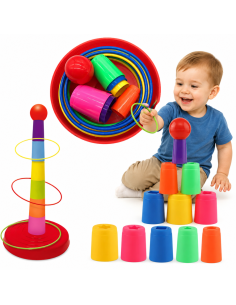



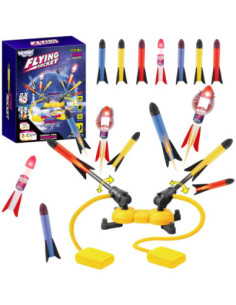
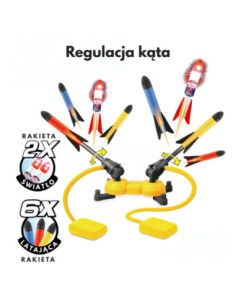
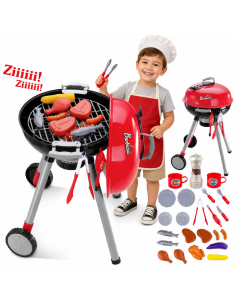


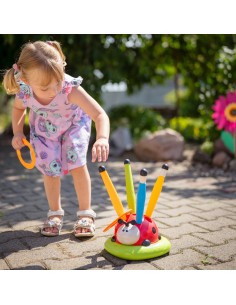
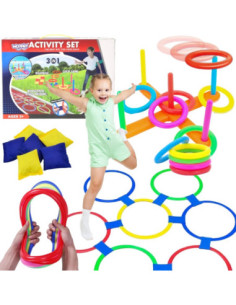
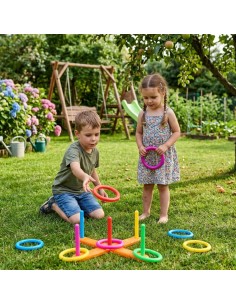
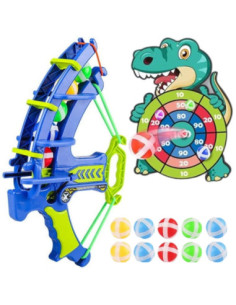
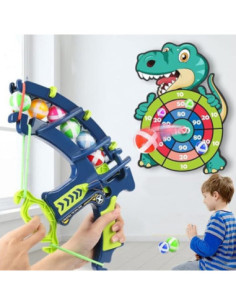


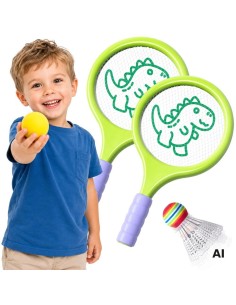
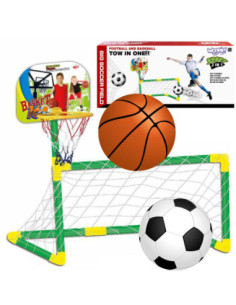
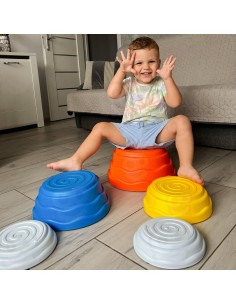
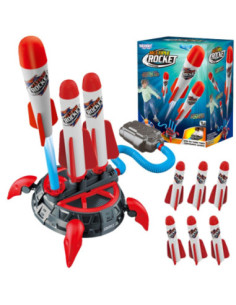

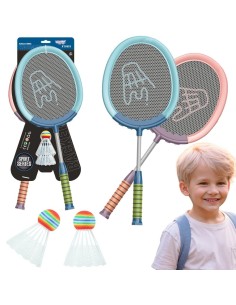


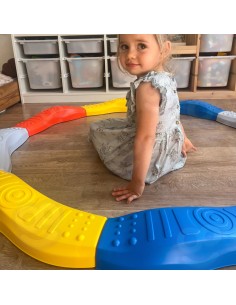
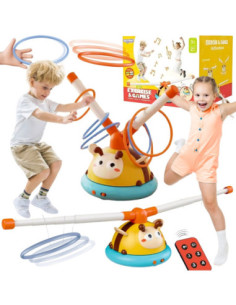
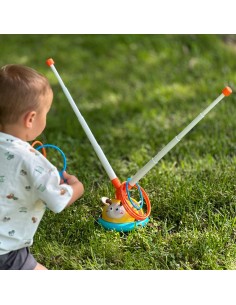

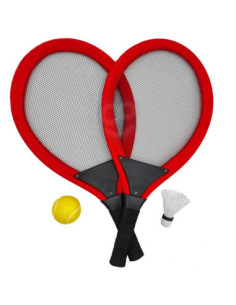
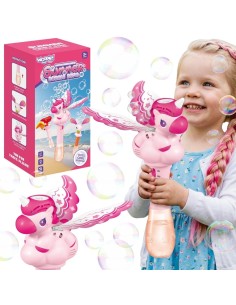


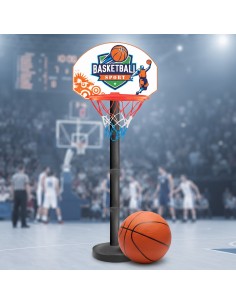
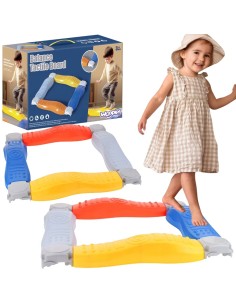

Games and fun products are one of the most practical ways to expand a B2B toy assortment with items that customers understand quickly and buy with confidence. This category brings together products that work well across the whole year: family board games, educational activities, logic puzzles, and play sets designed for different age groups. For online stores and marketplace sellers, that means a broad and flexible offer that is easy to present, easy to merchandise, and easy to turn into sales.
From a wholesale perspective, this is a category with strong commercial value because it naturally supports impulse purchases, gift buying, repeat orders, and seasonal campaigns. Parents, caregivers, and gift buyers usually look for clear benefits: age suitability, simple rules, engaging play, visible educational value, and a product that feels worth the price. When those points are communicated well in the listing, conversion rates improve and returns are reduced.
For B2B partners, the advantage is not only in the product mix itself, but also in how easy these items are to deploy across channels. Games and fun products fit e-commerce stores, Allegro, Amazon, Erli, and Empik Marketplace especially well because they can be presented with strong visuals, short benefit-driven copy, and clear product attributes. Ready-to-publish descriptions and images help speed up listing creation, while XML integrations and automatic stock and price synchronization reduce manual work and limit the risk of selling unavailable items.
Customers rarely need long explanations to understand this type of assortment. A well-chosen game or activity product often sells on first impression, especially when the packaging, age range, and play style are immediately visible. That is a big advantage for resellers, because the product can be positioned not only as entertainment, but also as a simple gift idea, a family activity, or a developmental purchase for a child.
In practice, this means the category performs well in several commercial situations at once. It works as an entry-level offer for a new store, as an upsell in a larger shopping cart, and as a seasonal collection for holidays, birthdays, back-to-school periods, and winter campaigns. For distributors and dropshipping businesses, that flexibility helps maintain a stable rotation of products without relying on one narrow sales niche.
Another benefit is that games and fun items are easy to group into logical subsegments. A store can build collections around age, difficulty, play mode, number of players, or educational purpose. This makes navigation simpler for the end customer and gives sellers more opportunities to rank for relevant search queries without creating thin or repetitive categories.
Family board games remain one of the strongest pillars of the category because they connect entertainment with shared time. Buyers often look for products that encourage interaction, cooperation, and light competition, while still being accessible to children and adults. This makes family games particularly useful for stores that want to reach households looking for an evening activity, a weekend pastime, or a gift that will be used by more than one person.
From a sales perspective, family games are attractive because they are easy to explain in a product listing. Important information such as number of players, age recommendation, and approximate play time can quickly shape purchasing decisions. The clearer the presentation, the easier it is for a buyer to compare options and choose a product that suits their expectations.
For B2B sellers, family games also provide a strong basis for bundling and cross-selling. They can be paired with educational toys, puzzle products, and other items that support long-term engagement. This helps stores create broader product families and encourages customers to buy more than one item at a time.
Educational products are an important part of this category because many customers want more than simple entertainment. They look for toys and games that strengthen concentration, observation, memory, logic, planning, or hand-eye coordination. For retailers, this is valuable because educational items can be marketed with a clear purpose, which often makes the purchase decision easier.
When a product offers a learning angle, the listing can answer the buyer’s hidden question: what does this do for the child? That matters especially in online sales, where the customer cannot inspect the item physically. Good descriptions, age guidance, and a clear explanation of the activity help build trust and reduce hesitation.
Educational games are also versatile for merchandising. Stores can build themes around early learning, logical thinking, sensory play, or developmental support. This is particularly useful when serving families looking for meaningful toys, including children who need additional support in development due to health-related or natural barriers. In those cases, clear product information and thoughtful categorization can make the offer more accessible and easier to choose.
For wholesalers, educational products often have strong repeat potential because buyers return when they want the next level of challenge or a different skill focus. That creates opportunities for recurring orders and category expansion over time.
Logic games and puzzles appeal to customers who like challenge-based play. These products are often chosen by buyers seeking focused engagement, brain training, or a quiet activity that can be used independently. They can be positioned as a thoughtful gift, a desk-friendly pastime, or a way to encourage concentration and patience.
In e-commerce, logic products benefit from precise product data. Customers usually want to know how difficult the game is, how it works, what age it is suitable for, and how long a typical session lasts. Sellers that communicate these details clearly usually see better conversion, because the item feels easier to evaluate before purchase.
This segment also supports catalog freshness. New logic titles, refreshed packaging, and different variants can keep the assortment dynamic without changing the category structure. For sellers managing multiple channels, that makes it easier to update offers while keeping stock and pricing aligned across platforms.
One of the biggest advantages of this category is the ability to organize products by age. Buyers frequently search for games for toddlers, preschoolers, older children, or family play, and they respond best when the offer is clearly matched to their needs. That is especially important in B2B sales, where the retailer needs products that will be easy for the end customer to understand and buy confidently.
Age-based merchandising reduces the risk of mismatch. If the challenge level is too high or too low, customers may be disappointed, and the likelihood of returns rises. When the product page clearly communicates the intended age range and style of play, expectations are more realistic and satisfaction is more likely.
For online stores, this also means better category architecture. Age filters, play type filters, and skill-based groups make the assortment more usable. The result is improved browsing behavior, stronger search relevance, and a better chance that customers will find the right product without leaving the page.
Games and fun items are particularly suitable for multi-channel selling because they combine strong visual appeal with practical product features. On marketplaces such as Allegro, Amazon, Erli, and Empik Marketplace, the customer often makes a fast decision based on photos, title structure, and a few key attributes. That makes it important to present the item clearly and consistently across all channels.
Ready descriptions and images help reduce listing preparation time, which is a major advantage for resellers and distributors handling larger catalogs. When content can be published faster, a store can launch new products sooner, respond to demand more quickly, and keep the assortment more current. That is especially helpful in categories where trends, seasonal demand, and gift purchasing behavior can shift during the year.
Automation also matters. XML integrations and stock and price synchronization make it easier to keep data accurate across the store, marketplace accounts, and dropshipping feeds. This lowers operational risk, improves customer experience, and helps prevent overselling items that are no longer available.
Many products in this category naturally fit gift buying behavior. Customers often choose games and fun items for birthdays, holidays, rewards, or family occasions. That gives sellers strong opportunities to create seasonal collections and themed promotions without changing the core assortment.
Gift-friendly products need to be easy to understand at a glance. Clear packaging, attractive visuals, and a straightforward description of what the product offers all support the purchase. When shoppers can quickly see who the item is for and why it is interesting, the path to checkout becomes shorter.
For wholesalers, gift potential is useful because it supports broader order sizes. A retailer preparing for holiday traffic may buy several age groups or several difficulty levels at once, knowing that the category has multiple use cases. This makes the segment valuable not just for end customers, but also for inventory planning and assortment development.
A well-designed games and fun assortment should combine broad appeal with clear segmentation. It is usually best to include products for different ages, different skill levels, and different play styles so that the store can answer multiple customer needs at once. That approach helps retailers capture more traffic and gives them enough variety to build meaningful collections.
It is also worth balancing familiar items with newer titles or updated variants. Familiar products make the category easy to shop, while fresh additions keep the offer competitive and interesting. In a wholesale setting, this balance can support both stable repeat sales and exploratory purchases from trade partners.
Because the category is broad, navigation and product data become especially important. Buyers benefit when the catalog is organized by age, complexity, purpose, or game format. Clear structure makes the offer easier to browse and more effective in search, which is a major advantage for stores that depend on online visibility.
For B2B partners, the real strength of this category lies in operational efficiency. Games and fun products can be introduced into a store with ready images, useful descriptions, and clear product parameters, which shortens the launch process. That matters whether the business sells through its own shop, a marketplace, or a dropshipping model.
When stock and price synchronization are in place, the category becomes easier to manage at scale. Changes can be reflected faster, and the risk of data mismatches is lower. This is particularly important when multiple channels are active at the same time and the same item must be presented consistently across them.
For resellers and distributors, that combination of product appeal and process automation creates a strong business case. The assortment is commercially understandable, the content is easy to work with, and the category can be expanded without excessive operational complexity.
Games and fun products offer a practical, high-potential category for B2B toy wholesalers and their retail partners. They combine broad customer appeal, clear use cases, and strong sales performance in both everyday and seasonal shopping. Family play, educational value, logic challenge, and gift potential all sit naturally within the same assortment, giving stores more ways to sell.
For online sellers and trade partners, the category is especially attractive because it works well with multi-channel commerce, ready product content, XML integrations, and automatic stock and price synchronization. That makes it easier to launch products quickly, keep listings accurate, and scale the offer without unnecessary manual effort.
If you are building a toy assortment for an e-commerce store, marketplace account, or dropshipping business, this category gives you a flexible foundation. It supports conversion, repeat sales, and category growth while staying easy for customers to browse and understand.