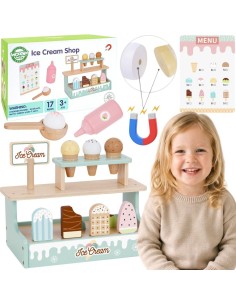
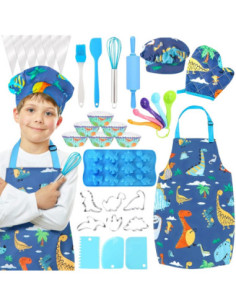
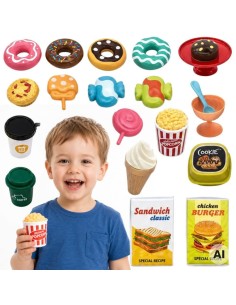
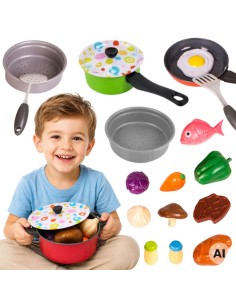
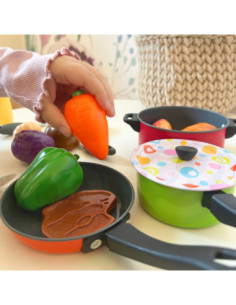
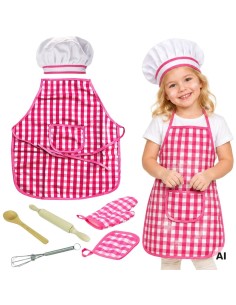
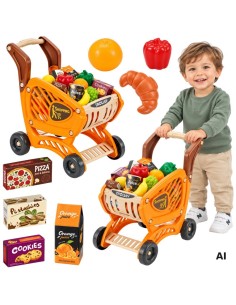
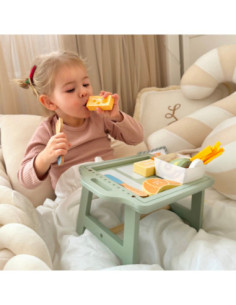
Accessories are the category that often decides whether an offer feels complete, practical, and ready to buy. In B2B toy wholesale, the right accessory range helps online stores, marketplace sellers, and trade partners build stronger product pages, increase average order value, and create natural add-on sales. Here you can present items that complement main products, support everyday use, and make it easier for customers to finish their purchase without searching through multiple suppliers.
For retailers, accessories are especially valuable because they are easy to combine with bestsellers, useful in themed bundles, and attractive in cross-sell and up-sell strategies. For distributors and dropshipping partners, they are a flexible part of the catalog: simple to list, easy to match with existing assortments, and effective when you want to expand your offer without restructuring the whole shop. Accessories also work well when product data must stay consistent across several sales channels, because clear descriptions, images, and structured details reduce friction during publication.
What belongs in the Accessories category
This category is designed for products that complete, improve, or extend the value of core toy listings. Depending on the assortment, accessories may include spare parts, add-on elements, practical extras, replacement components, and items that help customers get more use from the main product. In a wholesale environment, that means more opportunities to build logical bundles and more ways to support repeat sales.
Accessories are often the missing piece in a shopper’s buying journey. A customer may already have the main toy but still needs one more element to make the set useful, safer, more comfortable, or more fun. By grouping these products together, you give your audience a faster path to completion and give your store a stronger commercial offer.
Why accessories matter in toy wholesale
Accessories have a strong position in wholesale because they combine practical value with sales flexibility. They are usually lighter to explain, easier to pair with existing listings, and more likely to be bought as an additional item rather than a standalone destination purchase. That makes them useful for improving basket value and supporting a smoother sales process.
For B2B buyers, accessories also help build a more attractive catalog. A well-organized accessory section can support product families, simplify assortment management, and strengthen offer presentation on your own store or on marketplaces. When the main product and its accessories are clearly connected, the customer can make a quicker decision and is less likely to abandon the cart due to missing details.
How retailers use accessories to increase basket value
Accessories are a natural fit for online merchandising strategies. They can appear as recommended add-ons, bundle components, complementary items, or replacement parts. This makes them useful at several points in the buying process: before purchase, during product comparison, and at checkout. A smart accessory offer can turn a single sale into a more profitable order.
- They support cross-selling by offering logical additions to core products.
- They help create bundles that are easier to understand and easier to sell.
- They improve the usability of the main toy and make the offer more complete.
- They are well suited to “customers also bought” and “complete the set” sections.
When the accessory range is broad enough, retailers can also create more variants of the same product family without changing the entire catalog. That is useful for stores that want to keep listings fresh and increase visibility through related product groups.
Product features customers expect from accessories
Buyers in the toy sector usually look for accessories that are clearly useful and easy to match with a main product. They want items that are understandable at first glance, well described, and presented with clean visuals. The easier it is to identify the purpose of an accessory, the better it performs in both store and marketplace environments.
Strong accessory listings usually highlight practical benefits such as compatibility, ease of use, durability, and the way the product improves the main purchase. Clear naming, accurate images, and short but informative descriptions help buyers decide quickly. This is especially important in online channels where the customer cannot physically inspect the item before buying.
Typical qualities that improve sell-through
- Compatibility with popular toy lines or themed sets.
- Simple functionality that is easy to explain in a listing.
- Clear visual presentation that supports fast decision-making.
- Practical use in both home sales and marketplace offers.
- Useful margin potential when combined with best-selling products.
Accessories as part of a multi-channel sales strategy
In multi-channel commerce, accessories are particularly effective because they can be listed across different platforms with minimal adaptation when the data is prepared properly. Online stores, Allegro sellers, Amazon sellers, Erli sellers, and Empik Marketplace sellers all benefit from listings that are concise, accurate, and easy to synchronize. Accessories often require less complex storytelling than larger products, which makes them faster to deploy in large volumes.
For companies working with XML integrations and automatic stock and price synchronization, accessories are a practical category to scale. Updated availability helps avoid overselling, while unified product data supports a consistent customer experience across channels. Ready product descriptions and images also shorten listing time and improve the quality of the catalog, especially when many related items must be published at once.
How accessories support dropshipping and reseller operations
For dropshipping businesses, accessories are valuable because they can fill catalog gaps and increase conversion without adding complexity to storage operations. Resellers and distributors benefit from the fact that accessories can be positioned as useful complements to popular toys, which makes them easier to promote and easier to move through several sales channels.
Because accessory items often complement existing top sellers, they can be introduced into a catalog as supporting products that do not require a full repositioning of the shop. This is helpful when building a wider assortment around proven categories. It also improves merchandising efficiency: a customer who buys a main product can be shown relevant add-ons immediately, without needing to search for them elsewhere.
What makes a good wholesale accessory offer
A strong wholesale accessory offer should be easy to publish, easy to match, and easy to sell. That means giving buyers enough information to understand the purpose of the product, while keeping the presentation clean and commercial. In B2B, time matters: the less work a partner needs to prepare a listing, the more likely the product is to move into active sale.
Useful wholesale accessories usually come with product data that supports fast listing, reliable stock management, and consistent presentation across channels. This is one reason why many retailers value suppliers who provide ready images, structured details, and integrations that keep catalog information current. When those elements are in place, accessories become a stable and scalable part of the offer.
Commercial advantages for stores and trade partners
- Easier catalog expansion with related and complementary products.
- Better conversion through complete and convenient offers.
- Higher average order value from add-on purchases.
- More efficient multi-channel publication.
- Reduced workload thanks to ready product data and automation.
How to present accessories in your shop
Accessories sell best when their role is obvious. Customers should immediately understand what the product is for, which main item it supports, and why it belongs in the order. That is why product pages should focus on use case, compatibility, and practical value rather than on vague promotional language.
On category pages and product detail pages, it is worth linking accessories to the products they complement. This improves navigation and gives the customer a more intuitive shopping path. It also helps search filters, bundling logic, and internal recommendations perform better. For stores with large catalogs, this structure can significantly improve user experience.
Automation, consistency, and catalog maintenance
Accessories become even more effective when the shop can manage them efficiently. XML integrations, automatic stock and price synchronization, and standardized content help keep listings current and reduce the risk of errors. That matters in fast-moving channels where product availability and pricing can change often.
When accessory data is synchronized across platforms, sellers can maintain consistent offers on their own store and on marketplaces without spending extra time on manual updates. This is especially useful for businesses that publish many related items and need to keep assortment quality high while scaling their sales operations.
Best practices for selling accessories online
To make accessory listings perform well, focus on clarity, relevance, and ease of buying. The customer should not need to guess what the item does or whether it fits the intended product. A simple, specific, and well-illustrated listing often outperforms a complicated one, especially in mobile-first shopping environments.
- Explain exactly what the accessory is used for.
- Show the connection to the main toy or product family.
- Use clean images and concise content to reduce hesitation.
- Offer the item as part of bundles or related product sections.
- Keep stock and pricing information updated across channels.
Why accessories are a strong category for B2B toy sellers
Accessories help B2B toy sellers build a catalog that is more complete, more flexible, and more profitable. They support repeat orders, improve basket size, and give retailers more ways to organize their assortment around real customer needs. For trade partners, that means better offer quality and more opportunities to create practical product combinations.
In a market where speed, presentation, and data quality matter, accessories are a useful category because they can be launched quickly and sold effectively across several channels. With ready product descriptions, ready images, XML feeds, and automatic synchronization, they become easy to manage at scale. That makes them a smart addition for online stores, Allegro, Amazon, Erli, and Empik Marketplace sellers, as well as for dropshipping companies, resellers, and wider B2B networks.
In short, accessories are not just a supporting category. They are a commercial tool that helps complete offers, improve shopping convenience, and strengthen multi-channel sales. When presented well, they increase the value of the main product, support customer satisfaction, and give wholesale partners a more profitable way to grow their toy assortment.