
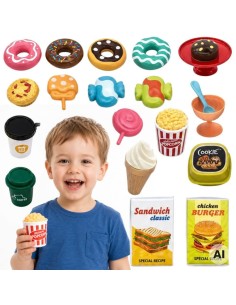
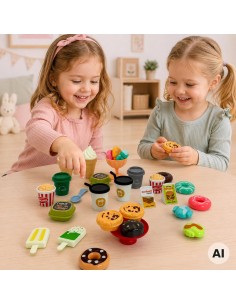
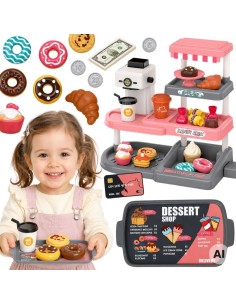
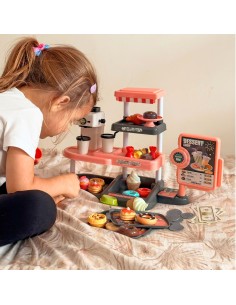

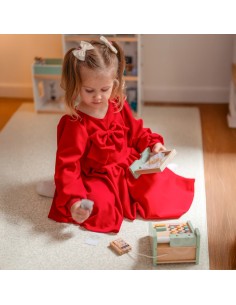
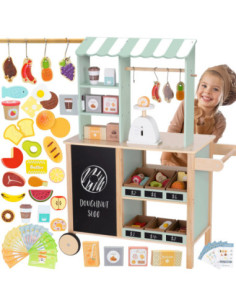
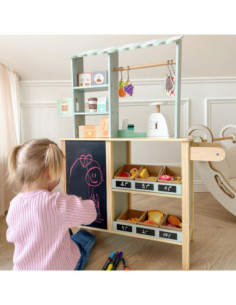
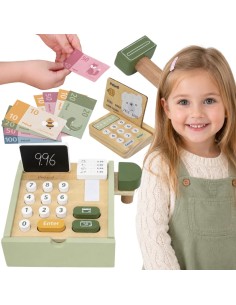


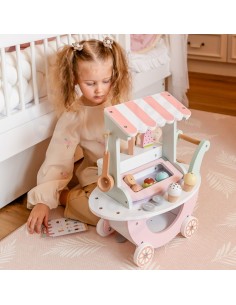


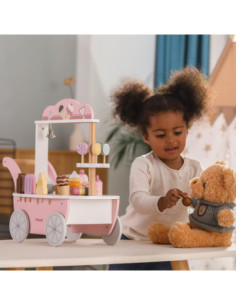
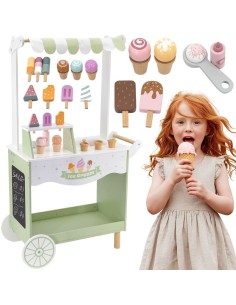
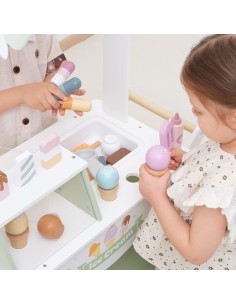
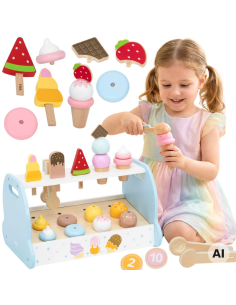
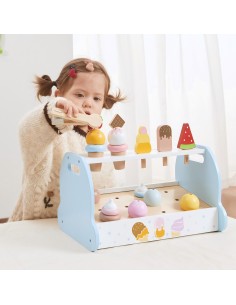
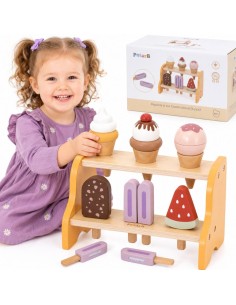
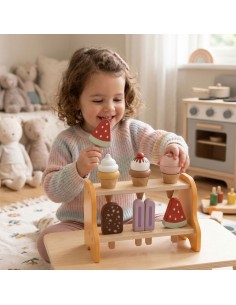

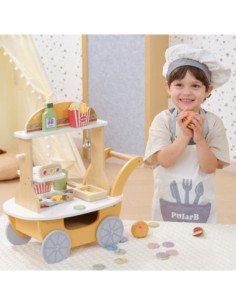
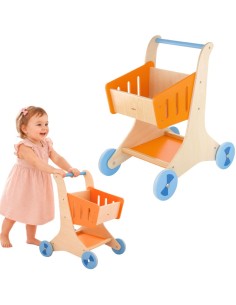
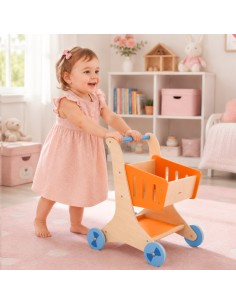
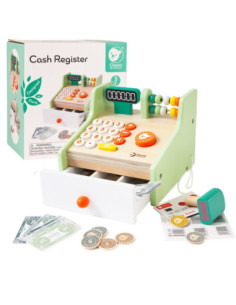
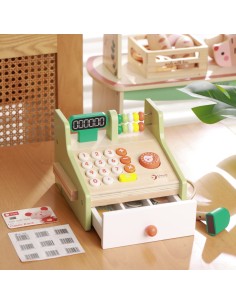
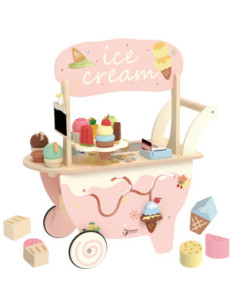
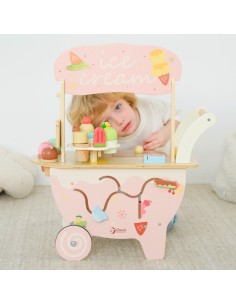
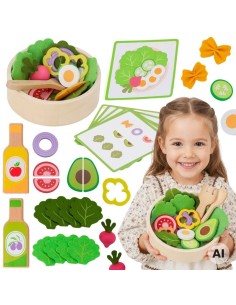
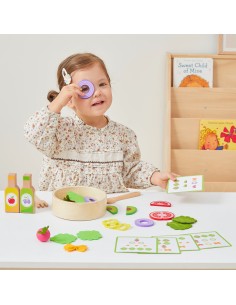

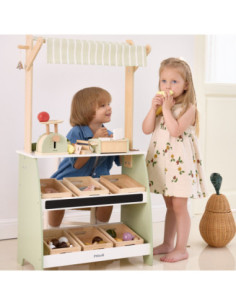
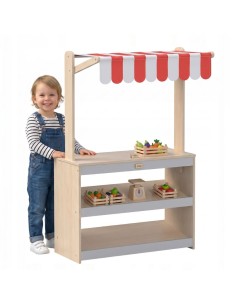

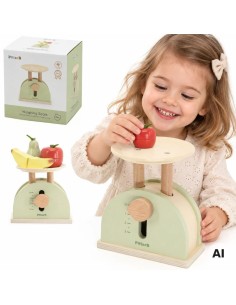
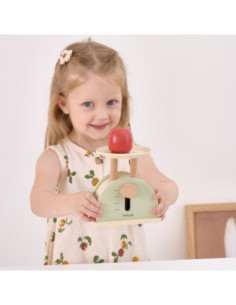
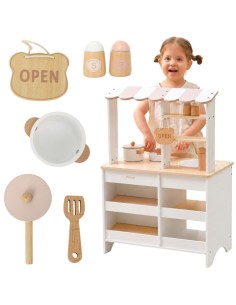
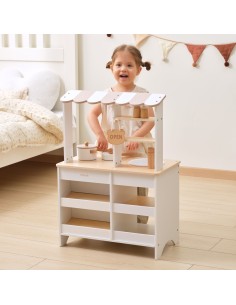


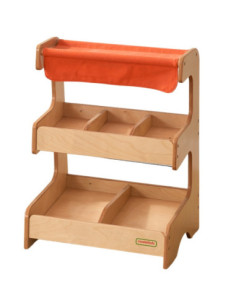
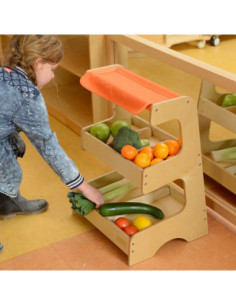
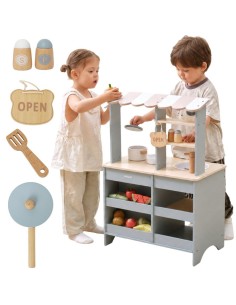
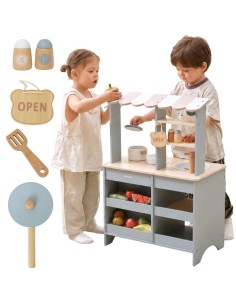
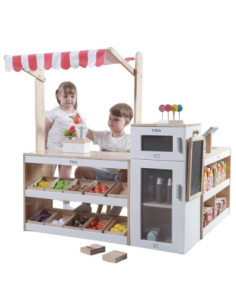

Play shops and checkouts are a proven category in the toy assortment because they combine imaginative role play with practical learning. Children enjoy taking turns as cashier, customer or shop assistant, while adults value toys that support communication, counting, social interaction and long-lasting engagement. For B2B sellers, this is a category that works well in regular seasonal rotations, gift assortments and themed bundles, especially when you want to build a clear, easy-to-present offer for online stores and marketplace channels.
In this category you will find products designed to create a complete shopping scene: play shops, checkout counters, tills, cash register sets and complementary accessories that make pretend retail play more realistic. These items can be sold as standalone products or grouped into attractive sets with add-ons such as baskets, payment accessories or shop-themed extras. That flexibility makes the assortment easier to organize, easier to cross-sell and more appealing in e-commerce listings where customers quickly compare product contents and value.
Pretend shop toys have strong commercial potential because they are easy to understand, easy to display and easy to extend with accessories. Parents and educators look for toys that keep children busy for longer than a few minutes, and retail play fits that need perfectly. A child can build a simple buying-and-selling scenario or expand it into a more complex game with pricing, customer service, stocking shelves and handling payments. That versatility makes the category relevant across different age groups and use cases.
For retailers, the category is attractive because it supports multiple price points. A compact cash register set can serve as an entry-level item, while a larger shop or checkout unit can anchor a higher-value offer. This gives you room to create a ladder of products that fits different budgets without losing coherence in the category structure. It also helps when planning promotions, bundles or gift-oriented collections around holidays and birthday seasons.
Children naturally return to pretend play when the toy gives them enough freedom to invent new scenarios. Shops and checkouts are ideal for that because the game can be repeated endlessly with different roles, products and rules. One day the child may run a grocery store, another day a toy shop, a café counter or a simple market stall. This repeatability is valuable not only for families, but also for resellers because it improves the perceived usefulness of the product and supports stronger customer satisfaction.
From a developmental perspective, shopping play encourages language growth, turn-taking, basic numeracy and social behavior. Children learn to ask, answer, count, compare and interact in a structured but playful environment. Some products also include realistic details such as buttons, scanners, drawers, shelves, receipts or payment features, which make the experience more immersive. For your catalog, this means better storytelling in product pages and more ways to highlight product differences without needing to force complicated explanations.
Trade buyers usually look for clear product composition, durable construction and a presentation that instantly communicates what the child can do with the toy. In the shops and checkouts category, that often means visible accessories, intuitive operation and a design that fits both home playrooms and educational environments. Toys intended for repeated use should be easy to set up and simple to understand, so parents and teachers can start the activity quickly without extra preparation.
Depending on the model, products may include a till, scanner, payment terminal, shelves, baskets, play food, cards, coins, notes or labels. Some checkouts are compact and focused on the cashier role, while others are larger play stations that resemble a full shop counter. This variety gives wholesalers and distributors the chance to build a balanced portfolio: smaller products for impulse purchase and larger sets for higher-margin sales or bundled offers.
Shops and checkouts are suitable for many sales channels because they work in private homes as well as in educational settings. In preschools and play corners, the toys help organize group activities and encourage shared play. In homes, they become a favorite role-play theme that children can return to over and over. That broad applicability supports consistent demand and makes the category easier to plan in wholesale stock management.
For businesses serving multiple customer groups, it is useful to present this category as both entertaining and practical. A parent sees a fun gift, an educator sees a learning tool and a reseller sees a product line with good turnover potential. This is why clean product classification, ready images and ready product descriptions matter so much. When the product information is already well structured, it becomes much easier to publish the same assortment across a web shop, marketplace accounts and dropshipping channels.
One of the biggest advantages of this category is the natural fit with accessories. A basic shop or checkout can be complemented with play groceries, shopping baskets, labels, signs, play money and other supporting items. These add-ons improve the play experience and create an obvious opportunity for cross-selling. A customer who buys the main set is often willing to add small items that make the toy feel more complete.
For B2B partners, this is particularly useful because it allows the creation of themed offers without overcomplicating the catalog. You can group products by shop style, level of complexity or included accessories. For example, a grocery shop set can be paired with food items, while a simple cash register can be supported by payment accessories or shop counters. Such organization makes your offer more understandable on Allegro, Amazon, Erli and Empik Marketplace, where clear product structure directly affects conversion.
Shops and checkouts perform best when the listing clearly shows what is included and how the toy is used. Customers want to know whether the set is compact or large, whether it comes with accessories and how the play scenario works. That is why product pages should focus on practical detail: age suitability, included elements, style of play and key functional features. The more understandable the listing, the easier it is to maintain consistent performance across multiple sales channels.
For online stores and marketplace sellers, ready-to-use images and descriptions save a significant amount of time. They reduce manual work, help keep the catalog uniform and make it easier to launch new listings quickly. When combined with XML integrations and automatic stock and price synchronization, this category becomes even easier to manage at scale. If an item changes availability or price, the update can move through your channels without constant manual correction, which is especially important in fast-moving toy assortments.
In wholesale toy sales, the real advantage is not only having the right product, but also having the right data flow. Shops and checkouts often have multiple versions, sets and accessory combinations, so accurate stock information matters. With automatic synchronization, your store can reflect current availability across different channels more reliably. That reduces the risk of overselling, improves customer trust and helps partners sell with fewer operational interruptions.
Automation also supports seasonal planning. When demand rises around holidays or during gift periods, you need a category that can be published quickly and kept current without extra administrative work. XML feeds, synchronized pricing and structured product content make it much easier to expand the range or refresh the offer for different marketplaces. For B2B sellers, this is a practical advantage that can directly improve sales efficiency and catalog control.
When building listings for this category, it helps to emphasize the features that influence buying decisions. Customers often compare products by size, number of accessories, play realism and durability. Some sets are designed for simple cashier play, while others support a more complete shopping environment with shelves and customer interaction. Clear differentiation makes it easier to target different buyers and build a coherent assortment strategy.
These points are useful not only for end customers, but also for trade partners who need to understand how the assortment fits into their sales strategy. A well-described product is easier to list, easier to promote and easier to connect with complementary items in a larger category tree.
In B2B toy distribution, a category becomes more valuable when it is organized around clear use cases rather than only product type. Shops and checkouts are ideal for this approach because they naturally create a complete play story. That makes it easier to structure your offer into logical groups such as simple cash registers, full shop counters, store-themed play sets and accessories. Buyers can then move from one level to another without confusion, which improves the shopping experience and supports higher order values.
This structure also helps when working with resellers, distributors and dropshipping partners. They often need a category that is simple to explain but still rich enough to support different price bands and promotional formats. Because the toys are easy to photograph and describe, they can be introduced quickly into new listings and adapted to various sales models. That is one reason this assortment fits well with ready images, prewritten descriptions and automated data exchange.
Marketplaces reward listings that are clear, searchable and easy to understand. Shops and checkouts benefit from this because buyers often search directly for practical phrases such as play cash register, toy shop or checkout set. When the product content is complete and the visual presentation is clean, the listing can perform better in comparison shopping environments. This is especially true when the item is part of a broader bundle or when the product page explains exactly what the child receives.
For sellers active on Allegro, Amazon, Erli and Empik Marketplace, this category can be an important part of a balanced toy portfolio. It combines recurring demand with strong visual appeal and straightforward product logic. When the assortment is organized correctly, it is easier to maintain consistent pricing, reflect stock changes and expand the range without creating data chaos. That makes the category useful not just for sales, but also for operational stability.
A strong shops and checkouts offer can support both product discovery and repeat sales. Retailers benefit from a category that is easy to cross-sell, easy to explain and easy to scale. Trade partners benefit from a clear structure that helps them publish faster and manage their catalog more efficiently. Because the toys lend themselves well to themed sets and accessory add-ons, they can be presented in a way that increases the average basket value without making the offer feel crowded.
For wholesalers, the key is to supply products that are ready for modern e-commerce workflows. That means complete data, reliable stock synchronization, accurate pricing and product materials that can be reused across channels. The shops and checkouts category is especially suited to that model because it has strong visual identity and a clear play function. Once the offer is assembled, it can be adapted across web shops, marketplaces and B2B sales pipelines with minimal friction.
Shops and checkouts are a versatile toy category with stable demand, strong role-play value and excellent potential for structured wholesale sales. They help children practice real-life scenarios in a playful way while giving retailers a product line that can be sold in different formats: compact sets, larger play stations and accessory-based bundles. That flexibility makes the category attractive for online stores, marketplace sellers, resellers and distributors.
With ready descriptions, ready images, XML integrations and automatic stock and price synchronization, this category becomes even easier to manage at scale. It fits well into multichannel selling and supports efficient publication across Allegro, Amazon, Erli and Empik Marketplace. For B2B toy wholesalers, it is a practical, repeatable and easy-to-present assortment that can strengthen both conversion and catalog organization.