
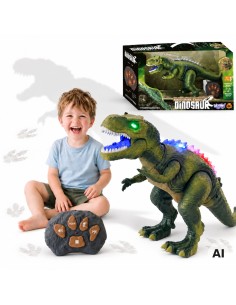
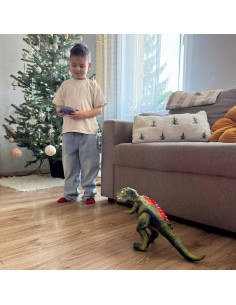

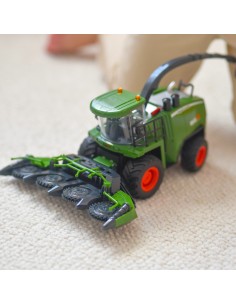
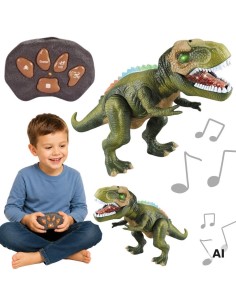
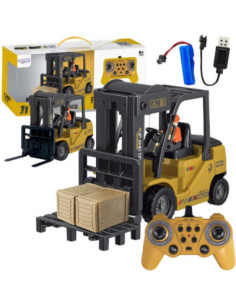
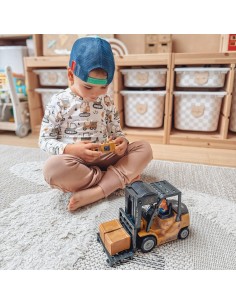
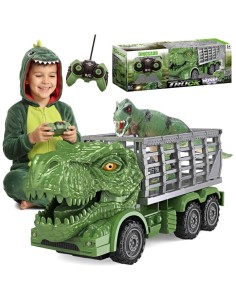
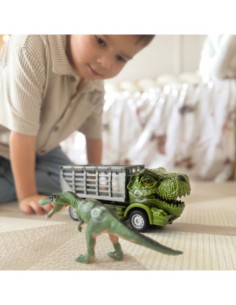
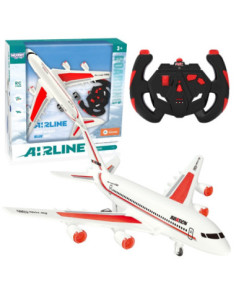
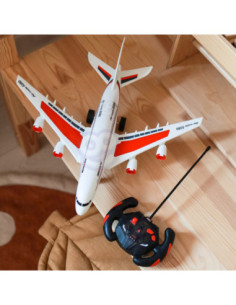
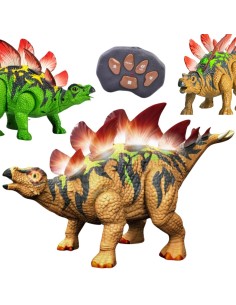

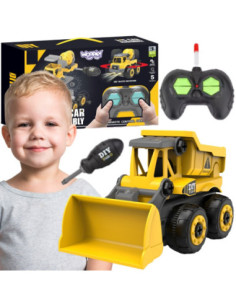
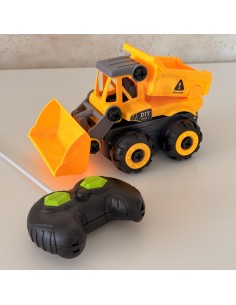
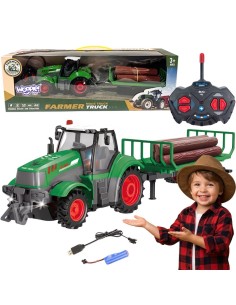
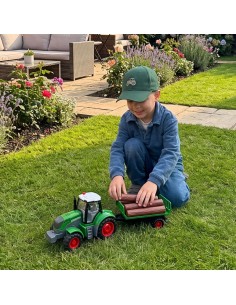
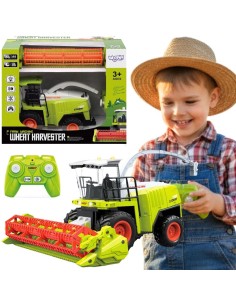
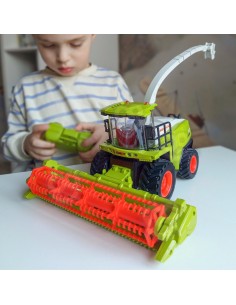
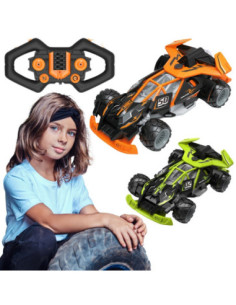
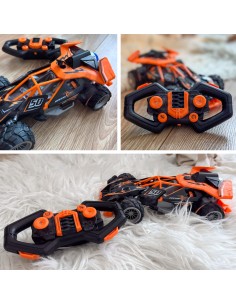
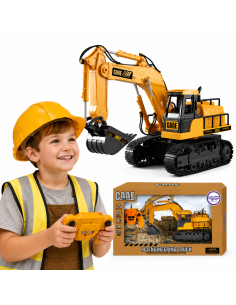
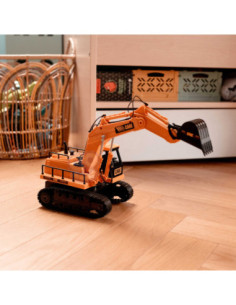
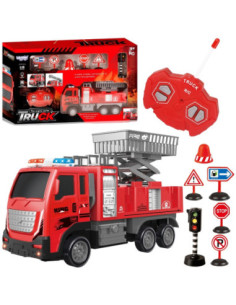
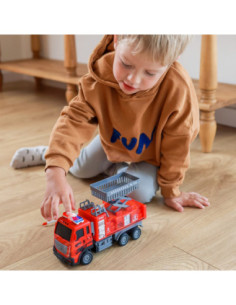
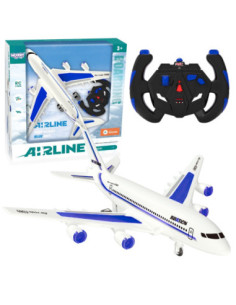
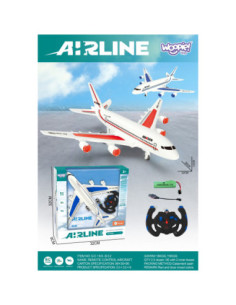


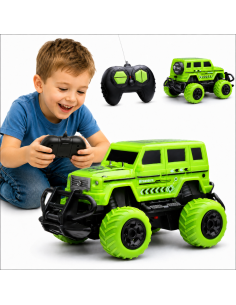
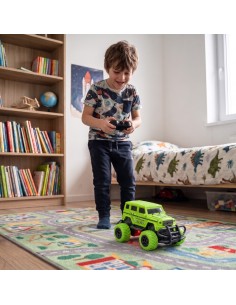
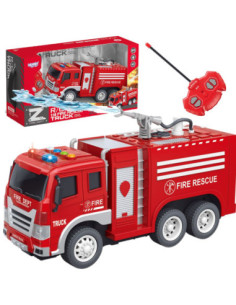
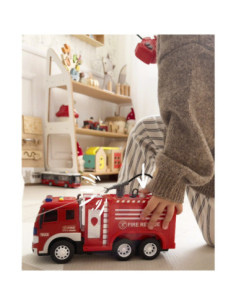
Remote controlled toys are a dependable category for B2B assortments because they attract attention across age groups, price ranges and sales channels. They combine instant play value with a clear product story: the customer can see what the toy does, understand how it is controlled and quickly compare technical features such as range, power source, responsiveness and terrain suitability. For wholesalers and online retailers, that makes the category easy to present, easy to cross-sell and easy to scale in a multi-channel offer.
Products in this category are popular because they offer fast engagement. A remote controlled car, truck, boat, robot or other moving model usually does not require a long explanation, yet it still gives room for differentiation. One item may be designed for younger users with simple controls, while another targets older customers who want more precise steering, higher speed or a more durable build. This variety is useful for stores that want to serve both impulse buyers and customers comparing specifications before purchase.
For B2B partners, the category works well because it supports a wide range of merchandising strategies. You can build a basic entry-level offer for volume sales, add mid-range models with better features and keep premium items for customers looking for stronger performance or more advanced control systems. That flexibility helps maintain a balanced assortment and improves conversion across multiple sales channels.
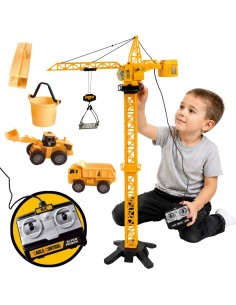
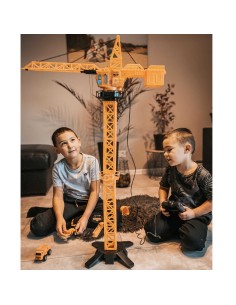
Remote controlled toys include several groups of products that can be arranged into clear subsegments. The most popular are cars and off-road vehicles, which are easy to sell because they are familiar and visually appealing. Boats and amphibious models appeal to customers searching for something different, especially in seasonal or gift-oriented offers. Robots and interactive models add a technological angle and can be positioned as a more modern play experience. There are also stunt models, construction vehicles and themed sets that expand the category further.
When building a wholesale catalog, it is useful to include products with different control styles and functionality levels. Some items focus on simple forward, reverse and turning movement, while others offer proportional steering, extra buttons, light effects or special driving modes. The broader the range, the easier it is for a store to match a product to the customer’s expectations and budget.
In this category, technical details matter because they directly affect customer satisfaction. Buyers often look at battery type, operating range, charging method, control sensitivity and durability. A product that starts quickly and reacts predictably is much easier to sell than one that feels unstable or complicated. That is why clear product data is essential for online listings and marketplace offers.
Other strong selling points include sturdy body construction, good wheel grip, shock resistance, stable radio connection and attractive design. For some buyers, runtime is the key factor; for others, it is speed, scale, terrain capability or included accessories. The best-performing assortment usually contains both simple, affordable options and more detailed models that offer extra value without making the purchase decision too difficult.
Store visitors often compare products based on a small set of practical questions. How far does the controller work? How long does one charge last? Is the model suitable for indoor or outdoor use? Is the set ready to run, or does it require additional batteries? Does the toy feel solid enough for repeated use? When these answers are visible in the listing, the buyer can decide faster and with less hesitation.
For this reason, remote controlled toys benefit strongly from ready product descriptions and well prepared images. Clear presentation reduces pre-sale questions, supports conversion and limits returns caused by mismatched expectations. This is particularly important for wholesalers serving retailers, resellers and dropshipping partners, where accuracy and speed both matter.
A strong category structure usually includes products for different customer profiles. Entry-level models can be positioned for younger users or for buyers who want an inexpensive gift. Mid-range products often deliver the best balance of price and performance and can become the core of the offer. Higher-end models work well as upsell items because they provide better control, more stable operation and richer functions that justify a higher selling price.
It is also smart to diversify the assortment by use scenario. Some buyers want indoor fun with lightweight models that are easy to handle in smaller spaces. Others look for outdoor vehicles that can manage rougher surfaces, obstacles or longer distances. If the catalog includes several of these use cases, the store can target a wider audience and increase the chance of repeat orders.
A balanced assortment should contain clear alternatives rather than many nearly identical items. Differentiation by size, control range, design, function or terrain capability makes the offer easier to understand. This helps resellers create cleaner product pages and gives marketplace sellers more room to set up bundles, promotions and comparison groups.
Another advantage of structured assortment planning is better stock movement. When products are arranged by target user and feature set, stores can restock faster and identify which models deserve stronger visibility. This is especially useful in seasonal periods, when demand can shift quickly and sellers need a catalog that is easy to update.
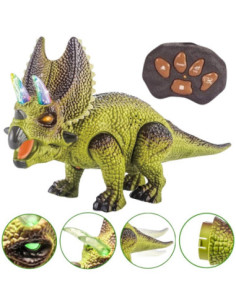
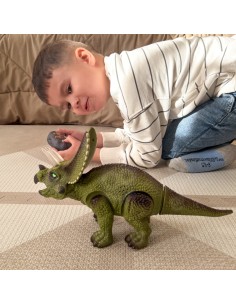
Remote controlled toys are highly visual, so the quality of the product page strongly influences sales. Customers want to see the vehicle or model from several angles, understand what is included in the package and know whether the toy is ready to use. That is why consistent images and structured descriptions are valuable assets for any store working in this category.
For B2B operators, prepared content saves time during launch and listing updates. Ready descriptions make it easier to expand the assortment quickly, while quality images help maintain a professional look across the store, Allegro, Amazon, Erli and Empik Marketplace. If the same product data is used across channels, the risk of inconsistent information drops significantly.
This category often contains products with frequent stock turnover, especially when seasonal demand rises or when customers respond quickly to new designs. Because of that, automatic stock and price synchronization can make a real difference. It reduces manual work, helps prevent overselling and keeps offers aligned across sales platforms.
XML integration is especially useful for wholesalers supplying many partners at once. It supports easier product import, quicker catalog updates and more reliable information flow between systems. For trade partners who manage multiple storefronts or marketplace accounts, this kind of automation can become a major operational advantage. It allows teams to spend less time on repetitive tasks and more time on pricing strategy, promotions and customer support.
Marketplace sellers need listings that are consistent, complete and easy to update. Dropshipping companies need current stock data and reliable product information. Remote controlled toys fit both models well because they are attractive, easy to categorize and often bought as gifts. With synchronized data and ready content, partners can publish offers faster and keep them accurate over time.
This also improves the shopping experience. When availability, price and product details are current, fewer orders fail and fewer customers ask follow-up questions. In practice, that means better operational efficiency and a smoother path from browsing to purchase.
Remote controlled toys benefit from strong gift potential. They are often purchased for birthdays, holidays and special occasions, which gives the category recurring peaks in demand. Because the products are visually engaging, they also work well in promotional campaigns and seasonal highlights. A retailer can easily build themed collections or recommend models based on age, budget or type of play.
Repeat demand is another advantage. Once a customer has bought one model, they may return for a more advanced version, a different vehicle type or a second item for another child. This makes the category suitable not only for first-time purchases but also for long-term catalog development. Stores can use that pattern to build cross-sell paths and encourage larger baskets.
For online store owners, this category offers a mix of clear demand, easy presentation and strong visual appeal. For distributors and resellers, it offers a wide enough range to support both volume orders and targeted assortment building. Because the products are easy to explain and compare, they work well in catalogs where speed of listing and consistency of information are important.
B2B partners also benefit from the ability to expand the category without major operational complexity. With ready images, prepared product descriptions, XML feeds and synchronization tools, it becomes easier to scale the offer across different sales channels while keeping the data organized. That is especially important for businesses handling Allegro, Amazon, Erli and Empik Marketplace at the same time.
The best results usually come from a catalog that separates products by purpose and buyer profile. Entry-level toys should be easy to find for customers looking for simple entertainment. More advanced models should be visible for buyers who want stronger performance, longer range or more technical features. Gift-friendly designs should be highlighted for seasonal promotions, while durable outdoor models can be positioned for broader use.
This approach gives trade partners a clearer structure and helps customers navigate the offer without confusion. It also supports better inventory planning because products can be reordered based on how they perform within each segment. When the catalog is organized this way, the category becomes easier to manage and easier to sell.
Remote controlled toys are a versatile, sales-friendly category with strong B2B potential. They combine visual appeal, clear functionality and a broad choice of models, which makes them suitable for online stores, resellers, distributors and dropshipping businesses. The category performs well when the offer includes different control levels, product types and usage scenarios, because that makes it easier to match the right toy to the right customer.
For wholesalers, the biggest advantage is scalability. With ready product descriptions, consistent images, XML integration and automatic stock and price synchronization, the assortment can be expanded across multiple channels with less manual work. That supports faster listing, cleaner operations and better sales performance on platforms such as Allegro, Amazon, Erli and Empik Marketplace. In a market where accuracy and speed matter, remote controlled toys are a strong category to keep active, visible and well organized.