
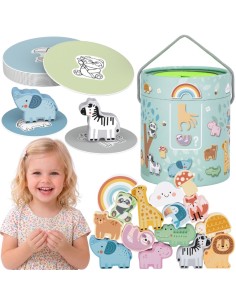
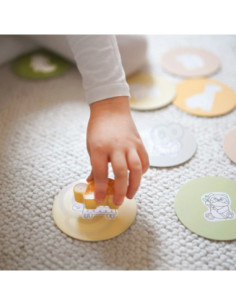
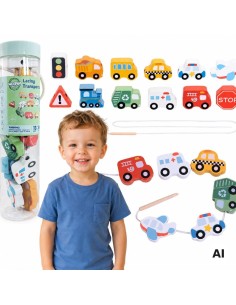
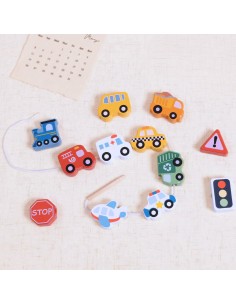
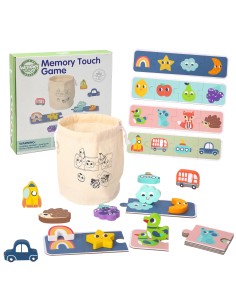
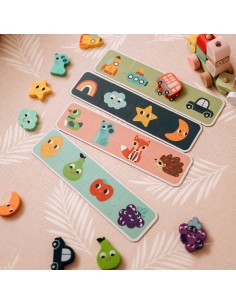
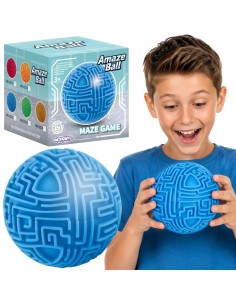

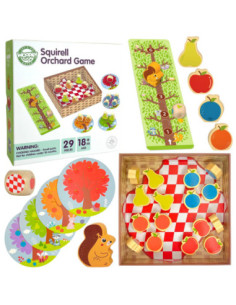
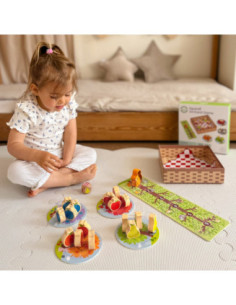
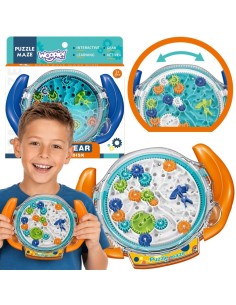
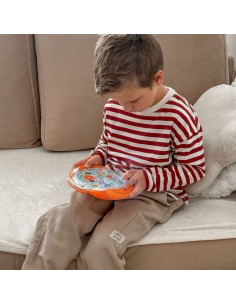
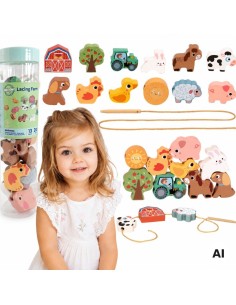
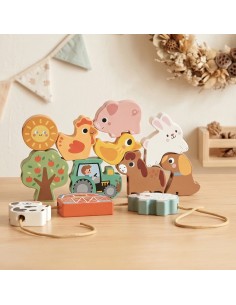
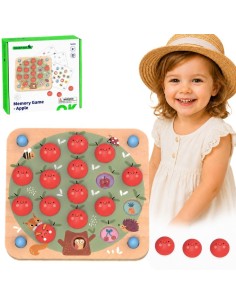
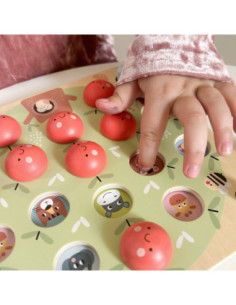
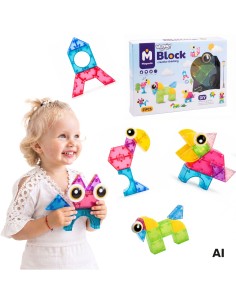
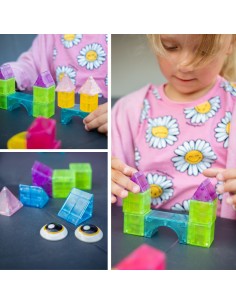

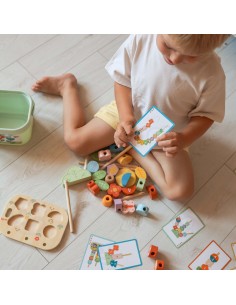
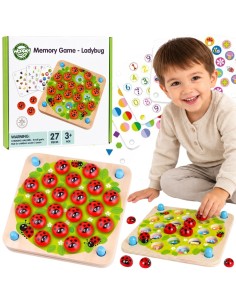
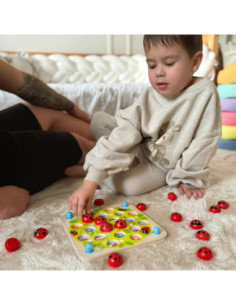
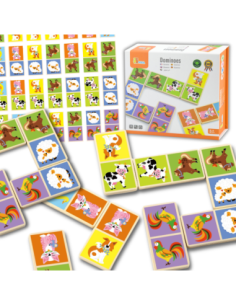
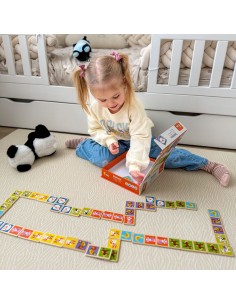
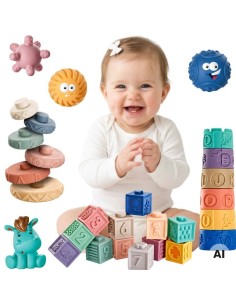
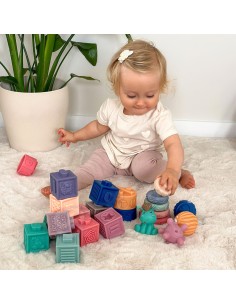
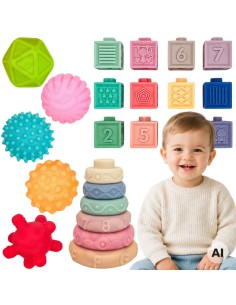
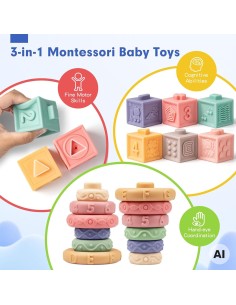
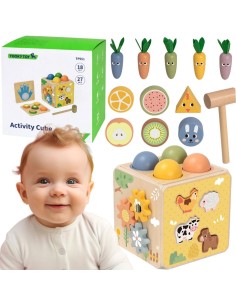
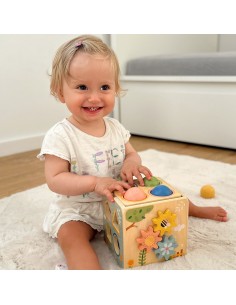

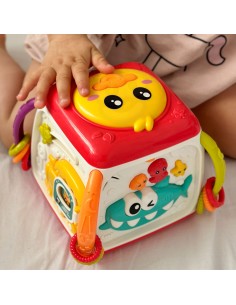
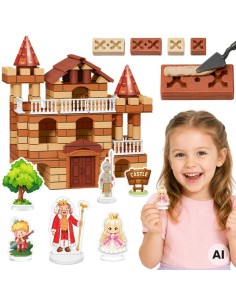
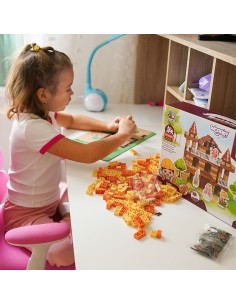
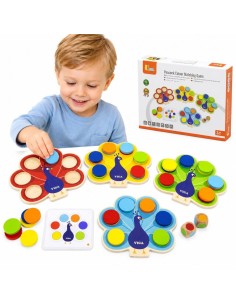
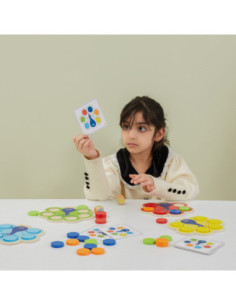
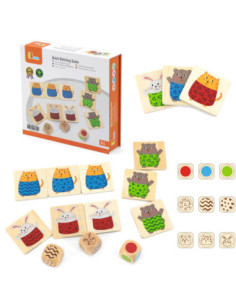
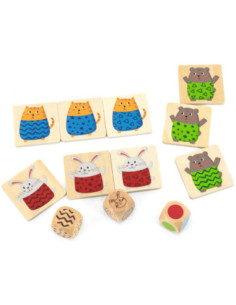
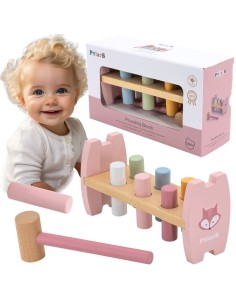

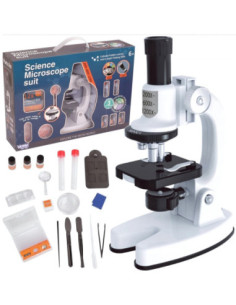



Our Mental category brings together toys and games designed to challenge thinking, improve concentration, and keep children engaged for longer than a quick, one-time play session. For B2B buyers, this is a strong commercial segment because products with a clear educational or developmental value are easier to position in online stores, on marketplaces, and in curated gift collections. They appeal to parents looking for meaningful entertainment, schools and activity centers seeking practical learning tools, and resellers who want a category with stable year-round demand.
In this assortment, you can build a varied offer around logic games, puzzles, matching sets, memory trainers, pattern challenges, and other activities that encourage problem-solving. These products are attractive not only because they entertain, but because they support skills such as focus, visual perception, patience, planning, and manual coordination. That combination makes them especially useful in e-commerce: the customer sees both play value and developmental value, which helps improve conversion and reduce hesitation at the point of purchase.
Mental toys are one of the easiest groups to merchandise with a clear benefit message. A buyer does not have to guess what the product is for: the function is obvious, the age suitability can be explained, and the educational effect is easy to communicate in a product listing. That means better performance in search results, stronger engagement on marketplace pages, and more effective cross-selling in your own store.
For wholesalers and trade partners, this category also has the advantage of wide audience reach. Some products are perfect as small impulse purchases, some work well as gift items, and others can be promoted as longer play activities that keep children occupied without screens. This makes the category useful across several sales channels, from independent webshops to Allegro, Amazon, Erli, and Empik Marketplace.
Because many mental toys come in visually attractive packaging and easy-to-understand formats, they are also well suited to marketplace listings. Buyers often compare age range, difficulty level, number of players, and materials, so having a structured catalog with ready product descriptions and images can significantly improve listing quality and save preparation time. In a busy B2B workflow, that operational efficiency matters just as much as the product itself.
Logic games are among the most commercially effective products in this category. They give the child a task to solve, a rule system to follow, and a visible result at the end of play. That structure is important because it creates a sense of progress and achievement. Children stay engaged because they want to complete the challenge, and adults appreciate that the activity encourages concentration instead of passive entertainment.
From a sales perspective, logic games are easy to describe in a way that highlights the value proposition. You can emphasize how a game develops strategic thinking, decision-making, and pattern recognition. You can also mention whether it is suitable for solo play or group play, because that information helps parents choose a product that fits their household habits. In stores and marketplaces, clear usage scenarios often convert better than generic product descriptions.
These products work well as gifts because they feel purposeful. A customer who wants something more meaningful than a standard toy will often choose a logic game. That makes the category valuable for seasonal sales peaks as well as everyday purchases. When stocked in a balanced assortment, logic games can serve as entry-level items for younger children and more demanding challenges for older users.
Puzzles and matching products have strong appeal because they combine visual interest with mental engagement. They are easy to present in photos, easy to understand at a glance, and highly adaptable to different age groups. Some products focus on simple shape recognition, while others build more advanced spatial reasoning and patience. This variety gives resellers room to create a ladder of products from basic to more complex.
For parents, this type of toy is often chosen as a screen-free activity that can be used at home, during travel, or in quiet moments of the day. For sellers, the practical advantage is that these products are simple to position in category filters and collection pages. A webshop can group them by age, theme, difficulty, number of elements, or play style, which helps customers find the right item faster and improves browsing behavior.
Matching games also support repeat sales because many customers buy several versions over time. As children grow, they move from simple matching tasks to more demanding puzzles and visual challenges. That creates a natural upsell path inside the same category and makes it easier to build long-term customer value.
Another important part of the category includes toys and games that train memory, concentration, and observation. These products are especially attractive to buyers who want educational value without making play feel like formal work. Short, repeatable tasks are ideal for that purpose because they can be used in short sessions and still feel rewarding.
Memory-based products are useful in many settings: at home, in after-school activities, in preschool groups, and in classroom support work. That broad use case is important for B2B clients, since it opens the category to both retail and institutional sales. When a product can be used by families as well as educational partners, the sales potential becomes more stable and less dependent on one single audience.
These toys can also be positioned as helpful tools for children who need extra support in development, including those who benefit from gentle exercises in focus, repetition, and recognition. In such cases, the key is to present the product as engaging and accessible, not as clinical equipment. A well-written listing can show that the toy is playful first, while still offering a meaningful developmental function.
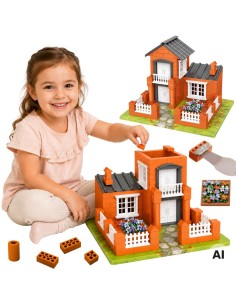
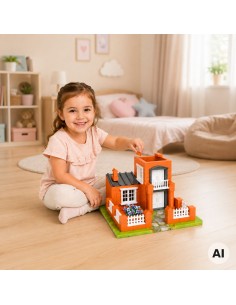
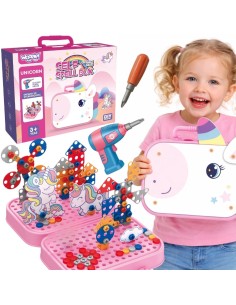
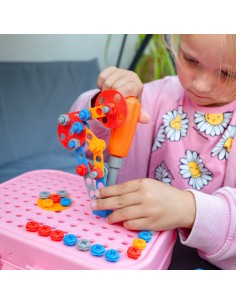
Many mental toys also involve hand-eye coordination, sorting, assembling, and fitting elements together. That makes them useful beyond pure reasoning tasks, because they support both mental and motor skills. This mixed value is attractive to customers who want products that keep children busy in a constructive way.
For online sellers, these products are easy to photograph and explain. Visible parts, colorful elements, and clear actions make the listing more compelling. If the product has multiple stages of use, that can be highlighted in the item description to show that the toy offers more than a single short activity. The more clearly a seller communicates the play process, the easier it is for the buyer to understand the value.
Manual coordination products are also a good fit for bundles and themed sets. A retailer can combine several similar items into an educational collection, a travel kit, or a gift-ready range. That flexibility is especially useful in multi-channel sales, where different platforms may benefit from different price points or bundle strategies.
The strongest assortments are usually structured around use case rather than only around product type. Instead of offering random titles, it is better to create a clear path for the customer: simple tasks for younger children, medium-level challenges for everyday play, and more advanced games for users who want a higher difficulty. This approach helps the shopper decide quickly and supports a healthier conversion rate.
A well-organized catalog should also include useful buying cues such as recommended age, number of players, number of pieces, and estimated play time. These details matter because they reduce uncertainty. In marketplaces, where customers often compare several similar products, a complete and consistent set of information can make the difference between a click and a skipped listing.
For trade partners, assortment planning should take into account seasonality and rotation. Mental toys sell throughout the year, but they also perform well during holidays, back-to-school periods, and gift seasons. That makes them suitable for stable inventory planning and for reordering based on demand trends. Products with broad usability are easier to keep in stock and less risky than highly niche items.
This category is particularly useful for sellers who operate in more than one channel. A product that works in a webshop can often be listed on Allegro, Amazon, Erli, or Empik Marketplace with only minor adjustments to the title and description. If the supplier provides ready descriptions, image assets, and synchronized stock and price data, the listing process becomes much faster and more reliable.
That operational speed is a major advantage for B2B clients. It reduces manual work, supports faster launch of new items, and helps keep the catalog current. In a competitive environment, the ability to update product data quickly matters as much as having the right assortment. When stock levels and pricing are synchronized, the seller can react more confidently to demand and avoid problems caused by outdated offers.
Because mental toys often have universal appeal, they can also be promoted through broader themes such as learning through play, family time, or screen-free entertainment. This gives retailers more room to create campaigns and category pages that speak to real customer needs rather than only to product specifications.
Customers usually compare several practical features before making a purchase. They want to know whether the product is age-appropriate, whether it is easy to understand, how difficult it is, and whether it offers enough play value to justify the price. Clear messaging around these points helps remove friction and makes the offer easier to trust.
Packaging and presentation are also important. A product that looks good in the listing image and has a clear play concept will usually perform better than an item that is difficult to explain. For that reason, it is worth building category content that supports strong presentation at every stage of the sales funnel.
When a product is marketed well, mental toys can serve multiple buyer needs at once: entertainment, education, gifting, and developmental support. That versatility is one of the main reasons the category remains attractive to both retailers and their end customers.
In wholesale and partnership sales, efficiency is essential. A category like this benefits from standardized product data, structured descriptions, and consistent image sets. That makes it easier to publish offers across multiple platforms and maintain a coherent brand presentation.
XML integrations and automatic synchronization of stock and prices help reduce errors and improve day-to-day operations. When those processes run smoothly, sellers spend less time on manual updates and more time on sales growth. This is especially important for products that are rotated frequently or introduced in broader collections.
For dropshipping partners, the category is also practical because it can be managed with relatively low logistical complexity when product data is well maintained. The combination of visible educational value, broad market demand, and strong listing potential makes these items a dependable part of an online assortment.
Mental toys and games are a strong choice for stores, resellers, and marketplace sellers looking for products with clear customer appeal and solid developmental value. They support concentration, memory, logic, coordination, and problem-solving, while also fitting naturally into gift ranges and everyday educational play.
For B2B buyers, the category offers commercial flexibility, easy cross-channel listing, and excellent compatibility with ready product descriptions, product images, XML feeds, and automatic synchronization. Whether you sell through your own webshop or across marketplaces, this is a category that can support both steady turnover and long-term category growth.
With the right assortment strategy, mental games and puzzles can become one of the most dependable parts of your toy portfolio: understandable for customers, practical for partners, and effective in both retail and wholesale sales.