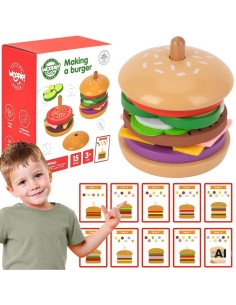
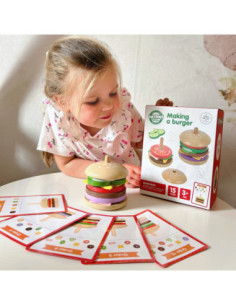
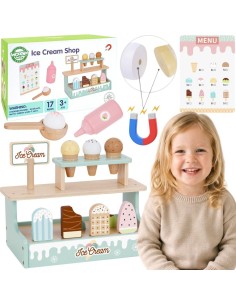
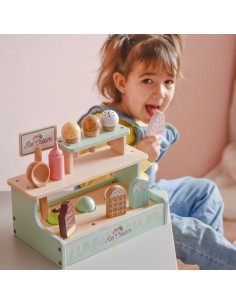
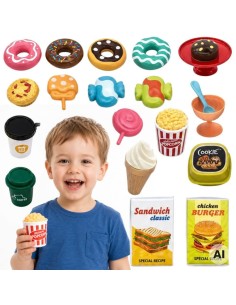
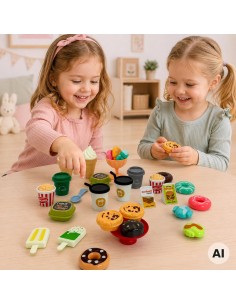
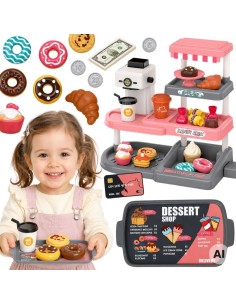
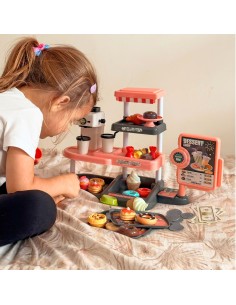
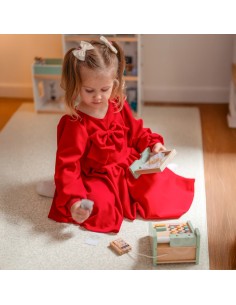
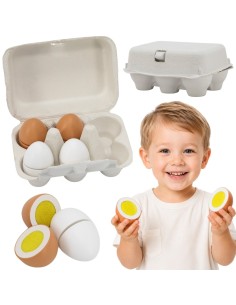
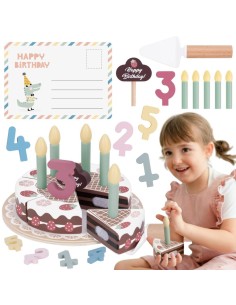
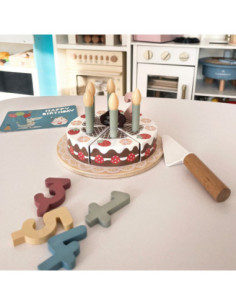
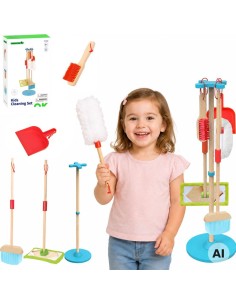
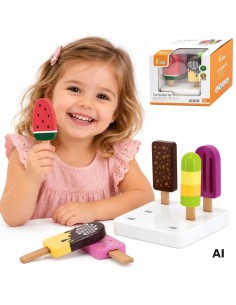
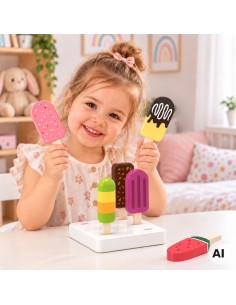
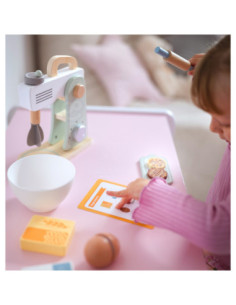
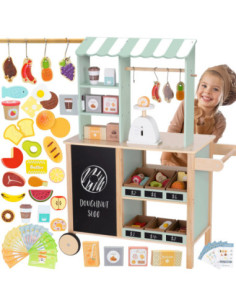
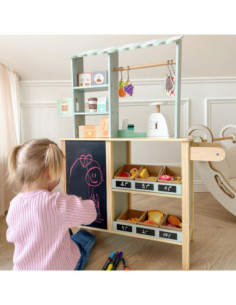
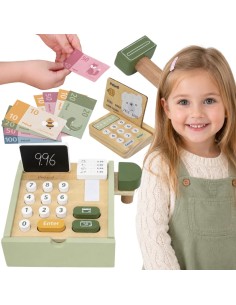
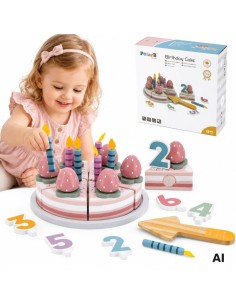
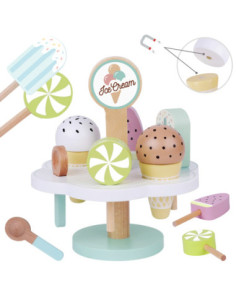
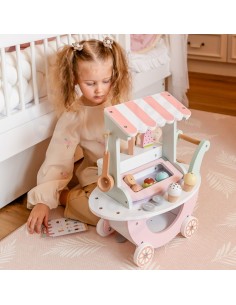
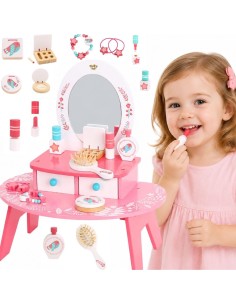
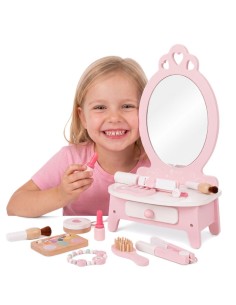
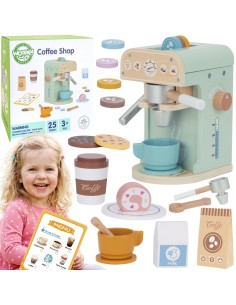
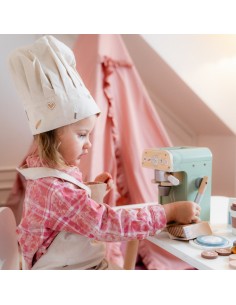
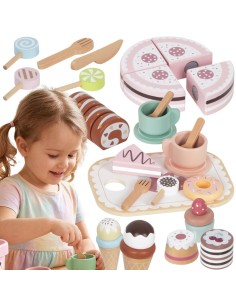
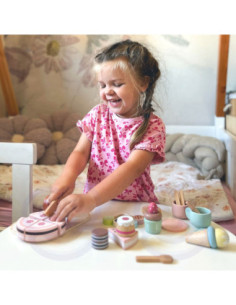
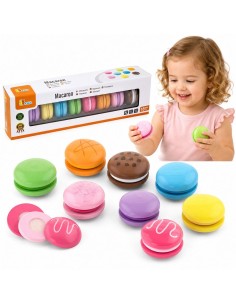
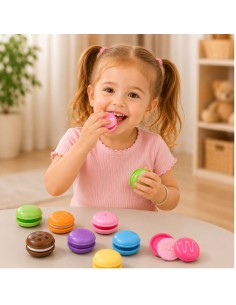
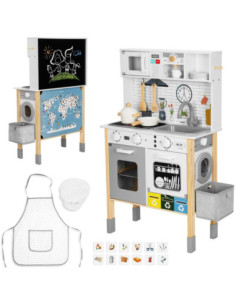
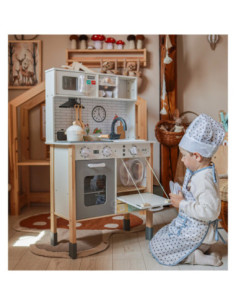
Household appliances for children are a category that combines realistic everyday shapes with engaging role-play value, making it easy to create a clear and attractive offer for B2B customers. In a toy wholesale assortment, this segment works especially well because it is instantly understandable for shoppers, easy to present in an online catalog and highly compatible with thematic sales. Children naturally recognize kitchen appliances, cleaning devices and home-care accessories, while parents appreciate the practical play scenario, the durable construction and the chance to support imaginative learning through familiar routines.
For online stores, marketplace sellers and resellers, household appliances in toy form are a category with strong commercial potential. Products inspired by vacuum cleaners, washing machines, irons, coffee machines, blenders, cookers or dishwashers allow you to build a coherent collection around everyday life at home. The category also lends itself well to bundle sales, because many items are bought not as single toys, but as part of a larger play set with accessories. This creates opportunities to increase average order value and to prepare offers that are more appealing both for end customers and for trade partners looking for ready-to-sell inventory.
Why household appliances toys perform well in B2B sales
One of the main strengths of this category is its broad appeal. Household appliances toys can be sold as gifts, as everyday play items and as themed additions to larger role-play collections. They are suitable for stores that focus on preschool toys, pretend play, home-play sets and accessories that mimic real domestic equipment. Because the product idea is simple and familiar, it is easier to present in product listings, advertising campaigns and marketplace listings. That simplicity matters in B2B sales, where fast listing creation and clear product communication are essential.
Wholesalers and retailers often look for categories that can be expanded over time without changing the structure of the store. Household appliances are ideal in that respect. You can start with core products such as toy vacuum cleaners or kitchen appliances and then extend the offer with more specialized items or add-on sets. This makes category management easier and helps maintain a stable assortment that supports repeated purchases. It also gives trade partners room to build seasonal promotions, gift bundles and themed landing pages.
Realistic design that supports play and conversion
Children are attracted to objects that resemble the world around them. Toy household appliances work because they imitate the shapes and functions of real devices in a safe, simplified way. A toy vacuum cleaner invites cleaning play, a toy washing machine supports home-routine storytelling, and a toy coffee machine or blender turns kitchen role-play into a richer experience. This realism improves the appeal of the products and helps stores communicate value in a straightforward way.
For sellers, realism is also a strong conversion factor. Customers browsing online can immediately understand what the product is and how it will be used. That reduces friction in the purchase process. Instead of having to explain a complex play pattern, the listing can focus on the visible benefits: familiar design, interactive elements, included accessories and the opportunity to recreate everyday home activities. In multi-channel sales, this clarity is especially important because marketplace audiences often make fast decisions based on the first image and a short product summary.
Popular product groups in the category
Household appliances covers several practical subgroups, each of which can be developed into a separate section in your store. This helps you organize the catalogue in a way that is intuitive for customers and useful for merchandising. Depending on your supplier offer, the category may include products for kitchen play, cleaning play, laundry play and general home routine simulations.
- Toy kitchen appliances – devices such as coffee makers, blenders, microwaves, toasters and cookers that support pretend cooking and food preparation.
- Toy cleaning appliances – vacuum cleaners, sweepers and similar items that allow children to imitate household cleaning tasks.
- Toy laundry appliances – washing machine style toys and related accessories that encourage role-play around washing, sorting and care routines.
- Home routine sets – combinations of several appliances or appliances with accessories that create a fuller play scenario.
These product groups make it easier to build a structured offer for different age ranges and budgets. Smaller appliances can be positioned as quick gift items, while larger sets can be used to increase cart value or to create premium bundles. In wholesale and dropshipping models, this flexibility is valuable because it allows you to adapt the assortment to the needs of different selling channels.
Features that matter to online stores and marketplace sellers
When a retailer chooses products for an online catalog, the key question is not only whether the item is attractive, but also whether it can be presented and sold efficiently. Household appliances toys usually perform well because they are easy to photograph, easy to describe and easy to classify in a store structure. Clear product names, understandable use cases and visually recognisable shapes make them a strong candidate for listings on Allegro, Amazon, Erli and Empik Marketplace.
Another advantage is the ability to communicate product value through accessories. If a toy comes with cups, plates, utensils, buttons, lights or sound functions, the listing becomes more persuasive because the customer sees a complete experience rather than a single object. This is especially important in B2B sales, where trade partners often prefer items that can be placed online quickly with minimal editing. Ready product descriptions and images reduce listing work and help maintain a consistent presentation across multiple channels.
How household appliances toys support role-play
Role-play is one of the most important reasons to include this category in a toy assortment. Children enjoy copying adult activities, and home appliances are directly connected to everyday household routines. A toy iron, for example, may become part of a family play scene, while a toy washing machine can turn into a story about caring for clothes and organizing the home. These small but recognizable situations make the products engaging and replayable.
For sellers, the role-play angle is useful because it gives you a clear way to position the products in text and visuals. Instead of presenting them as simple toys, you can show how they fit into imaginative scenarios. This improves the quality of the offer and helps parents understand the developmental value of the purchase. It also increases the chance of repeat sales, since customers who buy one home appliance toy may return later for a complementary product from the same theme.
Building a profitable assortment around familiar domestic routines
A well-organized household appliances section can be built around the routines children know from home. Cooking, cleaning, washing and tidying are all themes that can be translated into playful product groups. This approach helps stores create a logical shopping path and encourages customers to explore related items within the same category. A buyer looking for a toy vacuum cleaner may also be interested in a broom set, a cleaning trolley or a washing-related accessory pack.
From a merchandising perspective, this opens the door to cross-selling and up-selling. Basic models can be paired with more extensive sets, and individual appliances can be presented alongside complementary accessories. Retailers can use this structure to improve average order value while keeping the category easy to navigate. Because the products share a common theme, the catalogue looks consistent, and customers are more likely to continue browsing after adding the first item to the basket.
Benefits for B2B partners, resellers and dropshipping stores
In B2B trade, speed and accuracy matter as much as product appeal. Household appliances toys are a category where ready-to-use assets can make a real difference. If the supplier provides product photos, descriptions and structured data, store owners can launch offers faster and keep the catalogue updated with less manual work. This is particularly valuable for partners selling across multiple channels, where each listing has to remain consistent in terms of price, stock status and content quality.
Dropshipping businesses benefit in a similar way. Because this category often includes products with clear specifications and straightforward demand, it is easier to synchronize the assortment with store data and keep the offer aligned with actual stock availability. Automatic stock and price synchronization reduces the risk of listing outdated items, while XML integrations make it easier to import and update products across platforms. For resellers and distributors, this creates a smoother workflow and helps maintain a professional presence in a competitive market.
How to present household appliances toys in an online store
Presentation has a major influence on conversion, especially in categories that are visually driven. For household appliances toys, the first impression should show the product clearly and communicate its function without confusion. A strong main image, a concise title and a description that explains the play scenario are often enough to move the customer from interest to action. When the listing is prepared with ready images and content, the store gains a time advantage and can keep the assortment fresh.
It is also helpful to organize the category by use case. For example, a store can separate kitchen play, cleaning play and laundry play, or create subcategories based on age, type of appliance or bundle format. This makes browsing easier and helps users quickly find the right product. On marketplaces, where customers compare many similar offers at once, a clear structure can make the difference between a skipped listing and a completed purchase.
Category advantages for multi-channel sales
Household appliances toys fit very well into multi-channel retail because the products are easy to adapt to different sales environments. On a store website, they can be placed in themed sections and supported with longer descriptions. On marketplaces, they can be sold with concise, benefit-focused copy and clear visual assets. This versatility makes the category suitable for merchants who want to maintain one reliable catalogue and distribute it efficiently across several platforms.
For sellers active on Allegro, Amazon, Erli and Empik Marketplace, the ability to reuse product content is a major operational advantage. When a supplier provides structured data, listings can be updated more quickly and with less risk of inconsistency. That matters for promotions, stock changes and fast-moving seasonal campaigns. It also helps preserve the quality of the catalogue when the same products are published in multiple channels at the same time.
What customers expect from household appliances toys
Parents and gift buyers usually look for products that are visually attractive, safe and easy to understand. In this category, they also expect toys to reflect real domestic objects in a child-friendly way. A convincing toy appliance should be durable, engaging and suitable for pretend play without being overly complicated. If accessories are included, customers often see them as a sign of better value and more complete play potential.
For the seller, these expectations translate into practical listing priorities. The description should make it obvious what the child can do with the toy, what elements are included and why the product is a good addition to a playroom or gift offer. When this is done well, the category becomes easier to market not only to end consumers, but also to trade partners who need dependable, easy-to-sell stock for their own channels.
Assortment strategies that increase sales potential
There are several effective ways to build an assortment in this category. One approach is to focus on compact, affordable appliances that work as impulse purchases or small gifts. Another is to offer larger, more feature-rich sets that can be positioned as premium items. A third option is to combine both formats and use the smaller products to attract traffic while the larger sets raise the order value.
Stores can also create themed collections around specific household activities. For example, a cleaning theme might include a toy vacuum cleaner, a cleaning trolley and related accessories, while a kitchen theme could bring together a coffee machine, blender and play food. This kind of grouping helps customers buy more than one item and encourages them to explore the category in a more structured way. It is an efficient method for increasing basket size without relying on aggressive discounting.
Operational advantages for wholesalers and trade partners
From a wholesale perspective, household appliances toys are convenient because they offer a clear category identity and relatively simple merchandising logic. Trade partners can add them to existing toy collections without having to redesign the overall store structure. The category also works well with seasonality: it performs as a gift category during holiday periods, but it remains relevant throughout the year because children play with home routines in everyday settings.
When the supplier provides automation tools, the operational benefits become even stronger. XML feeds, stock updates and price synchronization allow stores to keep their offers up to date with less manual effort. This reduces the risk of stale listings, missing products and pricing errors. For busy sellers managing multiple shops or marketplaces, that kind of support can save significant time and make the category more profitable to maintain.
Why this category deserves a place in a toy wholesale offer
Household appliances toys combine several qualities that are highly useful in B2B toy distribution. They are recognizable, easy to explain, suitable for role-play and attractive to both parents and gift buyers. They also support efficient catalogue building, because the assortment can be organized around well-known everyday routines. That makes the category practical for online stores that need a consistent, scalable product range.
For wholesalers, the most important advantage is that the category can be sold in many formats: single items, accessory-driven bundles, themed sets and broader home-play collections. It fits well into retail stores, marketplace listings and dropshipping models alike. With ready descriptions, ready images and automated data exchange, trade partners can launch the offer quickly and maintain it with less effort while keeping the sales presentation professional.
Summary of the category
Household appliances toys are a strong choice for B2B sellers who want a category that is both easy to market and useful for building long-term assortment depth. The products are familiar, visually appealing and naturally connected to everyday play scenarios. They work well in online stores, on marketplaces and in dropshipping environments because they are simple to present and easy to connect with complementary accessories.
With the right product structure, this category can support cross-selling, bundle sales and multi-channel expansion. It also benefits from supplier support such as XML integrations, automatic stock and price synchronization, ready-to-use product descriptions and images. For online retailers, resellers and distributors, that means faster publishing, better operational control and a category that can keep generating sales throughout the year.