
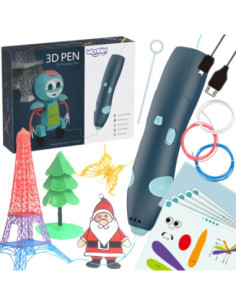

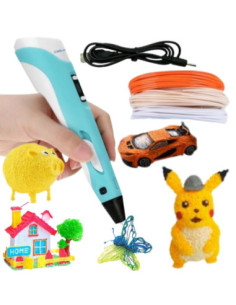
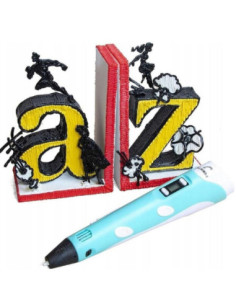
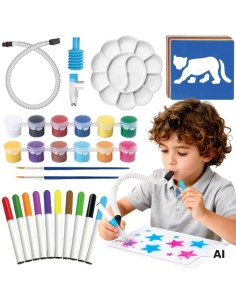
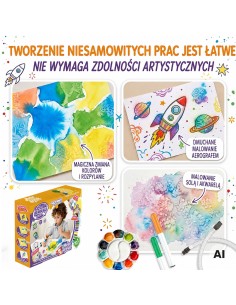
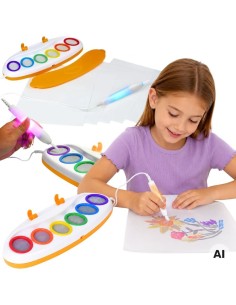
3D pens are a fast-moving category that attracts attention from families, hobby users, and educational buyers looking for creative products with clear everyday value. For a B2B toy wholesaler, this makes them a practical assortment choice: they are easy to present, easy to bundle with related accessories, and often lead to repeat purchases of refills and consumables. In online retail and on marketplaces, that repeat-demand pattern is especially important because one well-chosen first purchase can turn into a longer customer journey.
In this category you can build an offer that works for both beginners and more demanding users. Simpler models appeal to parents shopping for a first creative set, while more advanced versions are suitable for users who want greater comfort, better control, and more precise results. That flexibility helps resellers create clear product ranges, compare variants in a structured way, and adapt their listings to different sales channels without rebuilding the whole assortment from scratch.
Products in this category are not only attractive as standalone items, but also as part of a broader creative ecosystem. A buyer often starts with the pen itself, then returns for more material, replacement sets, or accessories that improve the experience. From a B2B perspective, this is a strong advantage: the first order can generate follow-up sales and increase basket value over time. That is why 3D pens are often included in offers aimed at online stores, marketplace sellers, and partners working in dropshipping.
Another benefit is the relatively simple logic of merchandising. The product can be shown as a creative tool for home use, a gift idea, or a leisure activity for children and older users who enjoy hands-on making. This gives store owners several ways to position the category without overcomplicating the listing. It also allows them to segment the range by age, level of experience, and intended use.
When a customer compares models, a few practical features usually determine the purchase decision. These include ease of use, ergonomics, operating comfort, the stability of drawing lines, and the general feel of control while creating shapes. For beginners, the most important thing is often intuitive handling and a smooth start. For more advanced users, the focus shifts toward more consistent output, better precision, and the ability to work on smaller details.
For resellers, that means product descriptions should not stop at a general promise of creativity. It is better to explain what the user can realistically expect from the device and which type of customer will benefit most from each version. This approach reduces confusion, supports conversion, and lowers the risk of returns caused by mismatched expectations.
3D pens are popular because they combine entertainment with practical value. Children enjoy making simple figures, decorations, and small objects, while adults often use them for hobby projects, model building, or personal craft work. The immediate visual effect is one of the strongest reasons for purchase: the user sees results quickly, which makes the product more satisfying than many slower creative tools.
In educational settings, the category also has strong potential. It can support activities focused on spatial thinking, concentration, planning, and hand-eye coordination. Teachers and parents often look for products that are engaging but still structured enough to encourage patience and precision. A well-presented offer can therefore speak to both recreational and educational motivations, which broadens the addressable market for your store.
For ecommerce sellers, the best results usually come from a category page that helps the customer move from interest to purchase without unnecessary friction. Clear product names, concise variant comparisons, and ready-to-use content make the listing process much faster. This is especially useful when managing many SKUs across different platforms, because consistency matters in search results, marketplace ranking, and customer trust.
At a wholesale level, 3D pens are also convenient because they can be combined with complementary items that naturally extend the order. Refills, materials, and accessory sets are easy to recommend as a follow-up purchase. That makes it possible to create bundles, starter kits, and upsell paths that increase average order value without forcing a hard sell.
Retailers operating on Allegro, Amazon, Erli, or Empik Marketplace need product data that is both complete and easy to maintain. In practice, that means stable stock information, clear descriptions, and a structured way to present the differences between variants. When those elements are handled well, the category becomes easier to scale across multiple channels.
Many B2B partners also rely on XML integrations and automated stock and price synchronization to reduce manual work. That is particularly important in categories where availability can change quickly or where a product is listed in several places at once. Automation helps keep offers up to date, prevents overselling, and makes it easier to manage a wider assortment without expanding the workload proportionally.
Most shoppers want reassurance that the product will be easy to use and that it will suit the intended user. A parent buying for a child usually wants a simple and approachable model, while a hobby buyer may be more interested in precision and creative flexibility. Because of that, a strong category description should explain not only what the product is, but also how it performs in real use and which type of buyer it is best suited to.
It is also worth highlighting that a good 3D pen offer can support different purchasing motives. Some customers are looking for a gift, some want a creative tool for home projects, and others search for a product that helps children spend time away from screens in a constructive way. The more clearly these use cases are presented, the easier it is for trade partners to position the category in their own stores.
Trade partners value product pages that are ready for immediate publication. That includes strong visuals, well-written descriptions, and a clear structure that makes comparison simple. If the product data is already prepared, the seller can launch the category faster and spend more time on sales rather than content creation. This is one of the main advantages of working with a wholesaler that supports ready content and multichannel distribution.
3D pens also work well in assortments where cross-selling matters. The pen can be positioned as the core product, while supporting items can be shown as the natural next step. This is useful in storefronts that want to increase cart value and build more complete buying journeys. A customer who comes for a single creative device often has a real need for consumables and related accessories, so the category supports repeat orders in a natural way.
When planning inventory, it is smart to include a mix of entry-level and more advanced versions so the offer can serve different customer segments. That creates room for clearer upselling and helps the buyer move from a basic first purchase to a more refined model later on. It also gives stores more flexibility when matching products to seasonal campaigns, gift occasions, and educational promotions.
Because the category has strong visual appeal and an understandable use case, it can perform well in both search-driven and impulse-driven sales. That is useful for online stores that want practical products with a simple story behind them. It is equally useful for distributors and resellers who need items that can be explained quickly to customers and listed efficiently across several channels.
3D pens are a versatile category with clear wholesale potential. They combine creativity, repeat purchase opportunities, and strong presentation value, which makes them suitable for online stores, marketplace sellers, and B2B partners working at scale. With the right assortment structure, the category can serve beginners, hobby users, and educational buyers at the same time.
For best results, present the products with clear variant differences, practical use cases, and supporting items that encourage larger baskets. Add automation where possible, keep stock and price data synchronized, and use ready descriptions and images to speed up publication. That way, the category becomes easier to manage and more effective to sell across every channel where your business operates.
It works well for children, hobby users, parents looking for creative gifts, and customers who want an engaging hands-on activity for home use. It is also useful for educational buyers.
It offers good repeat-sales potential because customers often come back for consumables and accessories. It is also easy to bundle and easy to present across multiple sales channels.
Use clear variant descriptions, strong product images, and practical explanations of what each model is designed for. This helps buyers choose faster and reduces uncertainty.
Yes. It is especially effective when listings are complete, stock data is synchronized, and content is adapted to the expectations of platforms such as Allegro, Amazon, Erli, and Empik Marketplace.