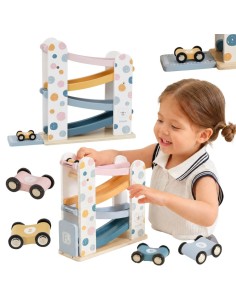
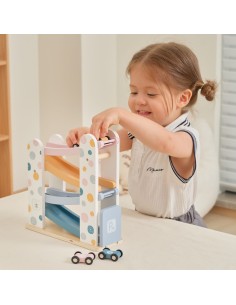
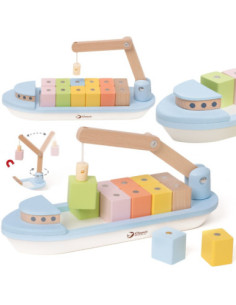
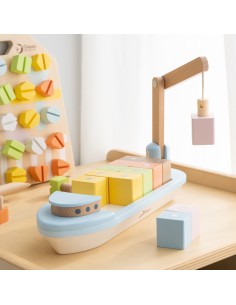
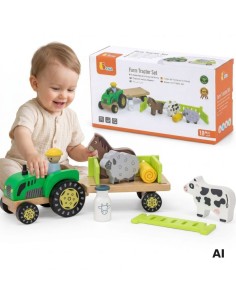
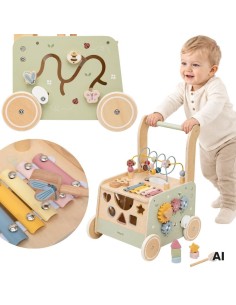
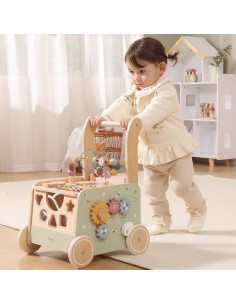
The Remaining category is designed to help B2B toy wholesalers and their trade partners quickly fill assortment gaps, extend a store’s offer, and keep product listings fresh across multiple sales channels. It gathers items that do not fit into a single narrow segment but still play an important role in everyday wholesale sales: practical add-ons, complementary products, replacement items, and assorted toys that can strengthen a catalogue without requiring a major restructuring of the offer. For online stores, marketplace sellers, dropshipping companies, and resellers, this is often the place where the most useful stock-boosting opportunities appear.
In a fast-moving retail environment, variety matters. Customers browsing toy shops expect both bestsellers and smaller products that help complete a purchase, build a set, or solve a specific need at the last minute. That is why the Remaining category can be a valuable source of items for impulse buying, quick replenishment, seasonal promotions, and assortment balancing. When a store needs to increase the number of active SKUs, improve basket completeness, or simply offer more options to different age groups and buying occasions, this section gives a flexible starting point.
Why this category matters in B2B toy distribution
Wholesale partners often need products that are easy to publish, easy to sync, and easy to resell. The Remaining category supports that model by bringing together items that can be introduced into a shop quickly and used in many commercial contexts. Some products may serve as budget-friendly additions to a cart, while others may work as substitutes when core assortment is temporarily limited. In both cases, the category helps keep the offer commercially active and more attractive to buyers looking for ready-to-sell stock.
For B2B clients, the biggest advantage is operational flexibility. Instead of searching through multiple separate categories for a missing item, merchants can use this area to discover products that fit into broader commercial plans: cross-selling, upselling, seasonal bundling, and promotional sets. This approach is especially useful for stores managing a large catalogue or operating on dropshipping principles, where speed and assortment coverage are crucial.
Products that support a broader assortment strategy
Items in this category can help fill several common gaps in a toy store’s structure. They may be used to complete themed collections, broaden age segmentation, or add small products that improve the store’s visibility in search results. Even when a product is not the centerpiece of the offer, it can still play a meaningful role in converting visits into orders. Smaller additions often help customers make the final buying decision, especially when they are looking for something affordable, useful, or immediately available.
The Remaining category can also support shops that need to adapt their assortment to changing demand. During seasonal peaks, shopping campaigns, school periods, holidays, or promotional actions, flexibility becomes a competitive advantage. Having access to a mixed but commercially relevant group of products makes it easier to react to demand without overcomplicating procurement or content management.
Assortment benefits for online stores and marketplace sellers
For e-commerce businesses, the value of a category like this is not only in the products themselves but also in how they contribute to catalogue performance. More items mean more opportunities for visibility, more keyword combinations, and more chances to match customer intent. A diverse assortment can strengthen internal search, improve recommendation blocks, and support product collections that encourage higher order value.
Marketplace sellers can also use these products to diversify listings on Allegro, Amazon, Erli, and Empik Marketplace. When product data is prepared correctly, even a mixed category becomes easy to manage across platforms. That is particularly important when a business relies on XML integration or automated import processes, because consistent product information helps reduce manual work and shortens the time between selection and publication.
- Increase the number of active SKUs without rebuilding the whole catalogue
- Improve basket completion with low-friction add-on products
- Create more varied offers for seasonal and promotional campaigns
- Support multi-channel sales with one flexible product pool
- Make it easier to test new product ideas before expanding them into larger collections
Ready-to-publish content for faster store activation
In wholesale trade, speed of implementation often decides whether a product starts selling quickly or remains idle in the backend. That is why ready product descriptions and product images are so important. Merchants want items they can publish with minimal preparation, especially when they manage many listings or work with frequent stock changes. This category is suitable for that workflow because it can be populated with materials intended for efficient online presentation.
Clear descriptions help customers understand what a product is for, who it may suit, and how it fits into the wider offer. Good images improve trust and make it easier to compare options. Together, these elements reduce the time needed to add products to a store and increase the likelihood that the listing will look complete from the start. For teams managing large assortments, that is a direct operational benefit.
Automation, stock synchronization, and price updates
Keeping product data current is one of the most important tasks in wholesale e-commerce. If prices are outdated or stock levels do not match reality, the result may be cancelled orders, poor customer experience, and extra support work. The Remaining category fits well into environments where price and stock synchronization are automated, because it allows teams to keep assortment changes under control while maintaining a live and reliable offer.
Businesses that use XML feeds or other integration methods benefit especially from categories like this. The ability to update data quickly means that products can move through the workflow from supplier to store faster and with fewer errors. This is helpful for online stores, distributors, and dropshipping partners who need a stable process for regular catalogue refreshes. It also reduces the burden on staff who would otherwise have to update every product manually.
How the category supports multi-channel sales
Multi-channel commerce requires products that can be published consistently across several platforms. A category built around remaining and supplementary items can be a practical tool in that environment because it allows sellers to maintain a broad, adaptable stock base. Whether a merchant is selling through their own shop, marketplace channels, or external partner networks, the key advantage is the same: one well-organized source of products that can be reused across sales endpoints.
When listings are prepared with the right structure, the same product can be adapted to different platforms without rebuilding the entire content set from scratch. That matters for sellers who want to scale efficiently while controlling the amount of repetitive work. It also helps maintain a coherent offer across channels, which is essential for customer confidence and operational accuracy.
What type of buyer demand can this category answer
Customers do not always search for a specific flagship toy. Often they need a quick solution: a smaller gift, a complementary item, a replacement, or a product that rounds out a larger purchase. The Remaining category can meet that demand by offering items that are easy to position in the store as useful additions. These products can work well in sections such as “recommended with this item,” “small gift ideas,” “complete your set,” or “last-minute purchases.”
From a business perspective, this makes the category versatile. It can be used to support entry-level offers, expand low-cost product ranges, or create better merchandising logic within the store. It also helps sellers address spontaneous purchases, which are often an important source of margin in toy retail.
Use cases for B2B partners and resellers
B2B partners often need assortment segments that can be integrated into different commercial models. Some products are best for direct resale, while others are more valuable as supporting items in a broader offer. The Remaining category gives trade partners room to build flexible plans around available stock, seasonal demand, and sales objectives. It is also useful for companies that service many retail clients and need variety without excessive complexity.
For resellers, the category can provide practical products that are easy to test in the market. If a certain item performs well, it can later be expanded into a larger collection or used to create a themed offer. If it sells as an accessory or impulse item, it still contributes to overall turnover and catalogue health. This makes the category a useful tool for balancing risk and opportunity in wholesale trade.
Practical merchandising ideas
Because the category includes different types of items, it can be used creatively in store organisation. Products may be grouped by price point, age range, purchase occasion, or strategic purpose. The goal is not to force them into one rigid structure but to present them in a way that helps buyers find what they need quickly. A well-organized Remaining section can improve both navigation and conversion.
- Build “small add-on” groups to increase average order value
- Place products near related categories to support cross-selling
- Use seasonal highlights to refresh the page regularly
- Combine budget items with premium offers to create balanced collections
- Test new product ideas before adding them to a dedicated category
Operational value for stores with large catalogues
Large catalogues need structure, but they also need room for items that do not justify a separate category. This is where the Remaining section becomes especially practical. It helps prevent unnecessary fragmentation while still keeping useful products visible. Instead of leaving items unclassified or difficult to locate, merchants can place them in a controlled area that supports sales and searchability.
That kind of organisation improves internal workflow as well. Teams responsible for catalogue management can more easily check which products need updates, which items are ready for publishing, and where new inventory should be added. When combined with automation and integration tools, this approach can significantly reduce the time spent on routine administration.
Built for trade efficiency
The strongest advantage of this category is its adaptability. It can support new product launches, seasonal replenishment, store expansion, and ongoing assortment maintenance. For a B2B toy wholesaler, that makes it more than a miscellaneous section: it becomes a practical sales resource. By gathering useful products in one place, it helps trade partners maintain a lively and competitive offer without losing control over data quality or catalogue structure.
In a market where speed, accuracy, and assortment breadth all matter, a category like this helps sellers stay responsive. It supports not only product discovery but also the whole route from import to publication to sale. With ready images, ready descriptions, XML integration, and stock and price synchronization, merchants can move faster while keeping their offer consistent across channels.
Summary
The Remaining category is a versatile part of a wholesale toy catalogue, especially for stores and partners that need breadth, flexibility, and fast deployment. It can help fill assortment gaps, strengthen cross-selling, support marketplace publishing, and improve multi-channel operations. For online stores, Allegro and Amazon sellers, Erli and Empik Marketplace traders, dropshipping companies, resellers, and other B2B partners, this category provides practical products that can be activated quickly and managed efficiently. When used well, it becomes a simple but effective way to build a more complete and commercially resilient offer.