


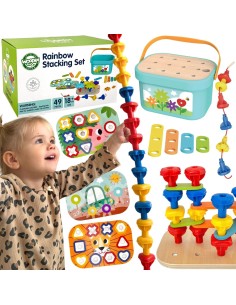
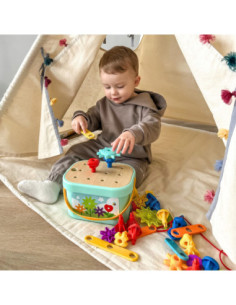
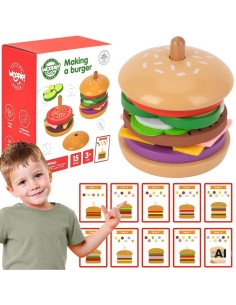
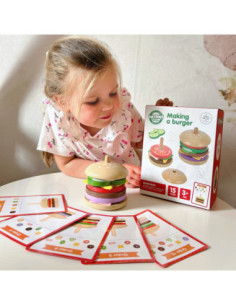

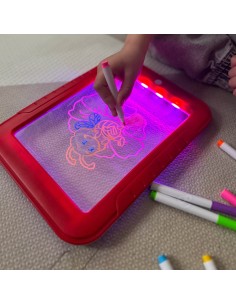


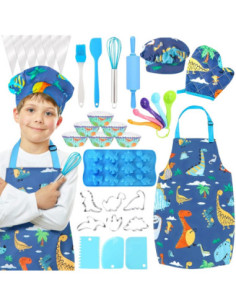

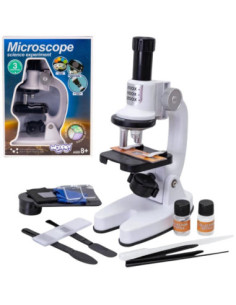

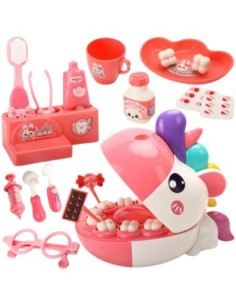




Educational toys are one of the strongest categories in B2B toy wholesale because they combine clear customer value with easy-to-explain product benefits. Buyers rarely choose them by impulse alone: they look for items that support development, encourage independent play, and offer a practical reason to buy. For online stores, marketplace sellers and distributors, this means better storytelling, more effective merchandising and a stronger chance of converting shoppers who are searching for something useful, durable and age-appropriate.
In this category you will find toys designed to help children learn through action. The assortment is suitable for retailers who want to offer products that are attractive both visually and functionally. Educational products are often selected for home use, preschool activities, gifting, early learning and everyday developmental play. They can support concentration, fine motor skills, logic, hand-eye coordination, memory, language awareness and first mathematical or problem-solving skills. For a wholesaler, this is important because the products are easy to position in thematic collections and easy to describe in a way that clearly communicates the benefit to the end customer.
For e-commerce sellers, educational toys are especially valuable because they answer a common buying question: what does this product help a child do? When the answer is clear, the product is easier to present in a store, easier to advertise and easier to recommend. That is why this category works well in multi-channel sales, including Allegro, Amazon, Erli and Empik Marketplace. If you operate in dropshipping or stock-based retail, you can use the same category structure to build consistent offers across many channels while keeping the presentation aligned with customer expectations.
Educational toys are rarely purchased only because they look good. Their real strength is the combination of play value and development value. That gives retailers a practical advantage: the product can be marketed not only as a toy, but also as a tool that supports a child’s growth. This makes the category more versatile than many general toy segments and often improves conversion when product pages are properly structured.
Customers usually respond well to products that have a clear purpose. A toy that supports learning is easier to explain than a purely decorative or random leisure item. Parents, grandparents, teachers and caregivers often want to know whether a product helps with attention, patience, manual precision or early education. Educational toys answer those needs directly, which is why they remain a strong choice for online shops that want to build stable, long-term sales rather than rely only on seasonal trends.
For B2B partners, the category also offers a strong foundation for assortment planning. Educational toys can be grouped by age, skill level, subject area or play format. This helps create clear collections such as first learning, logic and puzzles, manual skill development, creative construction or classroom-friendly play. A well-structured offer is easier for buyers to navigate and easier for search engines to understand, which supports both visibility and user experience.
The educational category can include many different toy formats, as long as they support learning or development in a natural way. This flexibility is useful for wholesalers because it allows the category to serve multiple types of customers: retail stores, educational resellers, marketplace sellers, gift shops and distributors looking for reliable, well-presented stock.
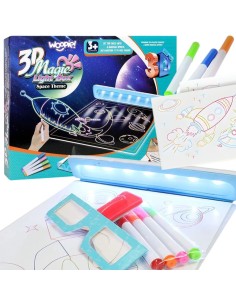
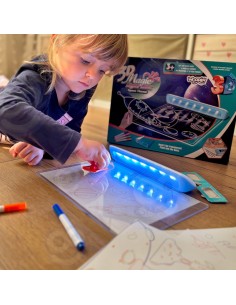
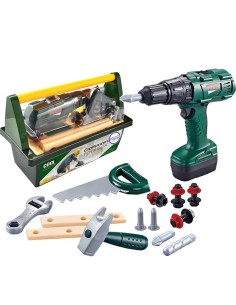
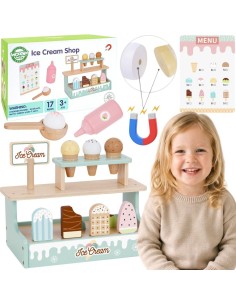
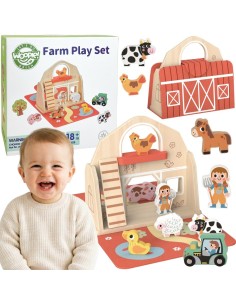
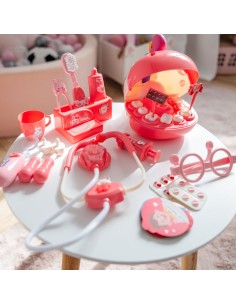
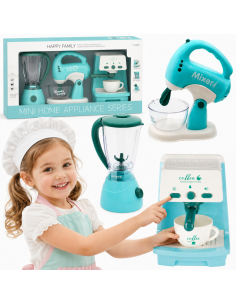
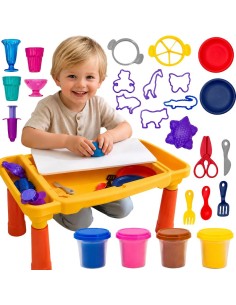
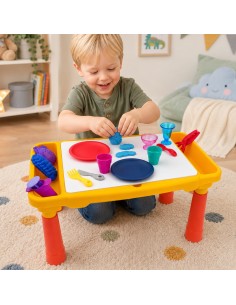
Typical products in this category may include building sets, logic games, puzzles, matching activities, sorting toys, creative kits, fine motor tasks, early learning boards, shape recognition products, counting aids, memory games and other play-based learning tools. Some products focus on individual work and quiet concentration, while others are designed for group use or shared family play. That variety makes the category suitable for many sales strategies, from entry-level products to higher-value educational sets.
For online selling, variety matters because it helps you build cross-sells and themed landing pages. A customer looking for a gift for a preschooler may respond to a simple learning toy, while a parent searching for a developmental challenge may prefer a more advanced puzzle or logic task. By offering different formats within one category, you can support different buying intents without confusing the shopper.
When customers browse educational toys, they are usually not only buying entertainment. They are buying a clear effect. This is why product pages in this category should communicate what the child can practice, how the toy works and what developmental area it supports. The strongest offers are the ones that make the benefit obvious right away.
Many educational toys help children build focus by offering tasks with a clear goal and a gradual level of difficulty. Others develop manual precision through sorting, stacking, threading, matching or arranging elements. Some encourage logical thinking by requiring the child to recognize patterns, solve a sequence or complete a challenge. There are also products that support early language awareness, counting, shape recognition or the first steps toward school readiness. All of these features are useful in retail because they give the seller a meaningful way to describe the product.
From the customer’s perspective, the main advantage is often that the toy feels purposeful. Parents like products that make play time feel constructive without becoming too serious or less engaging. Educational toys work well because they combine enjoyment with a sense of progress. This makes them suitable for everyday use, gift purchases and specialist assortments aimed at child development.
For a wholesaler or online store, the educational category can be used to create a very practical assortment structure. Instead of listing products only by appearance or brand, you can organize them by learning outcome and age range. That helps customers move through the catalog faster and reduces friction in the buying process.
This approach also supports merchandising in a multi-channel environment. A well-organized assortment can be mapped more easily into store categories, marketplace listings and dropshipping feeds. If you work with XML integration, having clear product data and a logical category structure makes it easier to automate stock and price synchronization and keep offers consistent across platforms. That reduces the risk of mismatched listings and helps maintain a professional presentation on channels such as Allegro, Amazon, Erli and Empik Marketplace.
Educational toys benefit greatly from complete and accurate product information. In this segment, customers often compare items by age suitability, activity type, skill level and learning benefit. When the description is precise, the customer can make a faster decision. That is especially important in online retail, where buyers cannot physically inspect the toy before purchase.
High-quality product pages should answer practical questions: what the child learns, how the toy is used, what materials or mechanisms are involved and whether the product fits independent play or shared activities. The more clearly these points are explained, the less hesitation the buyer feels. This can improve add-to-cart rates and reduce unnecessary questions to customer support.
For sellers managing many listings, ready product descriptions and images are a major operational advantage. They speed up launch time, simplify catalog building and help maintain a consistent look across channels. Educational toys are particularly suited to this model because the value of the product can be explained with structure and clarity, which makes reusable content highly effective.
This category is also attractive in B2B because it fits different operating models. Some partners hold stock and want products that can be rotated steadily through the year. Others prefer dropshipping and need items that are easy to list, easy to present and easy to synchronize with current availability. Educational toys work well in both cases because they can be sold as standard retail products, seasonal gifts or specialist developmental items.
In dropshipping, the importance of reliable product information is even greater. The buyer expects a smooth process, and the seller needs a catalog that is easy to maintain. Educational items with strong descriptions and clear images are much easier to sell in this environment because customers can understand the offer without additional explanation. That lowers barriers to purchase and supports a more efficient sales operation.
For distributors and resellers, educational toys also offer good potential for long-term assortment stability. The category is not limited to one trend or one season. It remains relevant throughout the year because learning and child development are ongoing needs. As a result, it can become a dependable part of a wider toy portfolio rather than a short-term promotional segment.
Educational toys are often chosen because they fit into everyday routines. Parents may use them during quiet time at home, before school, during travel, in shared family play or as part of a learning corner. Teachers and caregivers may select them for group activities, practice sessions or developmental support. This everyday usability makes the products easier to position in retail because the value is immediately understandable.
Many products in this category are designed for repeated use. A good educational toy can be returned to many times without losing its appeal, because the child explores it at a different pace or in a different way. That reusability is important for customer satisfaction and can improve the perceived value of the purchase. It also supports stronger reviews and repeat buying behavior, especially when customers trust the brand or store.
For the seller, this means that educational toys can be promoted not only as one-time gifts but also as useful everyday learning tools. That expands their commercial potential and gives the category a broader role in the assortment.
To make the most of this category, it helps to present educational toys in a way that reflects how customers actually shop. Many buyers search by skill, age or learning goal rather than by the generic word toy. Clear filters and well-written category pages can therefore improve the browsing experience and support better conversion.
These tactics are especially useful on marketplace platforms, where shoppers often scan many offers quickly. If the product positioning is clear and the content is professional, the listing stands out more easily. This is one reason educational toys are a strong fit for sellers who want to build reliable catalog structures and support a scalable, multi-channel approach.
Trade partners often look for products that are easy to explain to their own customers and easy to integrate into existing offers. Educational toys meet both needs. They can be placed in core toy categories, gift assortments, early learning sections or specialist developmental collections. Because they communicate value so clearly, they are often easier to recommend than general impulse products.
For a wholesaler, this means the category can serve as a stable anchor in the offer. It supports repeat orders, makes it easier to create seasonal promotions and gives partners a strong story for selling. With complete product data, consistent pricing and synchronized stock, the category becomes even more efficient to manage across multiple sales channels.
If your business relies on automated workflows, educational toys are a smart category to include in structured feeds and integrated catalogs. Their recurring demand, clear use case and strong online presentation potential make them a reliable choice for both large and small retailers.
Educational toys are a practical and commercially strong category for B2B toy wholesale. They help children learn through play, and they help sellers communicate a clear reason to buy. Because the products support development, they are easy to market, easy to organize and suitable for many different sales channels.
For online stores, marketplace sellers and distributors, this category offers broad assortment potential, strong merchandising opportunities and excellent compatibility with ready descriptions, images, XML integration and stock synchronization. It is a category that can perform well in store catalogs, on Allegro and Amazon, in dropshipping models and in wider multi-channel retail strategies.
When presented well, educational toys are more than just another product group. They are a category that supports customer trust, improves listing clarity and gives trade partners a dependable way to build sales around real child development benefits.
Because they offer a clear benefit. Customers can quickly understand what the toy helps a child practice, which makes the product easier to explain and easier to buy online.
The best structure is usually based on age, learning goal and activity type. This helps customers find the right product faster and improves the overall shopping experience.
Yes. They perform well on platforms like Allegro, Amazon, Erli and Empik Marketplace because the product value is easy to communicate in short, structured listings.
Yes. Educational toys are a good fit for dropshipping when the catalog includes clear descriptions, good images and reliable stock and price synchronization.
A strong product page explains what the child learns, how the toy is used, what age group it fits and why it is valuable in everyday play or learning.