
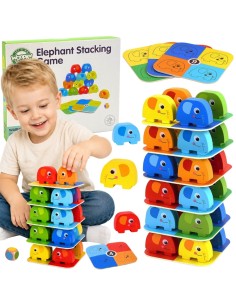
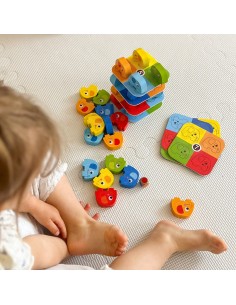
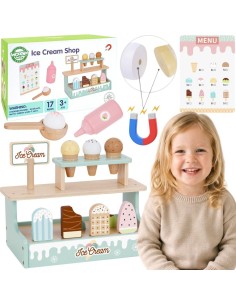
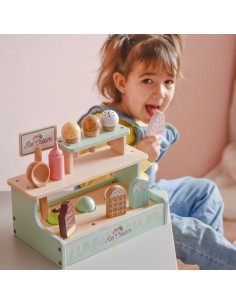


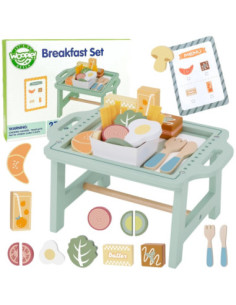


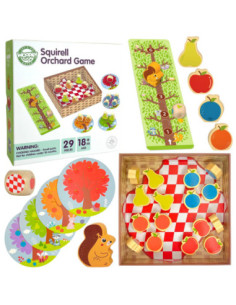
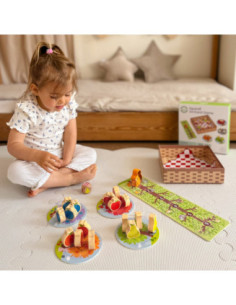
In this category you will find a broad selection of products that help online stores, marketplace sellers and trade partners build a stable, attractive toy offer for different age groups and buying occasions. The assortment is designed for B2B sales, so it supports fast listing, regular replenishment and smooth order processing across multiple channels. Whether you are expanding a webshop, preparing marketplace offers or developing a dropshipping model, this category gives you products that can be introduced quickly and managed with less manual work.
Toys remain one of the most flexible product groups in wholesale because demand changes throughout the year, but many items sell consistently in both seasonal and evergreen campaigns. That makes this category useful for sellers who want to combine bestsellers, novelty items and products with repeat demand. It also helps when you need a clear structure for merchandising: you can build collections by age, play style, educational value or occasion, and then adjust the offer to customer intent without creating unnecessary complexity in the catalogue.
For B2B buyers, the most valuable toy assortment is the one that is easy to present, easy to explain and easy to rotate. In this category you can build an offer around product types that naturally fit online search behaviour and shopping decisions. Customers usually look for a specific play effect, age suitability, quality of materials and clear information about what is included in the set. Products that communicate those features well tend to convert better, especially when the store presentation is complete and consistent.
Such segmentation makes it easier to create clearer category pages, landing pages and marketplace listings. It also improves search visibility because products can be grouped by purpose and use case rather than placed in a generic catalogue without context. For stores selling on Allegro, Amazon, Erli or Empik Marketplace, this structure can help customers find the right product faster and reduce the risk of losing attention to competing offers.
In wholesale trade, the quality of the product itself is only one part of the equation. Just as important are stock availability, pricing consistency and the ability to publish offers without unnecessary delays. Toys are a strong category for this model because they are suitable for wide audiences and can be adapted to different selling strategies, from everyday retail assortment to seasonal push campaigns.
Store owners and trade partners benefit most when the category contains items that can stay in active sale for longer periods. Predictable rotation makes it easier to plan purchases, coordinate replenishment and maintain availability across multiple sales channels. That is especially relevant if you manage a webshop alongside marketplace accounts and need to keep the offer aligned with real warehouse stock. Automatic stock and price synchronization can reduce the number of mistakes that happen when product data is updated manually.
This matters even more in a B2B environment where each missed sale can affect not only revenue but also customer trust. If a popular item disappears from the offer because the data is outdated, the loss is often immediate. By working with a category built for reliable replenishment and clear product management, you can focus more on sales strategy and less on administrative corrections.
A well-structured toy category should make the buying path easier, not more complicated. That means product pages need to present the most important details in a way that helps both retailers and final customers understand the offer quickly. Age range, type of play, set contents and practical benefits should be visible in the content around the product. When the information is clear, customers are more likely to complete the purchase and less likely to ask follow-up questions before ordering.
Ready product descriptions and images are particularly valuable here. They let you launch new items quickly, keep the presentation consistent and reduce the workload of content teams. For companies working in dropshipping, this is a major advantage because the offer can be published faster and kept in sync with supplier data. For resellers and distributors, it provides a more efficient way to create new listings and update existing ones without rebuilding content from scratch each time.
When choosing toys for a B2B assortment, it is worth looking at features that make the offer more commercially useful. Customers do not just buy a toy category name; they buy a specific play experience, a certain function and an expected value for the child. Products that support these expectations usually perform better in store and marketplace environments.
These features are not only useful for final customers. They also make internal merchandising easier because the catalogue can be organised in a way that supports filtering, campaign planning and inventory control. If you manage a large assortment across several channels, a clear product structure helps prevent confusion and improves operational efficiency.
Toys are often sold in more than one channel at the same time, so the category should support multichannel commerce from the start. A product that performs well in a webshop may also work on Allegro or Amazon, but only if the presentation is adapted to the specific platform and the stock data stays accurate. The same applies to Erli and Empik Marketplace, where product visibility depends on clean data, competitive positioning and fast availability updates.
XML integrations can make this process significantly easier. They help transfer product data, prices and warehouse information into connected sales systems, which saves time and lowers the risk of human error. When a seller manages hundreds or thousands of items, even small discrepancies can create problems in order handling and customer service. Automated updates reduce that risk and allow the team to focus on growing the offer instead of correcting basic data.
For B2B partners, this is especially important because the toy category often requires frequent additions and seasonal adjustments. New items can be added to the offer faster when descriptions, images and stock data are already prepared. That shortens the path from supplier catalogue to live sales and makes it easier to respond to demand peaks during holidays, promotional periods and back-to-school campaigns.
The toy sector works well in dropshipping and reselling because it combines broad consumer interest with strong product rotation. Many buyers are looking for gifts, developmental products or items connected to specific interests, and that creates multiple opportunities for merchandising. The category can therefore be built around practical groups that are simple to understand, easy to advertise and suited to fast publication.
For dropshipping businesses, the key advantage is the ability to offer a large assortment without holding every item physically in your own warehouse. If stock and price synchronization is reliable, you can keep the offer current and reduce the number of orders that cannot be fulfilled. This protects margins and helps maintain a better customer experience. For resellers and distributors, the same mechanism supports larger assortment planning and faster reaction to market demand.
Ready-to-use content is another major benefit. When product descriptions and images are available at the source, the seller can build a more complete offer with less time spent on copywriting and graphic preparation. That is useful for both small stores and larger operations that want to maintain consistency across channels. It also supports faster onboarding of new products, which is important when you need to keep pace with trends or replenish bestselling lines.
A strong toy assortment does not depend only on how many products you list. It also depends on how well the category is organised and how clearly the offer guides the buyer toward the right item. Stores that present toys in logical groups usually create a better shopping experience and improve the chances of a successful purchase. This is true in webshops, but also in marketplace listings where structure affects discoverability and competitiveness.
This kind of organisation is especially useful for stores that run a broad catalogue and need to avoid clutter. The easier the structure, the easier it is to maintain the offer, add new products and react to changes in demand. It also supports better internal cooperation between merchandising, sales and operations teams.
In this category, customers often compare several similar products before making a decision. That means the listing has to do more than simply name the item. It should explain the play value, mention the most important features and give enough detail for a confident purchase. When content is incomplete, even a strong product can lose attention to a competitor with a clearer presentation.
That is why a combination of ready descriptions, high-quality images and clean data is so effective. It helps stores build listings that are informative without being overloaded. It also makes the catalogue easier to maintain across multiple sales points. If the same product appears in a webshop and on marketplace platforms, the information should stay aligned so that customers see a consistent offer wherever they browse.
For B2B sellers, content quality is also tied to operational efficiency. The better the source materials, the less time is needed to prepare new listings and the easier it is to scale the assortment. This becomes especially valuable during periods of high demand, when speed and accuracy directly affect sales results.
If you sell toys through several channels at once, the category can become a practical foundation for expansion. It gives you a product group that is widely understandable, easy to segment and suitable for a variety of promotional strategies. You can use it to test new offers, refresh an existing assortment or develop long-term sales lines that stay active throughout the year.
Multi-channel sellers benefit from this category because it supports both breadth and control. The assortment can be expanded without losing structure, and the data can be synchronised with connected systems to keep prices and stock levels aligned. This is important when your business relies on fast response times and when each channel has different listing requirements. With the right setup, the same toy range can work across a webshop, Allegro, Amazon, Erli and Empik Marketplace without creating unnecessary operational strain.
In practice, this means you can build a catalogue that is easier to publish, easier to update and easier to scale. You gain more flexibility in pricing, product rotation and campaign planning, while also reducing the risk of overselling or listing inactive items. That combination is what makes the category valuable for modern B2B toy distribution.
Overall, this category is a strong starting point for businesses that want to sell products with broad appeal, repeatable demand and clear commercial potential. It supports stores that need ready content, partners that need reliable assortment structure and sellers who want to manage stock efficiently across multiple platforms. With XML integrations, automatic stock and price synchronization, ready product descriptions and images, and a well-organised product range, you can launch and maintain toy offers more efficiently while keeping the customer experience clear and consistent.