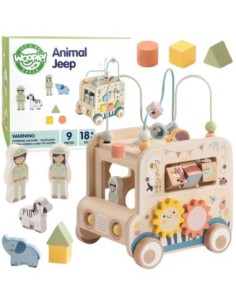
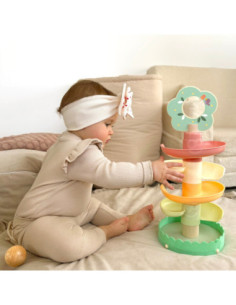
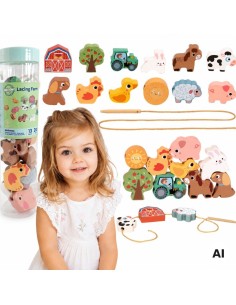
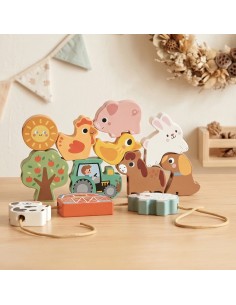
Manipulative toys are a reliable year-round category for B2B toy wholesalers and online sellers who want products that are easy to present, easy to understand, and attractive to parents looking for purposeful play. Children naturally enjoy touching, moving, sorting, fitting, turning, pressing, and exploring objects with their hands, which is why this group performs well in stores focused on development, sensory engagement, and practical play. In a wholesale assortment, these products help you build a balanced offer for different ages, interests, and shopping intents.
This category is especially useful for sellers who need clear product value at first glance. Customers usually ask what the child will do, what skills are supported, and why the toy is worth adding to the basket. Manipulative toys answer those questions in a direct way because they are based on visible actions and simple benefits. That makes them a strong fit for marketplace listings, online stores, and dropshipping collections where the product page must do most of the selling.
Why manipulative toys sell well in B2B channels
For trade partners, this category offers a practical advantage: it combines broad appeal with understandable functionality. Products in this group are easy to position as developmental toys, play-based learning tools, or everyday activity toys. They can be marketed to parents seeking gifts, to stores building age-based collections, and to resellers who need items that generate stable interest throughout the year rather than only in seasonal peaks.
The biggest benefit is clarity. A well-described manipulative toy does not require complicated explanation. The customer can immediately see whether the product supports grasping, hand-eye coordination, finger dexterity, sorting, matching, or simple problem solving. That reduces uncertainty, improves conversion, and helps lower the risk of returns caused by mismatched expectations.
For B2B sellers, this also means faster catalog building. When the function is obvious, it becomes easier to create effective titles, photos, and descriptions for multiple sales channels. If you manage listings across your own store, Allegro, Amazon, Erli, or Empik Marketplace, having a consistent category structure helps you publish faster and keep product data aligned.
Product types that fit this category
Manipulative toys cover a wide range of formats, from simple beginner products to more complex challenge-based items for older children. The common feature is active hand use. The child must do something with the product rather than only observe it. That makes these toys especially useful for keeping attention focused and encouraging repeated play.
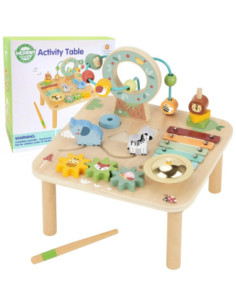
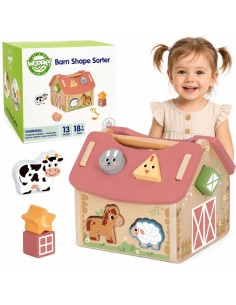
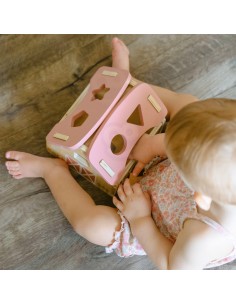
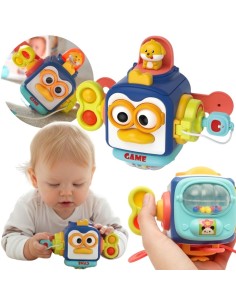
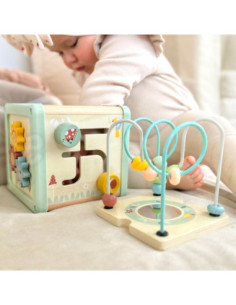
In wholesale assortments, you can expect products such as bead mazes, shape sorters, stacking and fitting sets, busy boards, lacing toys, counting boards, sliding elements, rotating parts, and objects that encourage pushing, opening, closing, pairing, or assembling. Many products combine several activities in one design, which increases play value and helps the item stand out in online listings.
These toys often work well as compact, gift-friendly items. Smaller products are easy to ship, easy to store, and easy to include in promotional sets. Larger activity boards and multi-element toys offer stronger visual appeal and can be positioned as premium additions. This variety gives resellers flexibility when building price tiers and category subgroups.
Features customers look for when buying
Parents and gift buyers usually focus on practical details. They want products that are safe, durable, age-appropriate, and engaging enough to hold attention. In this category, the best-selling items often share a few common qualities: clear actions, solid construction, attractive colors, smooth movement, and simple rules that a child can understand quickly.
Materials and finishing matter as well. Buyers often notice whether edges are smooth, components are easy to hold, and the product feels stable during play. For online stores, this means good photos and concise descriptions are essential. When a toy’s mechanism is visible in the image and explained in the text, the customer is more likely to trust the listing and complete the purchase.
Another important factor is age fit. A good manipulative toy should match the child’s developmental stage. Simpler items are better for younger users who need straightforward sensory input and easy interaction. More advanced toys are better for older children who enjoy sequences, challenges, and repeated mastery. Clear age positioning helps you create better category navigation and improves the quality of recommendations in your store.
How these toys support child development
Manipulative toys are popular because they combine play with real developmental benefits. They can support fine motor skills, grip strength, finger precision, bilateral coordination, visual tracking, spatial awareness, and concentration. Many buyers actively search for toys that help children practice these abilities in a natural way, without turning play into a formal task.
This is particularly relevant for children who need additional sensory support or who benefit from repeated hand activity as part of everyday development. Toys that encourage simple, structured movement can be valuable for children with different developmental needs, because they offer a predictable and motivating way to practice coordination and attention. For sellers, this makes the category relevant not only for general retail but also for more specialized customer groups.
The best products in this segment give children a sense of progress. They start with simple actions and gradually become more confident, faster, and more independent. That feeling of achievement is important for repeat engagement. A toy that remains interesting after the first use is more likely to generate positive feedback and strong product ratings.
Assortment planning for different age groups
When building a wholesale offer, it is worth segmenting manipulative toys by age and complexity. Younger children usually need larger, easy-to-grasp elements and direct cause-and-effect actions. They benefit from toys that offer immediate success and safe exploration. Older children are more interested in products with multi-step tasks, sorting logic, or more precise movements that provide a greater challenge.
For retailers, this segmentation makes merchandising easier. You can create separate collections for toddlers, preschool children, and early school-age users. This improves browsing, helps customers make faster choices, and reduces the chance that a shopper will abandon the basket because the offer feels too broad or unclear.
Age-based presentation also supports cross-selling. A customer buying a simple toy for a younger child may later return for a more demanding item as the child grows. When your category structure is well organized, it becomes easier to encourage repeat purchases and lifetime value.
What makes a manipulative toy attractive on a product page
In online sales, a product page must communicate value quickly. For this category, the most effective pages show the toy in action and explain the specific behavior it encourages. Instead of general claims, use clear language that tells the shopper what the child will do with the toy and why that action matters.
Strong images are especially important. Ready product photos that show movement, buttons, slots, shapes, and interactive elements help customers understand the mechanism immediately. Combined with a concise description, they can significantly improve conversion. This is one reason many B2B partners value wholesalers who provide ready images and ready product descriptions: it speeds up catalog creation and keeps the listing quality consistent across channels.
Clarity also supports marketplace performance. On platforms like Allegro, Amazon, Erli, and Empik Marketplace, customers often compare several similar items at once. Listings that clearly explain the function, play value, and age suitability tend to perform better because they make decision-making easier.
Benefits for online stores and marketplace sellers
For sellers operating in multiple channels, manipulative toys are convenient because the category can be presented in a standardized way. The same core product information can be adapted for an online store, a marketplace listing, or a dropshipping feed. That makes the category well suited to businesses that rely on efficient content workflows and rapid publication.
Wholesale partners also benefit from the possibility of automation. XML integrations, automatic stock updates, and price synchronization help keep offers current across all connected platforms. This matters especially when a product is listed in several places at once, because customers expect accurate availability and reliable pricing. A consistent data flow reduces manual work and helps prevent overselling.
In practice, this means a manipulative toy can move from warehouse to storefront with minimal delay. If the wholesaler provides structured product data, the reseller can launch listings faster, maintain better category hygiene, and spend more time on sales strategy rather than on repetitive content editing.
Support for dropshipping and multi-channel sales
Manipulative toys are a strong fit for dropshipping models because they are easy to describe, easy to categorize, and often compact enough for practical fulfilment. Sellers can build curated collections without holding large local stock, while still offering customers products that feel useful and well chosen. This is especially valuable for stores that test new niches or expand their assortment across several marketplaces.
Multi-channel operations also benefit from the category’s versatility. The same toy can be positioned as a sensory item, a motor skills product, a gift item, or a learning-through-play product depending on the channel and audience. That flexibility helps you tailor messages without changing the core product. When combined with synchronized stock and pricing, it becomes much easier to manage offers at scale.
How to build a stronger assortment in this category
A good manipulative assortment should offer variety without confusion. The best approach is to combine simple entry-level items with more engaging products that create a stronger visual impact. This gives you a wider price range and helps you serve different customer budgets. It also makes your category look fuller and more professional when viewed by trade partners or retail buyers.
Consider building around several use cases: toys for grasping and hand practice, toys for sorting and matching, toys for tactile exploration, and toys for quiet focused play. Each subgroup can support a different type of customer intent. Parents looking for a calm activity may choose one product, while buyers looking for developmental support may choose another.
It is also useful to balance timeless products with fresh visual trends. Some customers want classic, proven designs; others are drawn to bright, modern layouts or multifunctional boards. A well-rounded offer makes your store more adaptable and improves your chances of matching different search behaviors.
Why this category is valuable for trade partners
From a B2B perspective, manipulative toys are attractive because they combine sales stability with broad usability. They are not dependent on a single season, and they can be placed in many parts of an assortment: developmental, educational, sensory, gift, and everyday play. This gives resellers more opportunities to promote them in different campaigns and collections.
The category also supports efficient operations. Ready-to-use content, clear product structure, and reliable logistics help shorten the path from supplier to customer. For companies managing several storefronts or marketplace accounts, that efficiency is critical. It reduces the amount of manual work needed to keep listings active and accurate.
As a result, manipulative toys can become a dependable part of a long-term assortment strategy. They are easy to present, easy to explain, and easy to align with customer expectations. For a wholesaler, that means a category with strong practical value and repeatable demand.
Summary
Manipulative toys are a strong choice for B2B sellers who want a category that is understandable, versatile, and commercially useful. They encourage active hand movement, support concentration and coordination, and fit well into stores that sell through multiple channels. Because the products are easy to present and easy to categorize, they work especially well in online retail, dropshipping, and marketplace sales.
If you are building an assortment for trade customers, this category gives you a flexible foundation for age-based collections, development-oriented offers, and gift-friendly products. With consistent data, ready images, and automated stock and price synchronization, you can launch and maintain listings efficiently while keeping the customer experience clear and professional.
For resellers, distributors, and online store owners, manipulative toys offer a practical balance between sales potential and ease of management. That is what makes them a dependable category in a competitive B2B toy offer.