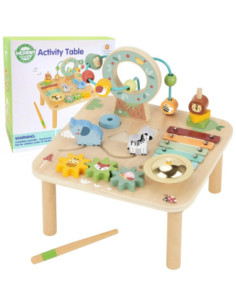
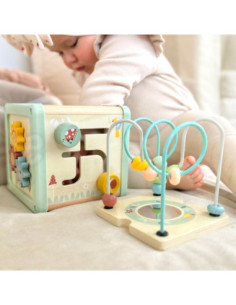
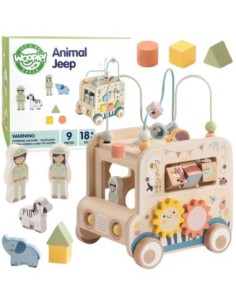
Educational tables and cubes are a practical part of a B2B toy assortment for retailers, marketplace sellers, and partners looking for products that combine play value with clear developmental benefits. This category brings together toys designed for active discovery: sorting, matching, pushing, turning, stacking, exploring sounds, colors, shapes, and simple cause-and-effect actions. For stores selling online, these products are easy to present, easy to explain, and often chosen by customers who want a gift that feels both engaging and purposeful.
In wholesale trade, this type of assortment is attractive because it addresses a broad age range and fits many sales channels. Educational tables and cubes work well as standalone products, as part of a larger educational toy collection, and as items that can be promoted in seasonal campaigns. They are also useful in multi-channel listings because their benefits are understandable at a glance: they support hand skills, encourage independent play, and offer repeatable activities that keep children interested for longer periods.
Why this category performs well in B2B sales
For online stores and distributors, educational toys with a clear function usually convert better than products that require a long explanation. Educational tables and cubes are visually appealing, interactive, and easy to showcase in product photos and short video clips. A customer can quickly understand what the child does with the toy, which reduces hesitation during purchase and makes the category suitable for marketplaces and independent e-commerce shops alike.
These products are especially valuable for B2B clients because they are versatile in merchandising. They can be listed as developmental toys, gift ideas, playroom accessories, or early learning tools. This flexibility helps sellers build broader catalogs, create more precise filters, and prepare campaigns for birthdays, holidays, or back-to-school periods. In practice, the category supports both impulse purchases and considered buying decisions from parents, grandparents, and gift shoppers.
Educational tables: structured play in one place
Educational tables are popular because they create a dedicated activity area for a child. Instead of scattered toys, the child gets a stable and engaging point of play that encourages focus and repetition. Many models include moving elements, shape sorters, gears, beads, sliders, buttons, or puzzle-like components that invite children to explore with their hands. This makes them a strong choice for stores targeting early development and learning-through-play.
From a sales perspective, the table format has a strong advantage: it is easy to communicate. Phrases such as interactive play center, hands-on learning, and activity table immediately tell the customer what the product offers. For B2B sellers, that clarity is useful because it supports better category organization, cleaner listings, and more effective image selection. The result is a product that can be published faster and understood faster by end customers.
Educational tables can also be positioned as toys that grow with the child. Simpler versions suit younger toddlers who are just beginning to develop hand-eye coordination, while more complex models provide longer-lasting engagement through multiple tasks and features. This makes them attractive in assortments where customers expect durability, value, and repeat use.
Educational cubes: compact form, rich play value
Educational cubes are a strong option for customers who want an all-in-one toy in a compact format. They often combine several play functions into a single product, which is one reason they are so popular in e-commerce. A cube may include sorting blocks, turning panels, sliding parts, bead mazes, spinning discs, or simple mechanical challenges. The child can approach the toy in different ways, discovering new activities each time.
For sellers, this format offers an easy path to presenting value. A cube looks complete, multifunctional, and gift-ready. It suits product pages where the goal is to show several benefits without writing a long explanation. In marketplaces such as Allegro, Amazon, Erli, and Empik Marketplace, that matters a lot because customers often compare offers quickly and choose the product that appears clearest and most useful.
Another advantage is that educational cubes are suitable for multiple purchase motivations. Some buyers want a developmental toy for a home environment, others look for a birthday gift, and some are searching for a compact toy that keeps a child busy during everyday routines. This wide appeal makes the category useful for sellers building a balanced assortment with different price points and formats.
Developmental benefits that matter to parents
Parents increasingly look for toys that do more than entertain. Educational tables and cubes fit that expectation well because they support key developmental areas in a natural way. Common benefits include fine motor practice, hand-eye coordination, concentration, problem solving, shape recognition, color recognition, and sensory exploration. For many children, these toys are not only enjoyable but also genuinely helpful in everyday development.
This is especially relevant for children who need extra support in play-based learning or who benefit from calm, structured activities. Toys that encourage repetition, touch, movement, and simple task completion can be useful in rehabilitation-oriented settings or in routines supporting proper development despite natural barriers such as illness or reduced physical capacity. A well-chosen developmental toy can help build confidence through small, achievable successes.
For B2B partners, this creates a strong selling story without exaggeration. The product does not need heavy marketing language; its value is already visible in the activity it enables. Clear descriptions of what the child touches, turns, matches, sorts, or moves make the listing more persuasive and reduce the need for additional explanation from customer service.
How to present the category in an online store
Good product presentation is essential in this category. Customers want to see the toy, understand its functions, and know whether it suits the child’s age and developmental stage. That is why product pages should focus on concrete actions: what the child does, which elements are included, and what kind of play the toy supports. This approach improves conversion and helps reduce returns caused by unclear expectations.
For online retailers, it is useful to organize the range by age, function, and type of activity. Educational tables can be grouped as larger play centers, while cubes can be presented as compact multifunctional toys. Some stores also create separate sections for sensory play, motor skills, first learning, and gift ideas. Such structure makes browsing easier and helps shoppers find the right product faster.
- show the toy in use, not only as a static item
- highlight the functions that make the toy educational
- explain the age suitability in simple, direct language
- use images that show all sides and interactive elements
- emphasize the gift potential and everyday usability
Why the category works well on marketplaces
Educational tables and cubes are ideal for marketplace sales because they are easy to compare, easy to photograph, and easy to categorize. The buyer can usually understand the offer from the title, main image, and a short list of features. That is a major advantage on platforms where attention spans are short and competition is intense. Sellers who prepare clear listings often achieve better visibility and stronger click-through rates.
This category also benefits from structured data and automated catalog management. If your business uses XML integrations, it becomes easier to publish and update the offer across several channels at once. Stock and price synchronization can reduce manual work, keep listings accurate, and help prevent situations in which a product is shown as available when it is already sold out. For a busy B2B operation, that kind of automation is not just convenient; it directly supports sales quality.
Ready product descriptions and images are another practical advantage. They allow partners to launch the assortment faster and maintain consistent presentation across platforms. That consistency matters when selling on Allegro, Amazon, Erli, and Empik Marketplace, where product clarity and data accuracy influence performance.
Assortment strategy for B2B partners
When building an assortment in this category, it makes sense to offer several variants that differ in size, complexity, and visual style. Some customers prefer colorful toys with multiple moving parts, while others want more compact designs that fit into smaller spaces. By offering a range of options, a wholesaler helps retailers address different budgets and customer preferences without overcomplicating the catalog.
From a commercial perspective, this category supports repeat purchases through new product refreshes and seasonal updates. Educational toys are often included in gift collections, nursery assortments, and learning-based toy selections. This means sellers can position them in both permanent catalog sections and short-term promotional campaigns. The category is also suitable for stores that use dropshipping models, because the products are easy to list, easy to describe, and attractive to end buyers across various channels.
For distributors and resellers, the benefit is stability. Educational toys keep a consistent place in the market because parents continuously look for play options that combine entertainment with learning. That steady demand makes it easier to plan inventory, build thematic bundles, and develop cross-sell opportunities with other early learning toys.
What makes a strong product listing in this category
A good listing should show practical value from the first glance. The title, photos, and short description should work together to answer the customer’s main questions: what does the toy do, who is it for, and why is it a good choice? In educational tables and cubes, the answer should focus on interaction and development rather than generic claims. This makes the product more credible and more appealing to informed buyers.
It is also important to keep the content precise. Mentioning the main activities, such as turning, matching, stacking, sorting, or moving elements, gives the customer a clear picture of the experience. If the toy has sensory features, those should be described in a natural way, especially when they help support concentration, exploration, or calm activity. Such wording works well for family stores, specialist shops, and partners serving customers looking for developmental support.
- Describe the main function of the toy in one clear sentence.
- List the interaction elements that make the product engaging.
- Indicate the likely age range and developmental fit.
- Use product photos that show the toy from multiple angles.
- Keep catalog data current with automated stock and price updates.
Sales advantages for wholesalers and resellers
For wholesalers, this category offers a good balance between visibility and usability. Educational tables and cubes are visually strong, which helps with listing performance, but they are also practical enough to fit many customer profiles. That makes them suitable for broad assortment planning and for targeted campaigns aimed at parents, gift buyers, and retailers specializing in developmental toys.
Resellers also benefit from the simple selling logic. The toy does not require a complicated explanation, and the value proposition can be communicated in plain language. This reduces friction in the sales process and supports conversion across multiple channels. When combined with ready descriptions, professional images, and seamless catalog updates, the category becomes a reliable tool for scaling multi-channel retail operations.
Because the products are easy to present, they can be promoted through short-form content, marketplace offers, category pages, and newsletter campaigns. That makes them especially useful for businesses that want to maintain a dynamic assortment without creating a heavy content workload for every new item.
Summary for trade partners
Educational tables and cubes are a category with broad commercial potential and clear value for children. They combine entertainment, learning, and repeated interaction in products that are easy to understand and easy to sell. For B2B partners, this means a category that supports strong product storytelling, efficient catalog management, and attractive presentation across e-commerce and marketplace channels.
With the right assortment, these toys can serve multiple sales goals at once: they appeal to customers looking for meaningful gifts, they fit well into educational collections, and they work effectively in stores that rely on fast publication and accurate product data. If your business depends on multi-channel sales, automation, and a clear product offer, this category is a strong addition to the catalog.
By combining useful developmental features with clear merchandising potential, educational tables and cubes help stores sell products that parents understand immediately and children enjoy for a long time. That combination is exactly what makes the category valuable in modern B2B toy distribution.