
SKU: 759499
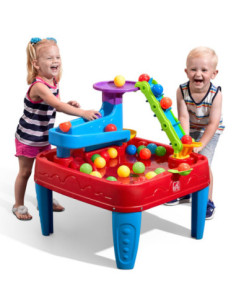
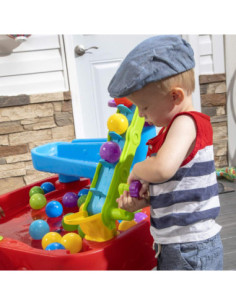
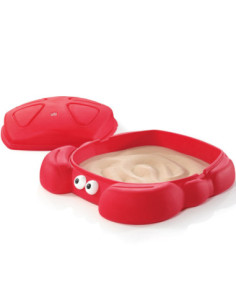
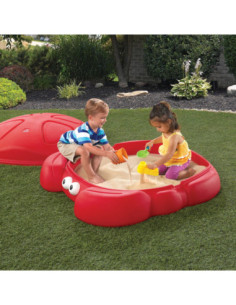
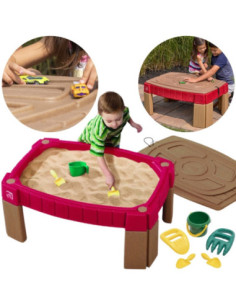
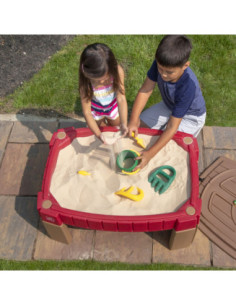
Sandboxes and sand toys are a reliable, highly seasonal assortment that also performs well all year round in gardens, on plots, in preschools and in outdoor play areas. For B2B buyers, this category is valuable because it combines strong consumer demand with a simple, easy-to-understand use case: children spend time outdoors, build, scoop, pour, shape and create their own play scenarios. That makes the products easy to present in online stores, on marketplaces and in trade catalogs.
As a wholesaler, you can use this category to build a flexible offer for retail customers, resellers, dropshipping partners and multi-channel sellers. Ready product descriptions and images make listing faster, while XML integrations and automatic stock and price synchronization help keep the offer consistent across channels such as Allegro, Amazon, Erli and Empik Marketplace. In practice, this means faster onboarding, less manual work and fewer problems with out-of-date product data.
Products for sand play are easy for customers to understand and easy to combine into sets. Parents look for toys that keep children engaged for longer, encourage outdoor activity and support creative play. Retailers benefit from a category that naturally leads to add-on sales: after buying a sandbox, many customers also choose buckets, shovels, molds, rakes and complete play sets. This makes it a practical group for increasing average order value.
From the sales perspective, the category works well because it covers both large-ticket and low-ticket items. A sandbox can be a core product in the offer, while smaller accessories can fill the basket and improve conversion. This structure is especially useful for online stores that want to create bundles, seasonal promotions and themed sets without building the assortment from scratch.
Sandboxes are one of the main products in this category and can be offered in different shapes, sizes and construction styles depending on the target customer. Some buyers want compact models for small gardens or terraces, while others look for larger solutions for outdoor play zones, nurseries or educational facilities. For a B2B seller, that variety is important because it allows you to address multiple customer segments with one category.
The key selling points are stability, comfort of use and clear product presentation. Customers want to know how much space the sandbox takes, how many children can use it at the same time and how easy it is to assemble or move. When you prepare your offer with complete descriptions and strong product images, you reduce hesitation and make the purchase decision simpler. This is especially useful in e-commerce, where the customer does not see the product in person before ordering.
Sandboxes are also a strong fit for businesses that serve educational institutions and childcare providers. In that environment, the product is not only a toy but also a tool for outdoor group activity. It supports shared play, cooperation and longer engagement, which makes it a dependable addition to a broader children’s assortment.
Sand toys are the natural companion to any sandbox offer. The category typically includes buckets, shovels, molds, sieves, rakes and sets designed for building, transporting and shaping sand. These items are simple in use, but they create many different play possibilities. Children can fill, pour, sift, press and construct, which keeps the play experience varied and engaging.
For trade partners, this is a category that is easy to merchandise in sets. A customer who buys one accessory often comes back for more, especially when the products are visually appealing and clearly grouped by purpose. You can create offers such as basic starter kits, construction-themed sets or decorative beach-style bundles that work well both in summer campaigns and in year-round garden sales.
Sand toys are also practical from an inventory point of view. They are usually compact, easy to store and straightforward to ship. This matters for dropshipping companies and sellers operating across several channels, because smaller products can be handled efficiently while still generating good turnover through add-on purchases.
When choosing sand play products for wholesale, buyers usually focus on a few core features. Durability is one of the most important, because outdoor play puts products under regular stress. Comfort of handling is another key point: tools should be easy for children to hold, safe to use and suitable for repeated play. Clear shapes, attractive colors and solid construction all help the product stand out in a crowded market.
Retailers also value products that are simple to explain in listings. Sand toys do not require complicated technical descriptions, but they do need well-written content that communicates the benefits clearly. A good product page should show what the toy is used for, who it is suitable for and how it fits into a larger play set. That approach improves customer understanding and supports conversion.
For B2B operations, this category is especially attractive because it lends itself to automated catalog management. When product data, stock levels and pricing are synchronized across channels, sellers can maintain a consistent offer with less manual effort. That is useful both for direct store sales and for marketplaces where availability changes quickly during peak season.
Sandboxes and sand toys perform well in multi-channel commerce because they are easy to classify and easy to present. On marketplaces, customers often search by use case rather than by brand alone, so a well-structured category helps listings appear in the right context. A clear assortment can be adapted to different channels with minimal changes when the core content is already prepared.
For online stores, the main advantage is speed. Ready images and descriptions shorten the time from purchase to publication, which is particularly important when seasonal demand rises. If you sell through Allegro, Amazon, Erli or Empik Marketplace, you can keep your catalog organized and reduce the risk of inconsistent data by using integrated stock and price updates. That saves time and improves the quality of your offer presentation.
This category also works well for distributors and resellers who need products that are easy to re-list, easy to bundle and easy to explain to end customers. A simple, familiar product family tends to generate fewer support questions and fewer misunderstandings during the sales process.
One of the biggest commercial advantages of this category is the ease of building attractive combinations. Sandboxes can be sold together with accessories, while smaller sand toys can be grouped into complete play kits. These combinations are useful for gift sales, seasonal campaigns and promotional offers aimed at parents who want a ready-made solution rather than a single item.
Examples of effective bundles include:
Such combinations help customers see the value of the offer more clearly. They also make it easier for sellers to communicate the purpose of the products. Instead of listing separate items one by one, you can present a complete play solution that feels more useful and more appealing in the product gallery.
Although sand play is strongly linked to spring and summer, the category is not limited to one short selling window. In practice, many buyers plan outdoor equipment in advance, purchase gift items throughout the year or replenish institutional stock before the season starts. That gives wholesalers a wider sales horizon and makes forecasting easier.
Sand toys are particularly effective as complementary products. They can be promoted alongside garden equipment, outdoor activity toys and children’s seasonal collections. This cross-selling potential is useful for stores that want to keep traffic inside the same product family and encourage additional purchases without requiring a large discount.
For B2B sellers, the category can also support recurring orders. Retailers often return for extra inventory when demand increases, especially if the product range is broad enough to cover different budgets and formats. Compact accessories, larger sandboxes and mixed sets together create a stable and flexible assortment.
From an operational standpoint, sandboxes and sand toys are efficient products to manage. They are easy to categorize, easy to photograph and easy to describe in a way that helps customers make quick decisions. That is why they fit well into catalog-driven sales models, especially where automation and synchronized data play a major role.
When you supply store owners and marketplace sellers, the value of the category is not only in the product itself but also in the ease of implementation. Ready-to-use content, clean product data and support for multi-channel distribution help partners launch faster and manage fewer exceptions. In a competitive market, that can be the difference between a slow catalog and an active sales channel.
The category also supports better merchandising strategy. Sellers can place the main sandbox products at the center of the offer and surround them with smaller items that build the basket. This structure works well in e-commerce navigation, seasonal landing pages and marketplace stores where customers often buy based on convenience and visual appeal.
Another reason this category sells well is that its benefits are intuitive. Parents see sand play as a form of active outdoor entertainment that is more engaging than passive screen time. The products encourage movement, exploration and creative problem solving, while remaining accessible for a wide range of ages and skill levels.
Sand play also supports sensory and manual development. Children practice grip, coordination and fine motor control while scooping, filling, pressing and shaping. For some families, especially those looking for toys that support development in a natural, low-pressure way, this is an important purchasing factor. A good assortment can therefore appeal not only to general consumers but also to customers seeking meaningful play value.
When the product page explains these benefits clearly, the result is stronger trust and better conversion. That is especially important in B2B sales, where your clients need content that can be reused quickly and presented to end customers without major editing.
If you want to build a profitable assortment in this segment, it helps to cover different customer needs within one category. Offer simple accessories for impulse purchases, complete play sets for larger baskets and sandboxes as the main anchor items. This gives you more flexibility in pricing, promotion and channel-specific merchandising.
It is also worth preparing the offer with future scaling in mind. When product descriptions, images and stock data are ready from the start, you can expand the range faster and introduce new variants without slowing down the sales process. That is a major advantage for sellers who work across several platforms and need a reliable product base.
Sandboxes and sand toys are therefore not just a seasonal toy category. They are a practical, easy-to-sell and easy-to-scale part of a broader B2B assortment, suitable for stores, marketplaces, dropshipping operations and trade partners looking for products with clear demand and strong merchandising potential.