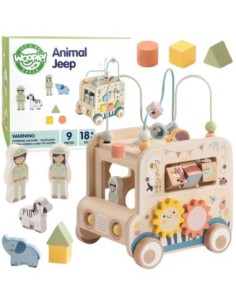
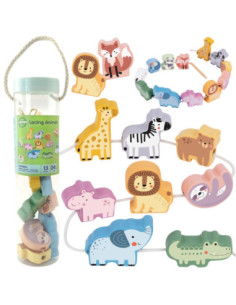
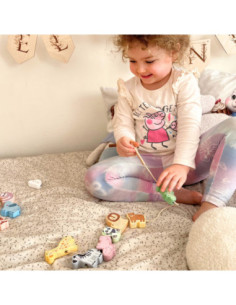
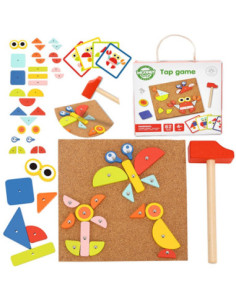
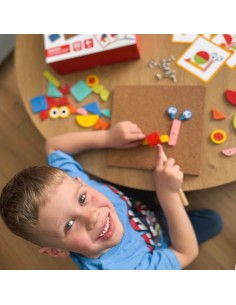
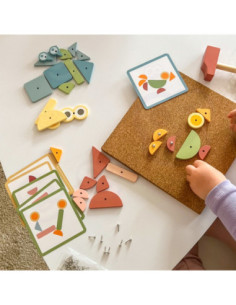
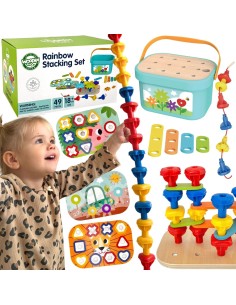
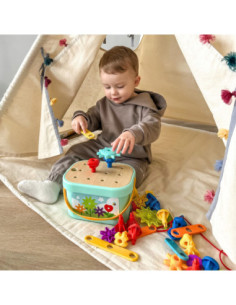
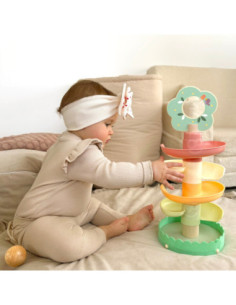
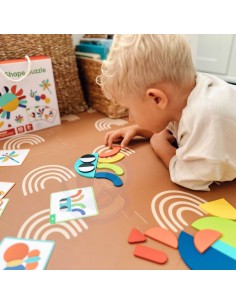
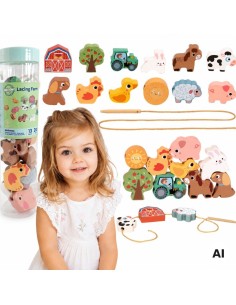
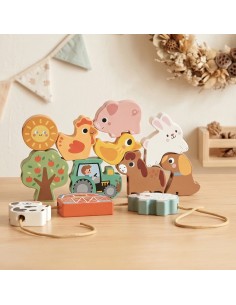
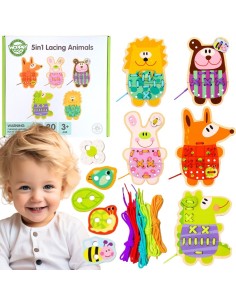
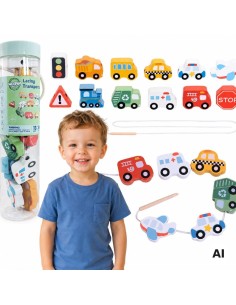
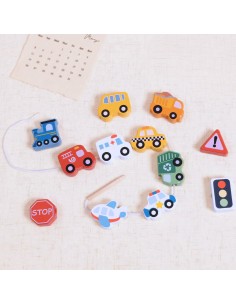
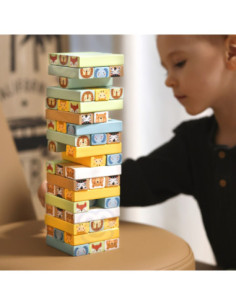
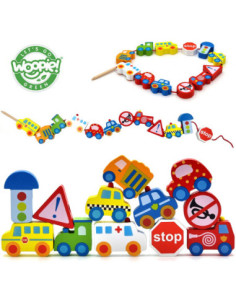
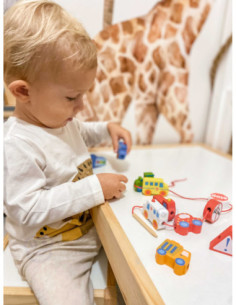
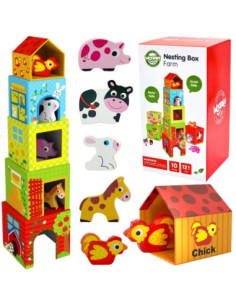
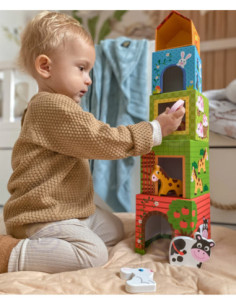
Manipulative and dexterity toys are a category that consistently attracts attention from wholesale buyers because they combine engaging play with clear developmental benefits and strong sales potential. In a B2B toy assortment, these products stand out for their ability to support fine motor skills, hand-eye coordination, concentration, patience, and everyday problem solving. They are also easy to present in an online store, on marketplaces, and in dropshipping offers, because their functions are understandable at first glance and their value can be communicated through a short, precise product description and good photos.
This category works especially well for retailers who want to build an offer around practical, easy-to-explain toys with repeat purchase potential. Parents, educators, therapists, and gift buyers often look for products that keep a child engaged while also encouraging purposeful movements such as twisting, matching, sorting, moving, stacking, inserting, or balancing elements. For resellers, that means a wide range of products that can be grouped into themed collections, such as fine motor practice, skill games, sensory play, travel toys, or gifts for younger children.
Why these toys sell well in B2B trade
Manipulative and dexterity toys have a strong position in wholesale because they answer a very clear customer need. Buyers are not searching for a vague entertainment item only; they are looking for a toy that does something useful while still being fun. That makes the category easy to position in search results, on category pages, and in sales campaigns. The products are suitable for year-round sales, and their appeal does not depend on seasonality in the same way as many trend-based toys do.
For online stores and marketplace sellers, the biggest advantage is the clarity of the purchase argument. A well-described toy in this category can immediately show its purpose: training precision, encouraging persistence, improving coordination, or providing a calm and focused play experience. This is particularly helpful when selling through channels where customers compare listings quickly and expect the benefits to be visible before they click.
Common buying reasons for parents and caregivers
- They want toys that help children practice precise hand movements.
- They look for products that keep a child occupied without being overly complicated.
- They prefer durable items that can be used repeatedly over a long period.
- They value toys that show visible progress and support independent play.
What characterizes products in this category
Products in this group are built around action. A child may need to slide, rotate, fit, connect, press, pull, sort, or coordinate several steps in the correct order. That active use is exactly what makes the toys valuable. The play experience is not passive, and the child receives immediate feedback from every successful movement. This helps create the satisfying feeling of achievement that buyers often describe as a key reason for choosing this type of toy.
In wholesale assortments, this category can include simple and compact toys as well as more advanced products with multiple functions. Some are designed for younger children who are just beginning to explore cause and effect, while others offer a higher level of challenge for older users who enjoy more complex dexterity tasks. This variety makes the category easy to expand across price points and to adapt to different customer groups.
Examples of features customers look for
- Clear, intuitive play rules.
- Durable construction suitable for frequent use.
- Compact size for home play, travel, or classroom use.
- Multi-step mechanics that keep the toy interesting longer.
- Strong visual appeal that works well in e-commerce listings.
Support for motor development and focused play
One of the most important strengths of this category is its connection to motor development. Manipulative toys encourage repeated, precise hand actions that naturally support dexterity. They are often chosen by parents who want to combine play with everyday skill building, and they are also relevant for educational and therapeutic environments where fine motor practice matters. In such contexts, toys that reward accuracy and repetition can become valuable tools for structured play.
These products can also help children who need extra encouragement to stay focused. Because the activity usually has a clear goal, the toy gives the child a visible task and a satisfying result. That can be especially useful in settings where concentration is difficult or where gradual skill development is important. For B2B customers serving schools, preschools, or therapy-oriented buyers, this creates an additional layer of commercial relevance.
Benefits seen in real use
- Better control over small hand movements.
- Improved coordination between vision and action.
- Longer attention span during structured play.
- Greater confidence from completing a task successfully.
- Opportunities for repeated practice without boredom.
Strong potential for online retail and marketplaces
For an e-commerce seller, this category is attractive because it translates well into a clean, informative product page. The toy itself usually has a visible mechanism or action, which makes it easier to create persuasive listings. Customers can quickly understand the intended use, compare product variants, and make a buying decision without needing a long explanation. That is a major advantage in fast-moving sales channels such as Allegro, Amazon, Erli, and Empik Marketplace.
Manipulative and dexterity toys also fit naturally into cross-selling and bundle-building strategies. A store can group them by age, type of challenge, material, or play environment. This helps create a logical assortment structure that improves navigation and supports better product discovery. In practice, that can raise average order value and make it easier to present complementary items together.
How sellers can organize the assortment
- By age group and difficulty level.
- By play style, such as sorting, balancing, threading, or fitting.
- By usage context, such as home play, educational use, or gifting.
- By material or product size for easier catalog management.
Advantages for trade partners and distributors
From a B2B perspective, this category is appealing because it is practical to stock and easy to present. Customers rarely need a very long explanation to understand what the toy does, which makes it simpler to prepare listings across multiple sales channels. When product information is well structured, a wholesaler can provide ready descriptions and images that accelerate the publication process and reduce the workload for sellers.
Another important advantage is the ability to support multi-channel sales with consistent product data. When a wholesaler provides XML integrations, automatic stock synchronization, and price updates, partners can maintain a reliable offer across their store, marketplace accounts, and dropshipping operations. That reduces errors, improves availability control, and helps prevent situations where a customer orders an item that is no longer in stock.
What makes the category easy to manage operationally
- Clear product logic and easy classification.
- Stable demand across many sales periods.
- Good compatibility with automated listing workflows.
- Simple presentation in catalogues, store pages, and marketplace offers.
Products suitable for different sales formats
Because the category includes a broad range of product types, it can be adapted to many sales formats. Small and affordable toys work well as impulse purchases, add-on products, and gift fillers. Larger or more advanced items can be positioned as educational gifts or premium options for customers looking for something more durable and engaging. This flexibility makes the category valuable both for specialty toy shops and for general e-commerce stores that want a dependable range with broad appeal.
It is also a useful category for promotional campaigns. Since the toys have a clear practical value, they can be featured in back-to-school offers, birthday assortments, holiday gift collections, and activity-based recommendations. Sellers who use seasonal promotions or thematic category pages can build a strong argument around usefulness, not only entertainment.
Sales situations where these toys perform well
- Birthday and holiday gift collections.
- Educational and developmental toy sections.
- Campaigns focused on fine motor skill development.
- Product bundles for preschool or home learning.
- Impulse buy sections in online stores.
Why content quality matters in this category
In competitive B2B and marketplace environments, a toy can only perform well if the listing communicates its purpose clearly. That is especially true for products that look simple at first glance but actually offer a meaningful play experience. Good content helps remove doubt, increases trust, and improves conversion. Buyers should understand not only what the toy is, but also how it can be used, what type of child it suits, and why it is worth adding to a basket.
This is where ready product descriptions and professional images become a real operational advantage. They shorten the time needed to launch an offer, support consistent branding, and make it easier to scale the assortment across different channels. For sellers operating with dropshipping models or large catalogues, that can make a significant difference in day-to-day efficiency.
Assortment value for a B2B toy wholesaler
For a wholesaler, manipulative and dexterity toys are a strategic category because they combine usability, educational value, and stable demand. They are the kind of products that retailers can present confidently to a wide audience: parents, gift buyers, teachers, therapists, resellers, and marketplace shoppers. The category also helps build an offer that feels balanced, because it includes toys that are fun to play with while still being clearly purposeful.
In a wholesale environment, that balance is important. Retailers want products that are easy to sell, easy to explain, and easy to replenish. When a category offers all three, it becomes a dependable part of the catalogue. Add clear stock data, synchronized pricing, ready images, and platform-friendly descriptions, and the result is a product group that can be deployed efficiently across stores and marketplace listings.
Summary
Manipulative and dexterity toys are a strong category for B2B trade because they combine active play with visible developmental benefits and clear sales potential. They support fine motor skills, coordination, concentration, and task completion, while also giving sellers a product range that is easy to list, easy to categorize, and attractive in multiple channels. For online stores, Allegro sellers, Amazon sellers, Erli sellers, Empik Marketplace sellers, dropshipping companies, and other trade partners, this means a practical assortment with broad customer appeal and reliable commercial value.
With ready descriptions, product photos, XML integration options, and automatic stock and price synchronization, the category can be introduced smoothly into a multichannel sales strategy. That makes it a strong choice for wholesalers and resellers who want toys that are not only engaging for children, but also straightforward to manage and profitable to present in modern e-commerce.
FAQ
What types of customers buy manipulative and dexterity toys?
They are popular with parents, educators, therapists, gift buyers, and online shoppers looking for toys that support skill development. They also perform well with resellers and marketplace sellers because they are easy to explain and position in listings.
Are these toys suitable for marketplace sales?
Yes. The category has a clear structure, visible functionality, and easy-to-understand benefits, which makes it a good fit for platforms such as Allegro, Amazon, Erli, and Empik Marketplace.
Why are they valuable in a wholesale catalogue?
They offer stable demand, broad age appeal, and strong potential for category-building, bundles, and repeat purchases. Their practical nature also makes them easy to support with ready content and automated product data.