


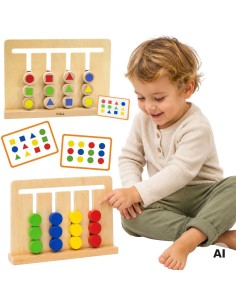
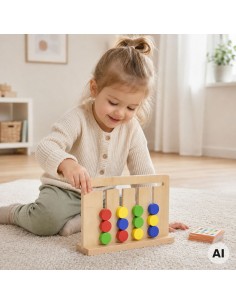
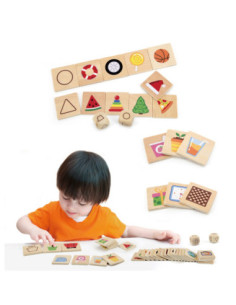
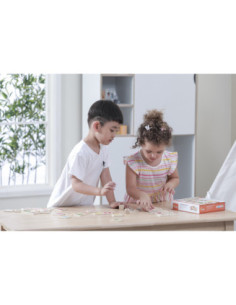
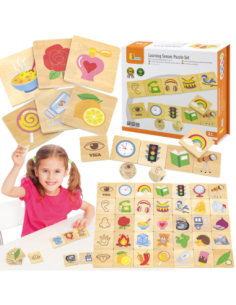

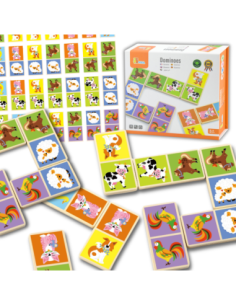
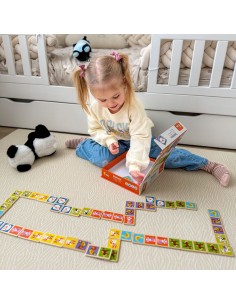
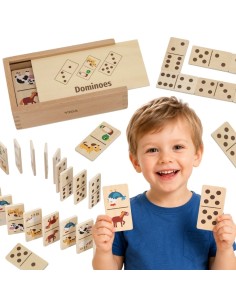
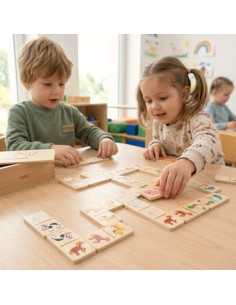
Logical toys are a category that combines engaging fun with clear developmental value, making them a strong and reliable part of a B2B toy assortment. They are especially attractive to online stores, marketplace sellers, dropshipping partners and resellers who need products that are easy to present, simple to explain and appealing to customers looking for meaningful play. Puzzles, brain teasers, matching games and challenge-based sets fit naturally into seasonal sales, gift collections and educational ranges, while also supporting steady year-round demand.
For retailers, this category offers a practical balance between product variety and predictable purchasing decisions. Buyers often choose logical toys because they want something that keeps children focused for longer, encourages independent thinking and offers more than short-lived entertainment. That makes this segment useful not only for parents, but also for stores building an offer around learning through play, problem solving and skill development. When a product clearly shows the level of difficulty, age range and purpose of play, conversion usually becomes easier and customer questions become fewer.
Logical toys stand out because they are easy to merchandise across many sales channels. A store can present them as educational gifts, family games, travel-friendly entertainment or development-focused products. They also perform well in bundles and category cross-selling, especially when paired with board games, educational toys or creative activity sets. For B2B buyers this means a category with broad commercial use and strong flexibility in assortment planning.
The strongest products in this segment are those that communicate their benefits quickly. Customers respond well to toys that visibly require matching, arranging, sequencing, observation or step-by-step reasoning. Clear packaging, understandable instructions and solid product photos help show the value instantly. That matters in online sales, where the product page must do most of the selling work. When the item is easy to explain, it is easier to sell through marketplaces and store listings alike.
Logical toys can cover a wide range of formats, from simple introductory items for younger children to more demanding challenge sets for older users. This makes the category suitable for different age groups and different budget levels. Retailers can therefore build a structured assortment with entry-level products, mid-range items and premium gift options.
These formats are popular because they are visually understandable and easy to present in a product catalog. Many of them also suit repeat purchases, since customers often return for products with a different difficulty level or a new theme. That is useful for stores aiming to create long-term customer relationships rather than one-time sales only.
Customers usually look for logical toys when they want a gift or a daily activity that feels purposeful. The main attraction lies in the mix of fun and measurable development. Children are not just spending time with a toy; they are solving a task, learning to focus and discovering how to approach challenges step by step. Parents appreciate that the play has a visible outcome and does not feel overly academic.
From a product perspective, logical toys can support several development areas at once. They may help children build concentration, improve observation, strengthen memory, practice patience and learn to make decisions. Some products also encourage fine motor control, especially when they involve placing pieces, turning elements, sorting shapes or handling small components. For children who need additional developmental support, including those facing barriers related to health or rehabilitation, these types of toys can be a valuable part of a broader play and learning routine when selected appropriately.
Because the toy has a clear goal, children often return to it many times. This repeat-use factor is highly attractive in retail. It means the product can stay relevant longer than a novelty item and continue generating interest even after the initial purchase. For stores, that translates into better assortment stability and stronger long-tail sales potential.
In e-commerce, the best-selling products are often those that are easy to understand from the listing alone. Logical toys support this very well because their key features can be described in simple, practical terms: what the child does, what skill is used, how many elements are included, how long the activity takes and what level of challenge it offers. This type of information helps parents make faster decisions and gives marketplace shoppers confidence.
Products in this category also work effectively on major sales platforms such as Allegro, Amazon, Erli and Empik Marketplace. Their structure is suitable for searchable listings, bundled offers and category filters. When the product data is well prepared, with correct age labels, item counts and concise benefit-driven text, it becomes easier to manage the full sales funnel. That is especially important for sellers operating in multiple channels at the same time.
For companies using XML integrations, logical toys are convenient because the category can be supported with ready product descriptions, images, stock updates and price synchronization. This reduces manual work and helps maintain consistency across shop systems and marketplaces. Reliable synchronization is particularly important for fast-moving assortment planning and for sellers who want to avoid overselling or outdated offers. In dropshipping models, where information accuracy directly affects customer experience, this advantage is even more valuable.
From a wholesale perspective, logical toys are not just a development category. They are also a commercial category that supports better merchandising decisions. Because the products often have a clear purpose, they are easier to position in gift ranges, educational sections and themed promotions. Resellers can build offers around learning, family play, travel activities or quiet-time entertainment, depending on their target audience.
The category also supports stable assortment rotation. Instead of relying only on trends, a store can keep selected logical toys in permanent offer while refreshing the line with new challenges, new designs or new age-group variants. That makes inventory planning easier and allows the seller to react to demand without rebuilding the category from scratch every season.
Another advantage is low communication friction. A well-described logical toy usually answers common buyer questions before they are even asked. What is the challenge? What age is it for? How difficult is it? What does the child learn? When this information is already available, the sales process becomes smoother and the conversion path shorter. For B2B partners this means fewer support requests, cleaner catalog management and better efficiency in multi-channel operations.
To sell logical toys effectively, product pages should focus on clear and practical details. Customers want to know how the toy works, what it trains and what kind of child it suits. In this category, the most useful product data is often the one that reduces uncertainty and helps the buyer imagine the play experience.
In many cases, well-structured content can do more for sales than a highly promotional tone. Buyers in this category typically want clarity and usefulness. They respond well to product text that explains how the toy supports focus, logic and independent play without sounding exaggerated.
Logical toys have one major business advantage: they are easy to repurchase in different versions. A parent may first buy a simple matching game, then later choose a harder puzzle or a more advanced logic challenge. This creates a natural upgrade path within the same category and helps stores build long-term customer value. It also makes the category suitable for repeat campaigns, remarketing and seasonal promotions.
The category is also attractive because it fits many occasions. It can be sold as a birthday gift, holiday present, travel activity, quiet-time game or learning aid. That versatility helps sellers avoid relying on a single season or a narrow audience. Stores can present the assortment to buyers who are focused on educational value as well as to those simply looking for a smart gift idea.
When combined with ready images, prepared product descriptions and automated stock and price updates, logical toys become even easier to manage in a professional retail environment. For online stores and trade partners, this means less manual work and a more scalable catalog. The category can remain informative, accessible and commercially strong across several platforms at once.
For B2B wholesalers and retail partners, logical toys are a dependable category that supports both sales performance and customer satisfaction. They are versatile enough to fit educational collections, gift selections and general toy assortments, yet specific enough to be described in a way that appeals to parents and educators. That combination makes them especially valuable in a competitive market where product clarity matters.
Stores that invest in this category can benefit from strong search visibility, broad age coverage and a product story that is easy to communicate. Logical toys help create an offer that feels thoughtful, useful and well organized. With the right assortment, the category can improve average order value, support repeat visits and give sellers a stable foundation for multi-channel growth.
For partners working with XML integrations, marketplace feeds and dropshipping operations, the category also offers practical advantages in data management. Ready-to-use content, synchronized stock and prices, and clear item details help keep offers accurate and consistent. That saves time while improving the quality of the customer journey. In a wholesale environment, that combination of educational value and operational simplicity is hard to beat.