
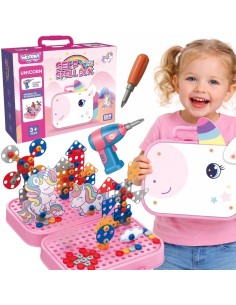
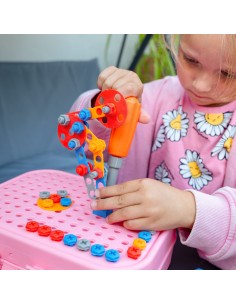
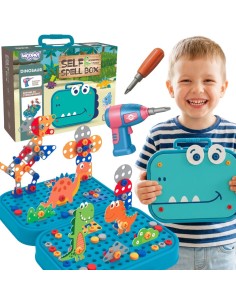
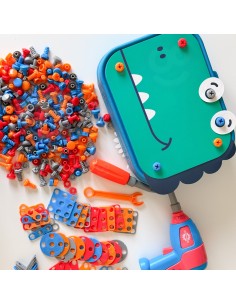
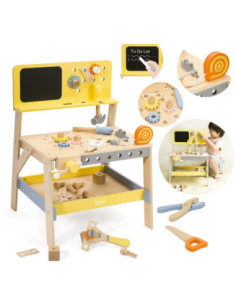
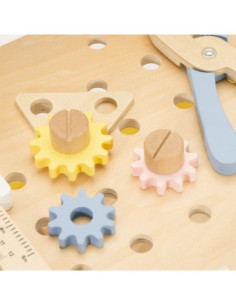
Workshops and tools is a category that brings active play into focus: children build, assemble, repair, and discover how things work through hands-on activity. For B2B sellers, it is also a practical assortment with strong year-round demand and clear seasonal peaks around birthdays, holidays, summer campaigns, and gift purchases. Products in this segment are easy to present in an online store because they offer a clear use case, visible value, and repeat purchasing potential when customers return for a larger or more advanced set.
In wholesale supply, workshops and tools cover a broad range of toy sets and educational accessories designed for different ages and skill levels. This makes it easier for retailers, marketplace sellers, and resellers to match the offer to the child, the occasion, and the preferred style of play. The category works well in curated collections such as “for young builders,” “creative assembly sets,” or “learning through doing,” which helps improve conversion and keeps the product range easy to browse.
Products in this category are created to keep children engaged without frustration. Depending on the assortment, they may include simple construction sets, pretend repair tools, building kits, or educational workshop toys that imitate everyday tasks in a safe and playful form. The result is a category that naturally encourages focus, motor coordination, and problem-solving while remaining attractive as a gift or impulse purchase.
For store owners, the advantage is that these products are easy to segment by age, theme, and complexity. A basic starter set can be positioned for younger children, while more elaborate kits fit older kids who want more challenging construction or pretend DIY play. This clear structure helps customers choose faster and reduces pre-sale questions.
This category has strong commercial potential because it is easy to explain, easy to bundle, and easy to expand. Parents understand the value immediately: the child is not only entertained, but also involved in meaningful activity. That makes the products suitable for gift-oriented sales, educational assortments, and year-round toy catalogues. For a wholesaler or reseller, this means a category that can be built into larger themed displays and repeat-order structures.
Many buyers look for toys that keep children occupied for longer than a single short play session. Workshop and tool sets do exactly that by inviting repeated use, roleplay, building, and repair scenarios. As a result, they perform well in stores that promote developmental play, creative play, and practical learning experiences. They also work well in multi-channel sales because the product story is clear enough to convert quickly on marketplaces and in webshops alike.
A well-structured workshop assortment should cover several levels of difficulty and different product formats. Some children prefer tool kits with large, easy-to-handle parts and simple tasks. Others want more detailed building activities, mechanical elements, or pretend workshop sets that allow them to act like little craftsmen. Offering this variety helps trade partners build a cleaner category architecture and improves the chance of upselling to more advanced items later.
The flexibility of this category is especially useful for sellers serving mixed audiences. A toy store can use the same category page to address parents, grandparents, schools, and educational resellers. Because the play pattern is familiar, the buyer does not need long explanations. Clear photos, product descriptions, and structured category naming are often enough to support the purchase decision.
Workshops and tools are more than just entertainment. They help children practice hand-eye coordination, fine motor skills, concentration, and basic sequencing. In many cases, the play also supports imagination and confidence, because the child sees a result after completing a task. This visible outcome is one reason the category works so well in both retail and B2B environments.
For some families and educational buyers, toys in this category can also be helpful when looking for structured activity that supports sensory engagement, dexterity, or developmental play in a gentle and accessible form. That broad applicability makes the assortment useful not only for everyday gift shopping, but also for schools, activity centres, and institutions that need engaging products with a clear functional role.
From a sales perspective, developmental value is a strong argument. It helps retailers present the item as a meaningful purchase rather than a short-lived novelty. In product descriptions and category listings, it is worth emphasising that children can learn by doing, repeat the activity, and gradually move on to more challenging sets.
For e-commerce partners, this category is especially convenient because the product benefit is easy to communicate in listing copy, thumbnails, and category filters. When the item clearly shows tools, building elements, or workshop-inspired accessories, the buyer instantly understands the purpose. This reduces friction and makes workshop toys suitable for fast-moving catalogues on webshops and marketplaces.
It also works well in B2B sales models where ready product descriptions and images shorten the time needed to publish an offer. If your business sells through multiple channels, XML integrations can help keep stock and price data synchronised across the catalogue. That is a practical advantage for Allegro sellers, Amazon sellers, Erli merchants, Empik Marketplace partners, and dropshipping businesses that need current product information without manual updates.
Accurate synchronisation supports better operations and reduces the risk of overselling. It also helps maintain trust with customers who expect the product to be available when they place the order. In a category with steady rotation and frequent seasonal peaks, that operational stability can directly improve performance.
Workshop toys have a natural place in gift-oriented merchandising. They are easy to position as a present for children who like building, fixing, or pretending to work like adults. This makes them useful in seasonal campaigns, birthday collections, holiday promotions, and curated gift guides. For store owners, that means more opportunities to bundle products, highlight value, and create themed landing pages.
The category also supports repeat purchases because children often move from one level of play to another. A customer who buys a first tool set may later return for a larger building kit or a more detailed workshop toy. This progression is valuable for retailers because it opens the door to higher order value and stronger customer retention.
For resellers and distributors, workshops and tools are a category that is straightforward to manage and promote. The products are easy to describe, easy to place in the assortment, and easy to combine with other creative or educational toys. That makes them a practical choice for wholesalers supplying online stores and marketplace operators who need catalogues that are simple to maintain and quick to scale.
Because the play concept is universal, the category also adapts well to different audiences and sales channels. A single assortment can serve consumer-focused stores, educational sellers, and B2B partners looking for dependable, easy-to-explain products. With ready visuals, structured descriptions, and automated product data, retailers can introduce new items quickly and keep offers consistent across multiple sales platforms.
Workshops and tools form a versatile toy category with strong B2B potential, clear sales appeal, and broad customer relevance. The assortment supports active play, creativity, manual development, and roleplay, while also being easy to present in e-commerce and wholesale environments. Its practical value makes it suitable for gift sales, educational use, and repeat purchasing.
For trade partners, the category offers more than attractive products. It also fits well with multi-channel selling, XML integration, automatic stock and price updates, and ready-made content that speeds up listing creation. That combination makes workshops and tools a reliable addition to a toy catalogue built for modern online retail.