


Time left
SKU: CW54587


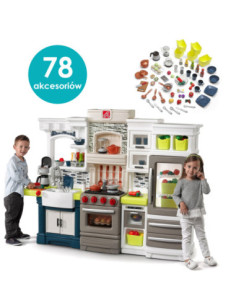
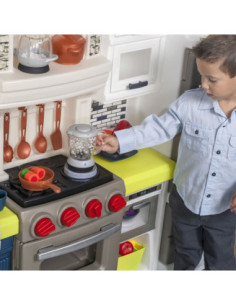
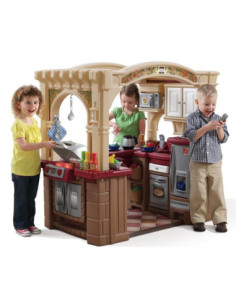
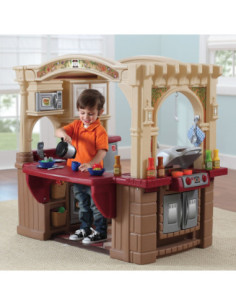
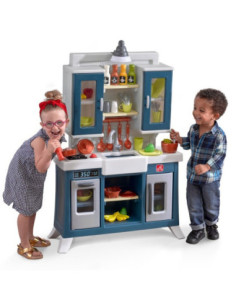
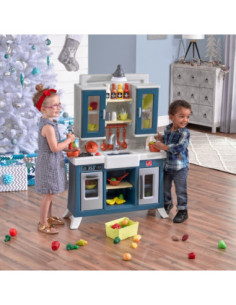
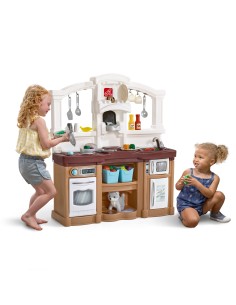
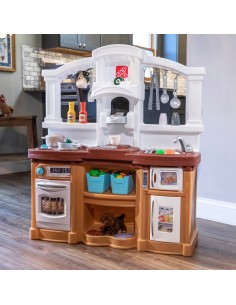
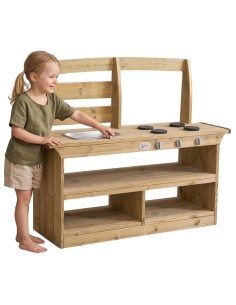

Children’s kitchens are one of those product categories that naturally turn browsing into buying. They combine role play, everyday imitation and gift appeal, which makes them attractive to online stores, marketplace sellers and B2B partners looking for toys with stable demand. In wholesale assortments, kitchens are valued not only for their play value, but also for their ability to generate higher basket values through sets, accessories and complementary products. A well-built kitchen offer helps customers quickly choose a model that fits the child’s age, the available space and the expected level of play realism.
In retail and wholesale, this category works especially well because it is easy to present visually and simple to explain. Buyers usually want to know what is included, how large the set is, whether it is ready for play right away and which accessories can be added later. That is why kitchens are a strong product group for stores that rely on clear descriptions, ready images and fast catalogue deployment. For B2B partners, they are also convenient to manage across multiple sales channels, including Allegro, Amazon, Erli and Empik Marketplace, where complete product data and stock accuracy matter every day.
Children naturally imitate adults, and kitchen play is one of the most familiar forms of role play. A toy kitchen gives a child a place to prepare meals, serve dishes, organise accessories and create everyday scenes from home life. This makes the category appealing to parents and gift buyers who are searching for a product that is both entertaining and educational. The toy supports creativity, language development and social play, while also keeping the child engaged for a long time.
From a wholesale perspective, kitchens are attractive because the category allows many price points and configurations. Stores can offer simple compact models, more elaborate sets with multiple zones, or kitchens enriched with accessories. This flexibility makes it easier to build a diversified assortment and target different customer segments. A compact kitchen may be ideal for smaller apartments and lower budgets, while a larger set can become the centrepiece of a child’s play corner and a more premium gift option.
The strongest products in this category usually have clear play functions. Customers respond well to elements that look and work like real home appliances, such as a hob, oven, sink, shelves, hooks or storage areas for accessories. Features that improve realism help the kitchen stand out in search results and on marketplace listings. For store owners, that means better conversion and fewer questions before purchase, because the offer communicates the value of the product immediately.
When selecting kitchens for a B2B offer, it is worth paying attention to the details that influence buying decisions. The first factor is the scope of the set. Some products are designed as standalone kitchens, while others include pots, pans, dishes, food replicas or utensils. A fully equipped set often performs better in gift-oriented sales because the customer can buy a complete play solution instead of searching for matching accessories separately.
Another important factor is the structure of the kitchen itself. Models with multiple levels, storage compartments and defined play zones are easier to merchandise as complete play stations. Children enjoy having space to place ingredients, arrange cookware and imitate daily tasks. For sellers, this means better visual presentation and stronger product differentiation. If the kitchen is compact but well designed, it can fit easily into a child’s room without overwhelming the available space. If it is larger, it can become the main attraction in a more spacious play area.
Material and build quality are also key points. Customers compare not only the appearance of a kitchen, but also the perceived durability and ease of use. A stable, thoughtfully constructed toy can strengthen trust in the brand and reduce the likelihood of returns. In B2B trade, that matters because the category often enters multi-channel sales where customer expectations are shaped by photos and concise listing data. Clear information about dimensions, included parts and intended use helps online shops create more effective listings and maintain consistent presentation across their channels.
Kitchens are especially effective when offered as complete sets. Customers like products that can be used immediately, without needing additional purchases just to begin the play experience. For stores, this creates a natural path to higher order values. A kitchen can be paired with cookware, plates, cups, food playsets or serving accessories, giving retailers the opportunity to create themed bundles that are easy to understand and easy to promote.
Complete sets are also useful for dropshipping and catalogue automation because they simplify decision-making for the end customer. Instead of asking whether a part is compatible, the buyer sees a coherent offer with a clear contents list. That reduces friction at the point of sale and supports faster product adoption in marketplaces. If your business model relies on automated stock and price synchronization, these sets are even more practical, as they can be deployed quickly using ready product descriptions and images.
Parents and gift buyers often choose a kitchen based on the child’s age and stage of development. Simpler sets are suitable for younger children who are just beginning role play, while more complex kitchens appeal to children who enjoy longer, more detailed scenarios. The best assortments include products that support different levels of engagement, allowing store owners to address a broad audience without changing the overall category focus.
For younger children, a kitchen with clear, easy-to-use elements and sturdy accessories can be the most practical choice. Older children may prefer more advanced sets with richer visual detail and more opportunities for imaginative scenarios. Some products support cooperative play, which is particularly valuable in homes where siblings or friends often play together. This social dimension makes the category stronger as a gift option and helps online stores present it as both fun and developmental.
In a B2B catalogue, age suitability should be communicated clearly and consistently. Trade partners benefit when product data explains what level of interaction the kitchen offers and what kind of play it encourages. This improves listing quality, helps search visibility and gives retailers more confidence when placing products across multiple channels. Good categorisation also makes it easier to match products with seasonal campaigns, birthday promotions and holiday gift searches.
One of the biggest advantages of this category is its cross-selling potential. A child’s kitchen rarely functions as a one-item purchase in the eyes of the customer. Once a buyer sees the kitchen, the next natural question is what accessories can make the play more complete. That creates an ideal opportunity for stores to offer related products such as cooking sets, serving items, imitation food, or other role-play accessories.
Cross-selling works especially well when the store presents an entire play scene rather than a single toy. For example, a kitchen can be shown together with utensils, play food and dish sets, creating a ready-made solution that looks appealing in search results and on product pages. This approach is effective for online stores that want to increase basket size without relying on aggressive promotion. It is also useful for marketplace sellers, because complete offers often stand out better than isolated items.
In the wholesale model, the ability to build complementary assortments matters. Resellers want products that are simple to group into themes and easy to communicate to their own customers. Kitchens provide exactly that. They sit at the centre of a broader role-play category and encourage further purchases over time. That gives trade partners a strong base for repeat sales and seasonal merchandising.
Children’s kitchens perform well in multi-channel retail because the product is easy to understand from photos and descriptions. A buyer browsing Allegro, Amazon, Erli or Empik Marketplace usually wants quick clarity: what is included, how large it is and whether it is suitable as a gift. When the listing contains ready images, structured product information and a clear description, the product becomes much easier to compare and purchase.
For companies managing multiple channels, the category also works well with automation. XML integrations, automatic stock synchronization and price updates help keep the offer accurate without constant manual work. That is important when a store has many SKUs or when the assortment needs to be deployed across several sales points at once. With children’s kitchens, accurate data reduces the risk of selling unavailable items and supports a smoother customer experience.
Stores that use ready descriptions can launch products faster and maintain a more professional catalogue structure. This is valuable not just for end customers, but also for B2B partners who need a stable workflow. When the product content is complete from the start, the listing can be published faster, updated more easily and reused across channels with less effort.
A good category description should help both shoppers and trade partners understand the practical value of the assortment. For children’s kitchens, the most useful information usually concerns construction, included accessories, visual style and play benefits. The product should be presented as a tool for everyday pretend play, but also as a gift-friendly item that is easy to merchandise and easy to explain.
It helps to show how the kitchen can fit into a child’s room or play area. Customers appreciate products that are compact enough for home use, yet rich enough to hold attention over time. If the set includes storage for accessories, it becomes more attractive because order and organisation are part of the play pattern. If the design includes realistic-looking elements, it supports imagination and makes the toy feel more premium.
For B2B sellers, it is also useful to describe how the product can be positioned in the catalogue. Kitchens can be listed as standalone toys, gift sets or part of a wider role-play collection. This makes the category flexible for online stores, distributors and resellers. It also supports better filtering and grouping within the catalogue, which is important when the assortment grows and many products need to remain easy to browse.
Wholesalers and resellers benefit from stocking kitchens because the category can be developed in a structured way. An assortment may include basic models, mid-range sets with accessories and more detailed kitchens designed to stand out in gift-focused sales. This tiered approach makes it easier to satisfy different customer budgets and different sales strategies without changing the core category.
It is also practical to think in terms of bundles. A store that offers kitchens together with matching accessories can create clearer product paths for the buyer. This is useful when customers want a quick answer to the question of what to buy for a child’s birthday or holiday gift. Offering a complete solution saves time and often increases the likelihood of purchase. For trade partners, that means stronger turnover and easier campaign planning.
Because the category is broadly understood, it is also easier to scale across regions and channels. Customers know what a child’s kitchen is, so the product does not require complicated explanations. That makes it an efficient category for businesses that operate with automated feeds, multiple storefronts and dynamic pricing structures. The combination of simple customer understanding and rich merchandising potential makes the category especially practical in a B2B environment.
Children’s kitchens are frequently chosen as presents because they feel substantial, useful and visually attractive. They offer more than a short burst of entertainment, which increases their value in the eyes of the buyer. A well-selected kitchen can become part of a child’s daily routine, encouraging repeated play and long-term use. This gives the category strong appeal during birthdays, holidays and other gift occasions.
For sellers, that means the category can be featured in seasonal promotions without needing major changes to the assortment. Kitchens already fit the types of occasions where customers look for a memorable, practical gift. When presented with strong visuals and a clear list of features, they become easier to market in multiple channels at once. That is particularly important for businesses that want to keep their offer active both in their own shop and in marketplaces.
The best-performing listings usually present the kitchen not just as a toy, but as a complete play environment. This framing helps the product feel more valuable and more complete. It also gives customers confidence that they are choosing a product with lasting play potential, which is often a decisive factor in toy purchasing.
For a B2B toy wholesaler, the usefulness of this category is closely linked to operational efficiency. Kitchens fit well into systems that rely on data feeds, image packages and synchronized offers. When the product data is ready, online stores can activate the category quickly, without building every listing from scratch. This is a major advantage for partners who want to scale their assortment fast and keep content consistent across many channels.
Automation also helps with stock and price management. In categories with visual appeal and frequent demand, sellers need to react quickly to changes in availability and pricing. Automatic synchronization reduces the risk of outdated listings and helps maintain customer trust. Combined with clear category structure and ready-to-use content, this creates a smoother workflow from warehouse to storefront.
In practice, that means kitchens are not only a strong retail product, but also a convenient one to manage. They are easy to place in a feed, easy to describe and easy to bundle with related items. For trade partners, this translates into faster implementation and better catalogue discipline. For online stores, it means a category that can be expanded without creating unnecessary administrative load.
Children’s kitchens are a versatile and commercially useful category for B2B toy distribution. They combine gift appeal, role-play value and strong cross-selling potential, making them attractive for online stores, marketplace sellers, resellers and distributors. The category works well both as a standalone offer and as part of a broader play collection that includes accessories and complementary products.
For businesses that rely on efficient catalogue management, kitchens are particularly practical because they can be launched with ready descriptions, strong images and automated inventory updates. That supports multi-channel sales on platforms such as Allegro, Amazon, Erli and Empik Marketplace, while also helping dropshipping operations and wholesale partners maintain consistent product information. As a result, the category offers a solid combination of customer appeal and operational convenience.
If you are building a toy assortment for professional sale, kitchens deserve a clear place in the catalogue. They are easy to present, easy to understand and easy to expand with accessories. That makes them a reliable category for growing turnover, strengthening basket value and offering customers a product that is both fun and commercially effective.